
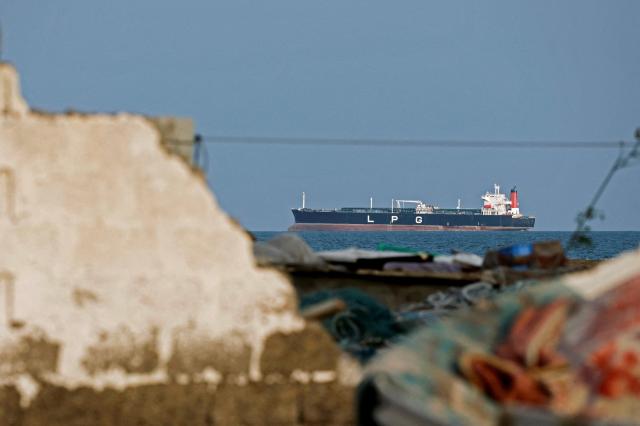
Ships do not pass through Hormuz simply because sea lanes are physically open. They move only when insurers are willing to price and underwrite the risk.
That makes U.S. President Donald Trump’s proposal to provide war-risk insurance more than a shipping support measure. It is an attempt to stabilize the commercial logic that keeps oil flowing.
In that sense, the emerging blockade is not purely military. It is financial as well — shaped as much by underwriting decisions as by missiles or mines — and increasingly dependent on who controls the information used to assess risk.
U.S. President Donald Trump’s proposal to offer war-risk insurance for ships transiting the Strait of Hormuz is being presented as an effort to keep oil and cargo moving. But the move also reveals a deeper reality: in a modern maritime crisis, control over insurance — and over the information used to price danger — can matter almost as much as control over the waterway itself.
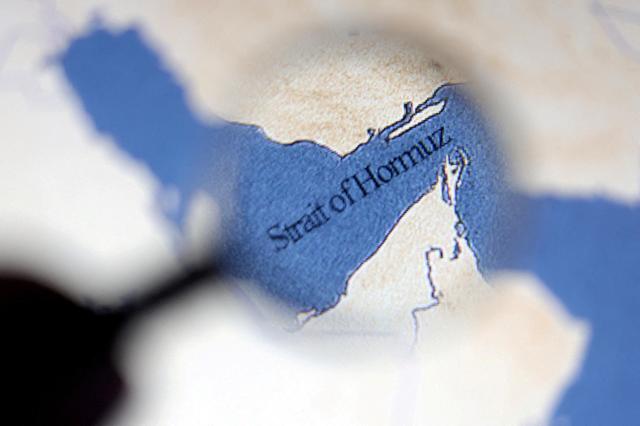
That helps explain why Trump’s push matters even if it does not fundamentally remake the market.
War-risk insurance is typically underwritten through a network of private insurers and reinsurers, many of them operating through Lloyd’s of London. Premiums are rarely withdrawn outright at the first sign of danger. More often, they are repriced sharply as risks rise, and that repricing can become a powerful barrier to trade.
The shift is already visible in the numbers. Hormuz is fast turning into one of the world’s most expensive waterways as war-risk premiums surge multiple times over prewar levels. For some tankers, a single transit now carries insurance costs in the hundreds of thousands — or even millions — of dollars.
According to broker Marsh, premiums for war damage coverage in the region have risen from about 0.25 percent of a vessel’s value to as high as 1 to 1.5 percent, with some deals even higher. For tanker operators, the question is no longer just whether a ship can physically pass through the strait, but whether the economics of doing so still make sense.
“Every large loss already needs reinsurance,” a Korean Re executive said. Most vessels transiting Hormuz already rely on some layer of reinsurance from global players. The U.S. plan, in that sense, would sit on top of an existing structure rather than replace it.
Still, the proposal matters because insurance is not simply a matter of capital. It is also a matter of confidence.
Underwriters price risk based on the information they trust, and the marine insurance market has long relied on London as one of its central benchmarks for judging danger. The issue is not merely whether risk exists, but whether it can still be measured with enough confidence for commerce to continue.
That is where the current crisis points to something larger than shipping. Much of the insurance market’s pricing power has historically rested on access to trusted information, whether from commercial intelligence, maritime monitoring or the broader Western security ecosystem. Insurers do not usually gather battlefield intelligence on their own. They inherit risk signals from the system around them.
If those signals become less reliable, the implications spread quickly. Premiums rise not only because ships are in more danger, but because the market becomes less certain about how to interpret that danger. In that sense, the Strait of Hormuz is becoming a test not only of naval deterrence but of informational credibility.
That, in turn, links the insurance story to a broader geopolitical question: alliance cohesion.
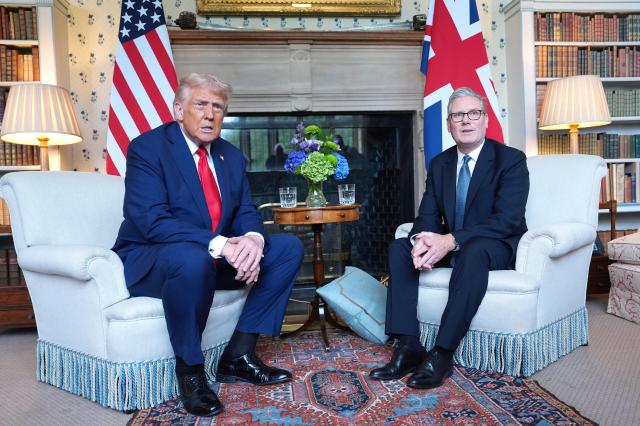
Even without any public breakdown in intelligence cooperation, such signals can feed doubts about whether the benchmarks that underpin global risk pricing still hold. If London is no longer fully aligned with Washington, the informational edge long associated with London-centered underwriting could come under pressure.
Seen from Seoul, Trump’s insurance initiative looks more symbolic than transformative. A Korean Re executive said the impact on the global market would likely be limited, perhaps easing premiums slightly at the margin but not changing the basic fact that most vessels are already covered through existing structures.
The deeper problem is that no government backstop can fully resolve a crisis of immeasurable risk. Public support can help absorb losses. It cannot by itself restore confidence if the market believes the threat environment is too unstable to price.
“In a war, you cannot say with confidence that coverage will remain stable,” the executive said.
South Korea is not entirely removed from these dynamics. Samsung Fire & Marine Insurance holds a significant stake in Canopius, a major insurer operating within the Lloyd’s market, making it the only Korean firm with direct exposure to this system.
A Samsung Fire & Marine Insurance official said, “We are closely monitoring the current situation, but so far, neither Canopius nor we have received any reports of losses or claims.”
What is unfolding in Hormuz, then, is not just a story about ships, missiles or insurance contracts. It is a story about who gets to define risk in a crisis — and how that power can shape the flow of global trade.
The waterway remains a geopolitical battleground. But it is also something else: a market test of whether insurers, governments and allies still share the same picture of danger. If they do not, the real disruption may come not only from attacks at sea, but from the quiet recalculations made in underwriting rooms far from the Gulf.

Copyright ⓒ Aju Press All rights reserved.
