
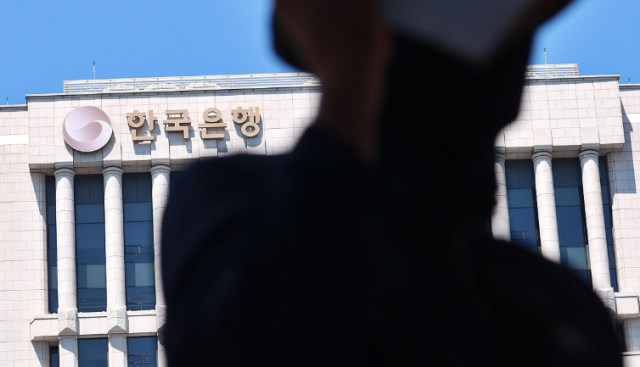
As the Bank of Korea moves ahead with the second phase of its central bank digital currency experiment, known as “Project Hangang,” attention is turning to why South Korea’s internet-only banks are not taking part. Industry officials cite weak profitability, high upfront costs and limited interoperability as key factors that reduced incentives to join.
According to the financial sector on Thursday, the country’s three internet banks did not express an intention to participate in the second-phase program. Project Hangang is a test in which the central bank issues a blockchain-based “wholesale digital currency,” and private banks distribute it as a payment instrument called “deposit tokens,” allowing consumers to use them in everyday transactions.
Nine banks will participate in the second phase: the seven banks that joined the first phase — KB Kookmin, Shinhan, Woori, Hana, IBK and NH NongHyup, and Busan Bank — plus Kyongnam Bank and iM Bank. Kim Dong-seop, head of the Bank of Korea’s digital currency planning team, said at a briefing the previous day that the central bank did not proceed by selecting some banks and excluding others. He said internet banks likely had “various considerations,” including internal circumstances and priorities.
Industry observers say the project’s unclear revenue model, combined with heavy initial infrastructure spending, likely discouraged participation. They argue that while a privately led stablecoin market can create both a risk of losing deposit customers and an opportunity to capture a new market, the central bank’s model does not present banks with a clear profit structure. During the first real-transaction test, conducted for two months starting in April last year, the seven participating commercial banks were reported to have spent nearly 35 billion won on infrastructure such as computer systems and on marketing for the project.
Skepticism also remains over user convenience. The central bank says it simplified payment procedures in the first phase by introducing features such as biometric authentication. But internet banks and big tech firms that already offer advanced “face pay” and other streamlined payment services do not see it as a distinct innovation, according to industry assessments.
Criticism has also focused on the technical design. The Bank of Korea expects distributed ledger technology, including blockchain, to help prevent misuse of deposit tokens. However, industry officials argue the system is effectively centralized and could paralyze the entire payment network if problems arise at the central bank.
Internet banks say they will monitor market reaction to the second test before deciding whether to join later, but many in the industry expect participation is unlikely.
One industry official said the first project failed because it lacked interoperability. “If the goal is a digital currency that works globally, linking with dollar stablecoins and the like is important, but the second project also has no interoperability,” the official said. The official added that there are no internationally successful cases of a centralized deposit-token system based on a permissioned blockchain, and said banks have reason to be cautious because the revenue model and operating costs are uncertain and could become a “sinkhole of sunk costs.”
* This article has been translated by AI.
Copyright ⓒ Aju Press All rights reserved.