

SEOUL, March 20 (AJP) -They are officially back as seven, with the drop of the fifth BTS full-member album ARIRANG on Friday.
That simple fact is the emotional center of this comeback — bigger than chart numbers, bigger than spectacle, even bigger than the stage rising in central Seoul.
After three years and nine months without a full-group album, BTS has returned with ARIRANG, carrying something both intimate and immense: the joy of reunion and the weight of time.
The members said it plainly. They had prepared carefully because ARMY had waited so long. They felt excited, nervous and above all deeply moved. More than anything, they said, they were grateful simply to be able to do something together again as seven.
Before it is an event, this comeback is a reunion.

Yet BTS is not returning by repeating what came before. The fifth full-length album, ARIRANG, opens what the group calls “BTS 2.0” — a new chapter shaped as much by growth as by reunion.
The title track “SWIM” captures that direction. Jimin described it as a message about continuing forward: there is pressure, there are doubts, but there is no stopping. It is not a return to shore. It is movement through water.
That sense of motion runs through the album.
The members said they focused on expanding genre, sound and vocal expression, even stepping into unfamiliar territory. Some tracks push rougher or more experimental textures, while others deliberately strip things back. Still, the guiding question remained simple, as SUGA put it: what is most like us?
That question may explain the title.
Arirang is one of the most resonant words in Korean culture — a song, a feeling, a shared memory of endurance and passage. For BTS, it becomes a bridge between identity and reinvention. Each member described “BTS 2.0” differently — a new beginning, growth, a new direction — but RM brought it into focus as balance: half is the meaning of being seven again, and half is the need to move forward.
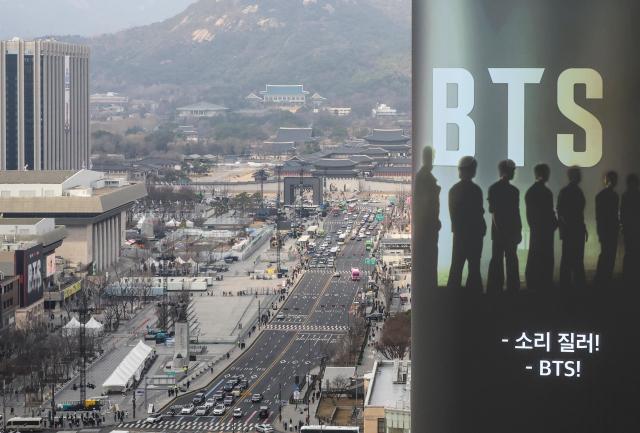
That balance also explains why they chose Gwanghwamun.
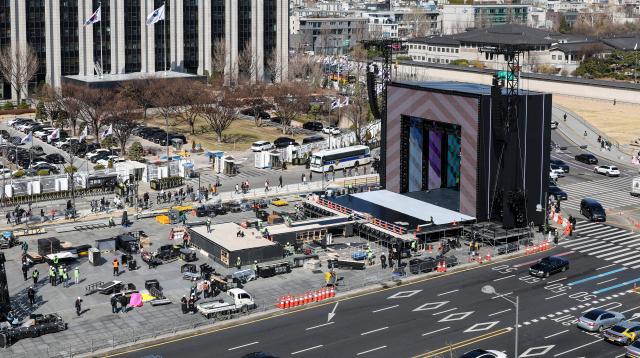
Most artists would return in a stadium. BTS chose Gwanghwamun Square, the symbolic heart of Seoul.
Framed by Gyeongbokgung Palace, it is a place where history, public life and national identity meet. That choice turns the comeback into more than a concert. It becomes a national narrative moment — where K-pop, cultural symbolism and public emotion converge. The space itself becomes part of the performance. Even before the music begins, the setting carries meaning.
The decision to make the show free adds another layer. This is not a closed, ticketed return. It is open, in a public square. That changes the emotional contract. It makes the comeback feel communal rather than exclusive — less like a product launch, more like a gathering. For a group built on its connection with ARMY, the symbolism is clear: the first step back is outward.
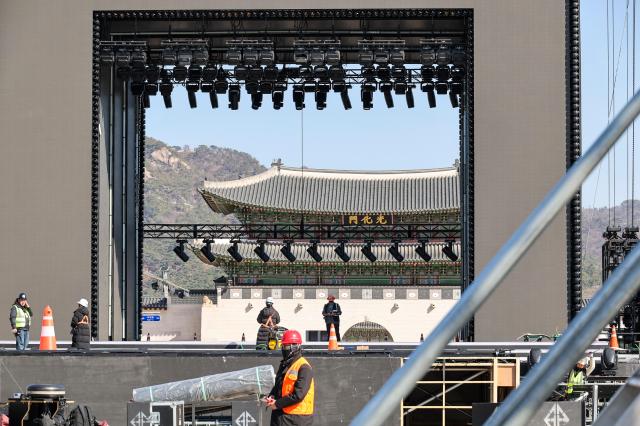
And yet the moment is not limited to Seoul.
The Gwanghwamun performance will be livestreamed globally, allowing fans across the world to share the same moment.
That duality — local and global, intimate and vast — has always defined BTS.
Their rise was not a single explosion, but a steady accumulation. From their 2013 debut through years of gradual growth, from early tours to global chart dominance, BTS built momentum step by step. Even at their largest scale, they retained something direct — a closeness with fans that did not disappear as the stage expanded.
That is why this reunion carries such weight.
During the hiatus, each member pursued solo work, but the group itself never faded.
If anything, the time apart clarified what BTS is: seven distinct artists whose meaning is strongest together. Jungkook recalled the process of listening to more than 100 demo tracks as a group — sometimes hearing each other’s work for the first time — as one of the most memorable parts of making the album. Jin said the members have grown closer. The atmosphere — the jokes, the laughter — remains unchanged.
BTS 2.0, then, is not a break from who they were. It is a continuation, with more depth.
The Gwanghwamun stage is also a beginning. It opens into a global tour and the so-called “BTSnomics 2.0,” where the group’s impact extends beyond concerts into platforms, digital content and a wider cultural economy.

Copyright ⓒ Aju Press All rights reserved.
