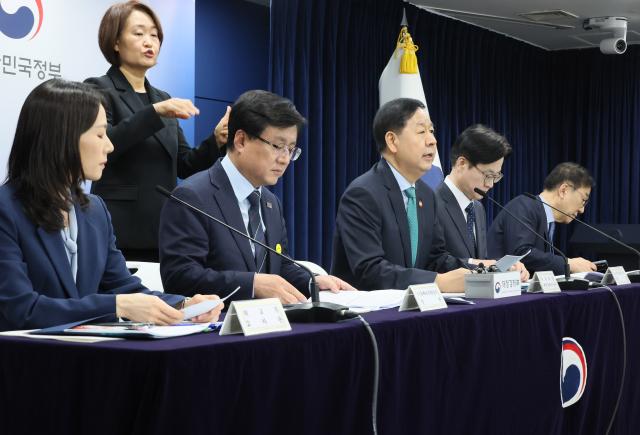
“In the face of a grave wartime situation, we will mobilize all policy means and the optimal mix to ensure the hard-won recovery momentum is not derailed,” Deputy Prime Minister for Economy Koo Yun-cheol said in a televised briefing Thursday after an emergency cabinet meeting.
The emergency package comes as the conflict enters its fourth week, driving sharp volatility in global oil prices and financial markets, with South Korea particularly exposed due to its heavy dependence on Middle Eastern energy imports.
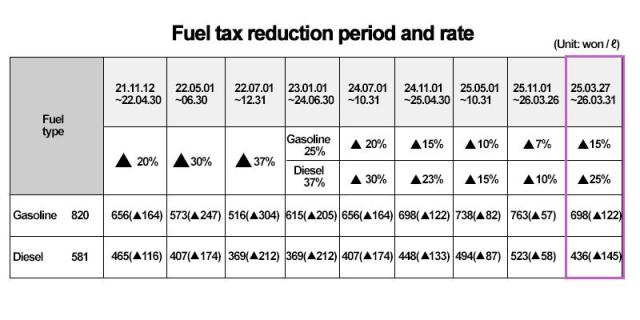
Under the plan, the government will expand temporary fuel tax cuts to 15 percent for gasoline and 25 percent for diesel through May 31, nearly doubled from current reductions, in a bid to cushion rising energy costs.
The measures are part of a broader push to stabilize prices and supply chains, while preventing spillovers into vulnerable sectors such as small businesses, farmers and low-income households.
To contain inflation and energy price shocks, authorities will maintain a ceiling price system on petroleum products, strengthen market surveillance against collusion and expand subsidies for freight and public transport operators.
On the supply side, the government will secure alternative crude and liquefied natural gas sources, including increased imports from the United Arab Emirates and swap arrangements with Japan, while preparing to release strategic reserves in coordination with the International Energy Agency if needed.
A crisis-level supply chain task force has also been launched to monitor key items such as naphtha and urea on a daily basis, with emergency financial support and import diversification measures to mitigate disruptions.
To support affected businesses, policymakers will expand policy financing by more than 4 trillion won, provide low-interest loans and extend maturities for firms facing liquidity stress, while fast-tracking approvals for emergency funding.
Additional targeted support will be directed at small merchants, farmers and transport operators, including energy subsidies, logistics cost assistance and temporary toll exemptions.
In financial markets, authorities pledged “timely” intervention to curb excessive volatility in the won and bond markets, including liquidity injections, bond buybacks and activation of a 100 trillion won-plus market stabilization program if necessary.
The finance ministry separately announced 5 trillion-won buyback program to bolster the bond market, with government bonds yielding more than 100 basis points over the base rate.
The government will conduct stress tests across the financial sector and maintain 24-hour monitoring of foreign exchange and capital markets to guard against systemic risks.
The U.S. dollar hit 1,506.90 won as of 3:00 p.m. Thursday, unshaken by the Seoul government response.
The markets instead pay heed to the government warning.
“The longer the situation persists, the greater the downside risks to the economy, including slower growth, higher inflation, supply chain disruptions and financial market volatility,” the government said in its assessment.
Copyright ⓒ Aju Press All rights reserved.