Editor's Note: One month into the Iran war, a conflict that began in the Middle East is rapidly evolving into a broader economic and strategic shock for Asia, and in this special series, AJP examines those spillovers in full — from a comprehensive overview of Asia-wide shocks to industrial realignments, the mounting risk of a third oil shock, and rising security tensions — as the central question shifts from how the war unfolds in the Middle East to how deeply its consequences will be embedded across Asia.
SEOUL, March 27 (AJP) - As the energy crisis triggered by the blockade of the Strait of Hormuz drags on, the collateral damage has spilled well beyond oil and gas.
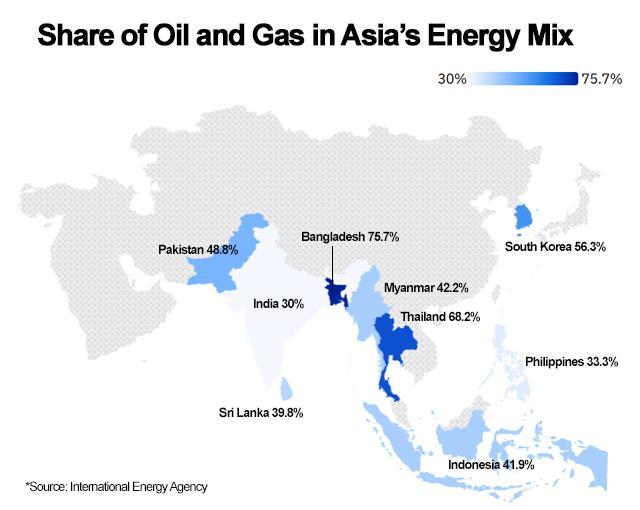
From South Korea — where hoarding has driven up prices of plastics, paint, cement and even garbage bags — to Southeast Asia, governments are declaring energy emergencies and reverting to stopgap measures such as restarting coal-fired power plants, risking lasting carbon footprints in a region that already accounts for more than half of global emissions.
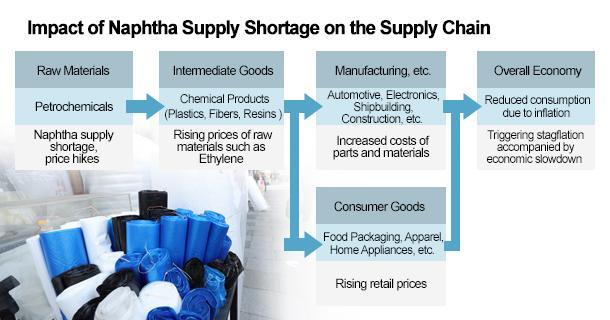
At the core of the disruption lies naphtha, the petrochemical feedstock underpinning a wide range of industrial production. Prices have surged about 73 percent since early January, while ethylene — the basic building block of plastics — has doubled, reflecting both supply disruptions and panic buying.
With supplies tightening, Seoul has moved into what it calls "wartime" management. The government imposed a temporary ban on naphtha exports, mandated daily reporting of inventories and shipments, and warned against hoarding, with the power to intervene directly in corporate stockpiling if necessary.
"Supply itself has been cut off, halting production entirely," said Jung Jun-hwan, a senior researcher at the Korea Energy Economics Institute, warning that shutdowns could spread across industries where raw material costs account for a large share of total expenses.
The strain is already cascading.
Industry groups warn of a potential "April shutdown cascade," as smaller firms are priced out by larger competitors stockpiling limited supplies.
Even garbage bags have emerged as a symbol of the disruption, prompting government reassurances over inventory levels.
In a sign of how far policy boundaries are shifting, the United States has allowed South Korea to pay for Russian oil products, including naphtha, in non-dollar currencies without triggering secondary sanctions — reopening supply routes once closed after the Ukraine war.
The shock, however, is regional.
Across Asia, governments are rolling back energy transition policies to secure immediate supply. South Korea is lifting caps on coal generation and accelerating nuclear restarts, while Japan is releasing record emergency oil reserves. The Philippines has declared a national energy emergency, and countries including Thailand, Indonesia and India are turning back to coal to meet surging demand.
Some economies have gone further, introducing four-day workweeks to curb fuel consumption.
The result is an energy policy reversal that could push regional carbon emissions up by an estimated 5 to 8 percent in the short term, even as longer-term dynamics point in the opposite direction.
Analysts say the crisis is reinforcing the strategic vulnerability of fossil fuel dependence.
For now, however, the immediate pressure is mounting.
With petrochemical plants running at minimum rates and inventories measured in days rather than weeks, the window to prevent broader industrial disruption — and a deeper economic shock across Asia — is narrowing fast.

Copyright ⓒ Aju Press All rights reserved.