
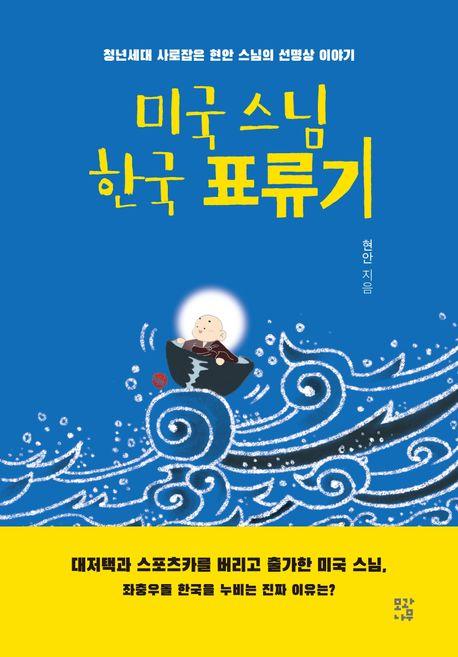
An American Zen Monk’s Journey in Korea=Written by Hyeonan, Mo Gwa Namu.
For readers who turn to spicy food or stimulating content to cope with stress, this new book offers a different approach. The author, who once enjoyed salsa dancing and driving sports cars, says he changed course after immersing himself in what he calls “American Zen meditation,” becoming a “Korean American monk.” For him, the sports car has been replaced by the lotus position.
Following his teacher’s wishes, he moved to South Korea and opened his first meditation center in a building marked by a large sign advertising “unlimited meat refills.” The space later became a youth magnet — a kind of “meditation hot spot.” Guided by teachings from his mentor, Ven. Yeonghwa — “Don’t try to teach before you ask,” “There are no stupid questions,” and “In a temple, you must see the person” — the author shares meals and conversations with young people and draws them into meditation in an unforced way.
The book lays out brief, clear steps for beginners: practicing attention on the lower abdomen (around the navel), sitting every day, adding two minutes a day, and meditating without expectations. He writes that simply gathering attention around the navel can lead to calm.
The author says Zen meditation builds not only the ability to stop thinking when needed, but also the capacity to observe thoughts in daily life without being swept away. As the mind clears, he argues, judgment becomes sharper. “Meditation is not knowledge but a process learned through the body,” he writes, adding, “Buddhism is not philosophy; it is a performing art.” He also presents examples of ordinary office workers to suggest readers can find the courage to face themselves through practice.
“When you start meditating, thoughts keep coming up. That is natural. You should set a time, sit every day, and gradually increase the time. Having many thoughts during meditation never means you are not suited for meditation. Rather, that process is a very important stage of practice. If you repeatedly experience not being pulled by thoughts and returning again, thoughts gradually decrease. All practice bears fruit only with time and consistency. Keeping your mind on the lower abdomen is not as easy as it sounds. That is why chanting during seated meditation can help. If your religion is Buddhism, repeating names such as ‘Amitabha, Amitabha’ or ‘Bhaisajyaguru, Bhaisajyaguru,’ or using mantra practices such as the Surangama Mantra or the Great Compassion Mantra, can also be helpful.” (pp. 87-88)
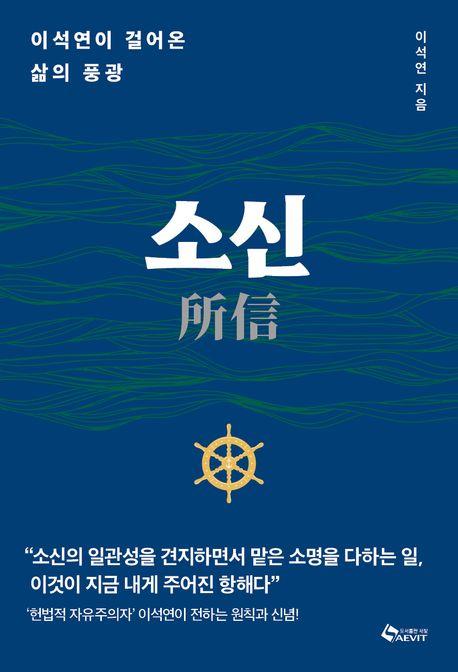
Conviction=Written by Lee Seok-yeon, Saebit Publishing.
In a book that revisits major turning points in South Korea’s modern political history, Lee Seok-yeon — now chair of the National Integration Committee — urges a steady approach even amid fierce ideological conflict. He describes himself as a “constitutional liberal” and argues that attitude should matter more than rhetoric, principles more than faction, and the Constitution more than power.
Citing major cases such as rulings striking down the military bonus-points system and the Special Act on the New Administrative Capital, Lee says his standard has been simple: “The only yardstick for judgment is the Constitution.” That stance, he writes, drew criticism from both sides — branded a hard-line conservative by progressives and a disguised conservative by conservatives.
The book includes his diagnosis of the 2024 Dec. 3 martial law crisis and the impeachment standoff that followed, structural problems in the presidential system, and the need for constitutional revision. Lee points to an “imperial presidency,” factional logic and distortions of the rule of law as reasons Korean politics repeatedly fails. He argues that civic awareness and the force of the Constitution sustain the state, and asks why “constitutional thinking” is needed again. He also calls for a society that can hold differing views and circumstances, like the sea holding both calm and rough waves — insisting that both heated debate and quiet daily life are part of democracy.
“Waves never stop rolling into the sea, but the sea does not reject them; it embraces them all. Some waves are gentle, and some are rough. At times a typhoon throws up enormous swells, but the sea ultimately takes them in and expands itself. I believe our society’s conflict and division are the same. Different thoughts, emotions and values keep surging like waves, but only when we can hold them rather than push them away does integration begin. Living as a public official, lawyer and civic activist, I have seen countless waves, and at times I was swept up in them. But as I stand in a new position this time, I feel an urgent need to hold different voices, as the sea holds waves.” (p. 252)"
* This article has been translated by AI.
Copyright ⓒ Aju Press All rights reserved.