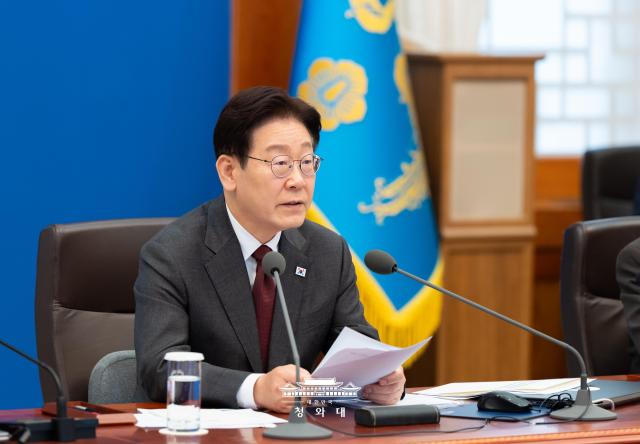
SEOUL, April 02 (AJP) - In a bid to draft immediate measures to ease public transport crowding, South Korean President Lee Jae Myung has directed the Ministry of Land, Infrastructure and Transport on Thursday. The order follows an elevation of the national resource security alert to its second-highest level. Officials have already implemented a mandatory two-day vehicle rotation for public offices, which is expected to push a surge of commuters onto the transit grid.
The war in Iran has left South Korea in a strategic bind. Seoul imports more than 70 percent of its crude oil from the Middle East, with the vast majority passing through the Strait of Hormuz. According to the Korea Energy Economics Institute, this heavy reliance makes the domestic economy uniquely vulnerable to supply shocks in the Persian Gulf. This dependency has cornered the administration into aggressive energy conservation, including the restriction of private vehicle use.
According to the presidential office, expanding free transit benefits to include city buses for citizens aged 65 and older could be considered as part of Lee's initiative to ease crowding on public transport during commuting hours. While the subway system has long been free for this demographic, bus fares have remained a significant out-of-pocket expense for senior residents. By subsidizing bus travel, The president aims to provide a comprehensive safety net for the elderly while incentivizing a shift away from private vehicle use during the height of the fuel shortage.
This directive ends a period of bureaucratic inertia where the transport, health, and environment ministries were engaged in a 'ping-pong' dispute over which department would oversee the new transit policy. By centralizing authority under the transport ministry, the president is framing the expansion of senior benefits as a logistical necessity of the energy crisis rather than a standard welfare debate. The move allows the government to manage the influx of passengers through a unified system that can adjust service frequency in real time.
"The Ministry of Land, Infrastructure and Transport should take charge and prepare measures to alleviate public transport congestion during commuting hours," Lee said. The ministry is now working to define specific operational hours for the expanded bus benefits and identifying high-density routes that require immediate reinforcement.
Copyright ⓒ Aju Press All rights reserved.