
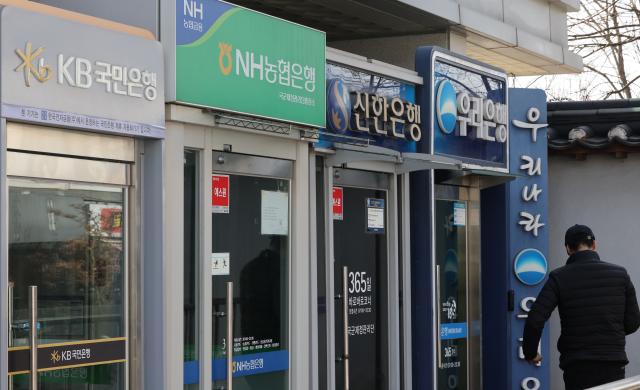
After moving in step with expectations of U.S. rate cuts, the broader downtrend in interest rates has been jolted by the unexpected shock of the Iran war. With hopes fading for policy-rate cuts by central banks at home and abroad, and market rates — a key benchmark for lending — rising quickly, borrowers are facing tougher choices.
As of Thursday, five-year fixed-rate mortgage loans at South Korea’s five major commercial banks — KB Kookmin, Shinhan, Hana, Woori and NH NongHyup — were quoted at annual rates of 4.42% to 7.02%, according to the financial industry on April 3. The top end of the fixed-rate range rising above 7% marks the first time since October 2022, about three years and five months ago. Compared with mid-January (4.13% to 6.29%), the upper bound is up 0.72 percentage points and the lower bound up 0.29 points.
Experts say the upswing is unlikely to reverse sharply in the near term and advise consumers to adjust their financial plans accordingly.
With interest burdens rising, managing debt to reduce repayment pressure is emerging as the immediate priority. Borrowers who bought homes in 2020 and 2021 by maximizing loans in a low-rate environment — and who are now renewing five-year fixed-rate mortgages — are entering a period of full rate resets starting this year. In many cases, monthly interest payments are expected to rise by hundreds of thousands of won or more.
Borrowers should consider using the right to request a rate cut when their circumstances qualify. Those whose loans are more than three years old may also want to use rules that waive early repayment fees, allowing them to respond more quickly as market rates move.
When choosing between fixed and variable rates, borrowers should factor in the possibility that rates may stay elevated rather than fall. For customers with heavy principal-and-interest payments or high debt relative to income, a fixed rate may be more stable by reducing exposure to rate swings. By contrast, higher-income borrowers with smaller loans and a strong likelihood of early repayment may find a variable rate — with a lower initial burden — more practical.
“If the war drags on and oil prices stay above $100, the Fed could raise its policy rate, and the Bank of Korea could respond with hikes,” said Choi Ji-hoon, a gold private banker team leader at Hana Bank’s Club1 Hannam PB Center. “If the policy rate rises, loan rates have no choice but to rise as well.”
* This article has been translated by AI.
Copyright ⓒ Aju Press All rights reserved.