
After completing a trip to India, President Lee Jae-myung moved directly to Vietnam for a state visit, a sequence that underscores a shift in diplomatic focus from security to economic strategy. Competition over emerging markets and supply chains has become central to national planning, and Vietnam is already one of South Korea’s key trading partners and among its largest investment destinations. That is why the visit is being watched as a test of “economic diplomacy.”
The question, as always, is how to measure results. Without clear standards, overseas trips risk ending as photo opportunities and announcements. During the Vietnam visit, officials are discussing large-scale projects including nuclear power, infrastructure, bio-related industries, new airports and new-city development. Energy security and cooperation on critical-mineral supply chains are also on the agenda. These issues are closely tied to South Korea’s economic future, but their value diminishes if they do not lead to concrete contracts and investment.
At the same time, judging success only by short-term deal counts is also risky. Supply-chain diversification and energy security are structural tasks that are not easily reduced to immediate figures. The trip should be assessed by two measures: in the short term, how quickly memorandums of understanding are converted into actual contracts and investment; and over the medium to long term, how steadily a Vietnam-centered production and supply-chain structure is built. The near-term focus should be on execution, while the longer-term test is whether the underlying structure changes.
The article argues that South Korean diplomacy has too often remained “MOU-centered,” with many agreements signed but limited systematic tracking and disclosure of how many became contracts and how fast investment was carried out. It says the government should build a cross-government implementation monitoring system to track the full process after MOUs, with sector-by-sector teams regularly checking project progress and disclosing results transparently. Diplomatic outcomes, it says, are completed through follow-through, not announcements.
It also draws a line between the roles of government and business. Measuring sales diplomacy solely by corporate order totals, it says, is a logical leap. The government’s role is to open markets and reduce political and institutional risk, while companies are responsible for turning opportunities into contracts and profits. If those roles are blurred, diplomacy can face excessive pressure for quick wins and companies can become bound by political expectations.
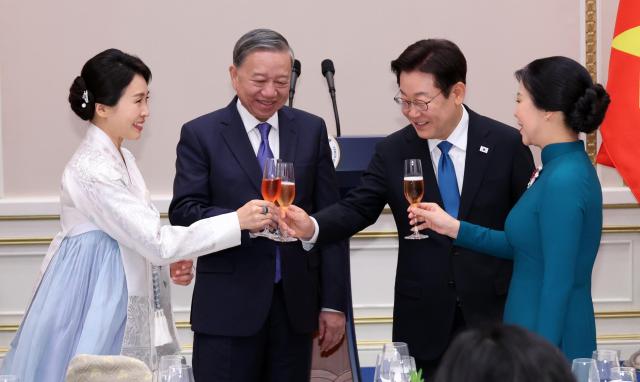
Vietnam’s political structure is another variable. The first meeting with the new leadership centered on General Secretary To Lam is described as an important diplomatic moment, but the article cautions against relying on personal ties. In systems with high power concentration, it says, predictability and institutional stability matter. That is why stronger investment guarantees, clearer dispute-resolution procedures and more institutionalized government-to-government cooperation should accompany any push for closer ties. Long-term results, it argues, require cooperation built on systems rather than individuals.
The article says South Korea is at a turning point and must prepare for a “post-China” era, with Vietnam and India emerging as key alternatives. It describes India as a place that shows market potential, while Vietnam serves as a hub for production and supply-chain realities. Linking the two, it says, could open a new growth path for the South Korean economy, and that is the strategic meaning of the trip.
In the end, it concludes, sales diplomacy is not completed by declarations. In the short term it must be proven in contracts and investment, and in the long term it must lead to changes in supply chains and industrial structure. The government should support that through institutions, and companies should deliver results through execution. The direction, it says, is right; what remains is speed and outcomes.
* This article has been translated by AI.
Copyright ⓒ Aju Press All rights reserved.