
Public sentiment toward private equity funds, or PEFs, has turned sharply negative since last year, with criticism increasingly framing them as “predatory capital.” The Homeplus controversy has added to the backlash, and the government has moved to tighten regulation of the sector.
Industry officials warn that rules could undermine the foundation Korea’s PEF market has built over two decades. Others say the sector must strengthen accountability and rebuild trust to ensure its role in corporate restructuring and industrial reorganization is properly recognized.
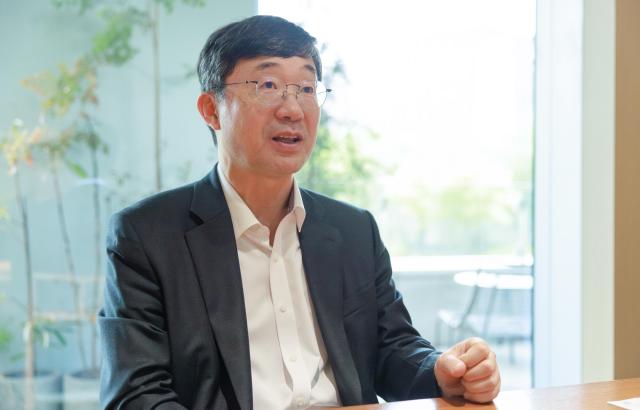
Park Byeong-geon, chairman of the Private Equity Fund Council and CEO of Daishin Private Equity, met with Aju Economic Daily on the 20th. He said he broadly agrees with tougher oversight but warned against regulatory imbalance with foreign managers, while urging socially responsible investing, or SRI, to support long-term returns and restore confidence.
He said regulation could curb investment activity by domestic managers if it ends up favoring overseas firms. “In the process of applying certain regulations to the market, a structure could form in which domestic managers are disadvantaged and foreign managers gain a windfall,” Park said, calling that an outcome that could run counter to policy intent.
Park also warned that if compliance requires excessive disclosure of trade secrets, local firms could lose competitiveness. He said disclosure of key information during fund operations could put domestic managers at a disadvantage in bidding for deals or lead to talent losses to foreign rivals.
He said Korea’s PEF market was formed in the mid-2000s under government leadership, as concerns grew about protecting domestic investors and preventing an outflow of national wealth amid rising foreign capital inflows. Since then, he said, a local ecosystem has taken root, supported by domestic institutional investors such as the National Pension Service and mutual aid associations.
“PEFs backed by domestic capital have a structure that must consider domestic stakeholders such as pension funds, while managers centered on foreign capital inevitably prioritize the interests of their home-country investors,” Park said. “If homegrown PEFs grow properly, positive effects can flow back to domestic investors and the broader industrial base.”
Park said that despite the poor public perception, domestic PEFs have played a meaningful role and that leveraging those strengths can help Korea’s industrial development.
He said domestic PEFs can also work effectively with policy finance initiatives the current government is emphasizing. “Policy funds such as the National Growth Fund require venture capital and PEFs to play roles together,” Park said. “If venture firms identify early-stage companies, PEFs should supply large-scale capital at the growth stage to support scale-ups.”
He said some promising startups, including in AI, seek overseas funding at the scale-up stage because of a domestic investment gap. That, he said, can increase financing burdens and lead to growth and returns flowing abroad.
Park said PEFs, with experience executing large investments, can play a central role in the National Growth Fund. He said about 70% of PEF investment goes to small and midsize companies, and 40% to 50% to technology companies, adding that the industry will mobilize its capabilities accordingly.
He said the National Growth Fund is expected to channel capital across key national industries including artificial intelligence, semiconductors, biotech, aerospace and defense. If such an investment ecosystem takes hold, he said, it could become an important foundation for Korea’s push to join the ranks of advanced economies.
“The National Growth Fund is not simply a supply of capital, but a policy to strengthen the entire growth stage of Korean industry,” Park said, adding that the PEF industry is ready to contribute.
Park emphasized the need for socially responsible investing to restore long-term trust after major controversies in the private equity industry. He also argued that SRI can support returns.
“Comparing the returns of general funds and funds that consider ESG, the performance of funds that consider ESG is actually higher,” Park said. “The existing perception that social responsibility conflicts with profitability needs to be reconsidered.”
He said overseas markets, including Europe, already show data supporting the performance of responsible investing, and predicted a similar trend could emerge in Korea within three to five years given private equity’s long-term investment horizon. “Socially responsible investing is morally right, but it does not necessarily move in inverse proportion to profitability,” he said, adding that the industry will continue to strengthen such investment.
Industry data in Korea also point in that direction, he said. According to the industry, employment at companies backed by PEFs rose an average 9.1% a year, well above the overall market average in the 4% range. Wages increased an average 9.3% a year, above the national average in the 3% range, and the share of regular workers was about 94%, indicating stronger job stability.
Park attributed the trend to policy and market shifts. He said government regulation is also providing incentives that consider environmental and social factors, and consumers are increasingly assigning higher brand value to companies that demonstrate responsibility, which he said can support corporate value and returns over the long term.
Park said 251 institutions in Korea participate in the stewardship code, including 75 PEFs, the largest participation by sector. He said that reflects continued emphasis by major institutional investors, including the National Pension Service, on responsible investment and stewardship code implementation. He added that the industry plans to further strengthen self-regulation and responsible investment in line with efforts to advance the code, including what he described as “Stewardship Code Season 2” presented by National Pension Service Chairman Kim Seong-ju.
Park also underscored private equity’s economic role. He said PEFs account for more than half of Korea’s M&A market, and annual investment totals about 30 trillion won, far exceeding venture investment.
He said the industry has invested a cumulative roughly $57 billion in high-risk, high-growth sectors such as AI, semiconductors and renewable energy, serving as a “risk absorber” in areas difficult to fund with public resources alone. He added that research and development investment and capital expenditures have increased an average 16% and 10% a year, respectively, strengthening long-term growth foundations.
Park said self-regulation and greater transparency are needed. “Ultimately, the goal is to compete on equal terms with foreign managers while establishing ourselves as responsible investors that contribute to the Korean economy,” he said.
“We must ensure something like Homeplus never happens again,” Park said. “In particular, homegrown PEFs have a very strong will to prevent any recurrence.”
* This article has been translated by AI.
Copyright ⓒ Aju Press All rights reserved.