
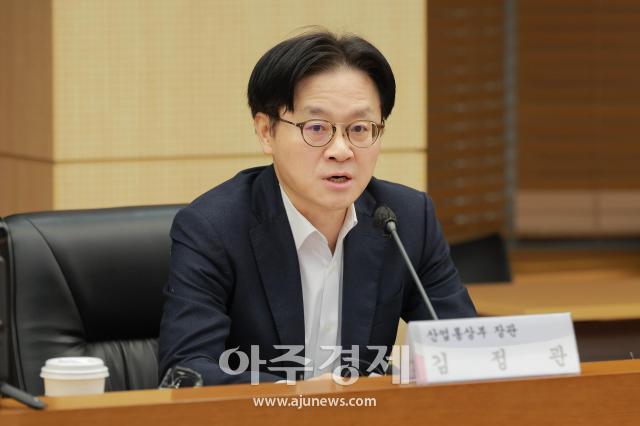
The ministry said it held its second town hall meeting on Thursday at the Government Complex Sejong, with about 500 employees from headquarters and affiliated agencies attending. The meeting, chaired by Minister Kim Jeong-gwan, reviewed progress and next steps for the “fake work reduction” project launched after the first town hall meeting in November, and recognized employees for what the ministry described as “real results.”
In an all-staff survey, 53% said workplace culture and work practices improved after the project was introduced, compared with 18% who responded negatively, the ministry said.
Employees cited gains including more efficient public relations work such as providing summarized press clippings and distributing a checklist for drafting news releases (65%); fewer late-night hours spent waiting at the office (61%); fewer unnecessary business trips due to expanded use of video reporting (58%); and greater acceptance of simplifying events and reporting requirements led by bureau and division chiefs (58%).
The ministry also shared results of an organizational diagnosis conducted in February with the Korea Productivity Center. The review found that, due to structural factors typical of an economy-focused ministry — including urgency, uncertainty and coordination with other agencies — working-level staff spend 41.6% of total working hours on “issue response and external cooperation.” The ministry said it will identify additional follow-up tasks tailored to these findings and work to improve them.
During a question-and-answer session with the minister, employees raised broader concerns about working conditions, including personnel policies, attendance rules and welfare. Suggestions included establishing a promotion culture based on performance rather than seniority, expanding support for skills development, and eliminating tangible and intangible disadvantages for employees who take parental leave.
A first special performance bonus ceremony was held alongside the meeting. The ministry said it awarded 68 million won in bonuses to 46 employees across eight selections.
In the group category, a U.S.-focused team working on tariff negotiations and MASGA received 40 million won. In the individual category, four people were selected, including an assistant director who received 5 million won for leading work to build the policy foundation and implementation for the M.AX project, aimed at shifting manufacturing to artificial intelligence.
“Seeing the changes achieved in half a year confirmed in numbers is meaningful,” Kim said. He said the ministry would return time lost to “formalities and old practices” to employees and connect that energy to results the public can feel. He added that employees’ feedback would be actively reflected in institutional improvements, calling it the starting point for the next round of innovation.
* This article has been translated by AI.
Copyright ⓒ Aju Press All rights reserved.