
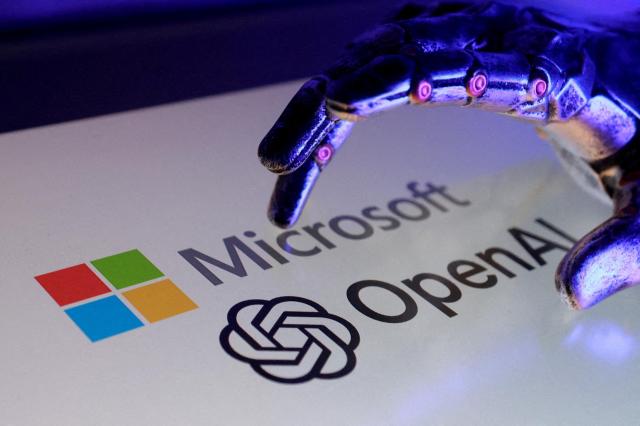
Microsoft is moving ahead with a large voluntary separation program for some U.S. employees. The plan primarily targets workers whose age and years of service add up to 70 or more. Some estimates put the eligible group at about 7% of Microsoft’s roughly 125,000 U.S. employees, or about 8,700 people. On the same day, Meta also announced plans for major job cuts and reduced roles. As the race to invest in artificial intelligence intensifies, the paradox of cutting people while spending heavily on technology is becoming more visible.
Microsoft recently announced cloud and AI investment plans totaling $18 billion in Australia and $10 billion in Japan. Building data centers, semiconductors and large-scale computing infrastructure requires enormous capital. Companies fear that falling behind in generative AI could cost them market leadership. As money flows to machines and servers, pressure to cut costs often lands on workers.
From a management perspective, reallocating resources to future growth areas during a technology shift is not unusual. Reducing overlapping organizations and raising productivity are standard goals, and publicly traded companies face constant pressure from earnings and stock prices. The key questions are the method, the pace and the level of social responsibility.
Microsoft’s approach also raises a broader issue: how companies value experience. Using a combined age-and-tenure threshold can be defended as an efficiency measure, but it can also signal that skill and institutional knowledge are being treated mainly as costs. Corporate competitiveness is not built only on younger talent and new technology. Crisis-management experience, operational know-how, customer networks and the ability to mentor colleagues are assets that are hard to quantify.
The moves also risk clashing with the values big tech companies have promoted, including diversity, inclusion, sustainability and people-centered innovation. If priorities shift and the response is large-scale layoffs, trust can erode. A technology company’s brand is shaped not only by products but also by culture and stated principles.
A deeper concern is that AI may reshape jobs faster than society can prepare. Restructuring is increasingly reaching high-paid office workers, developers and middle managers. Where earlier automation first disrupted factory labor, today’s AI is directly affecting white-collar roles. That makes the issue more than a corporate staffing decision; it points to a broader shift in labor markets.
South Korea is not immune. Domestic companies are also weighing bigger AI spending alongside leaner organizations. Pressure to improve workforce efficiency could grow across semiconductors, finance, platform businesses and manufacturing. Without early preparation — including retraining systems, job-transition support, measures for older workers and wage structures linked to productivity — the shock could be larger.
Companies need to invest in the future. But they should not treat today’s workers as disposable in the name of progress. Voluntary separation programs are not just a way to reduce headcount; they can change a person’s livelihood, career and direction in life. Adequate compensation, re-employment support and respectful procedures should follow.
Competitiveness in the AI era will not be decided by server capacity alone. Companies that adopt new technology while protecting people, and that pursue efficiency without abandoning community responsibility, are more likely to endure. Big tech companies should answer whether cutting workers first while spending tens of trillions of won on AI is truly innovation.
* This article has been translated by AI.
Copyright ⓒ Aju Press All rights reserved.