
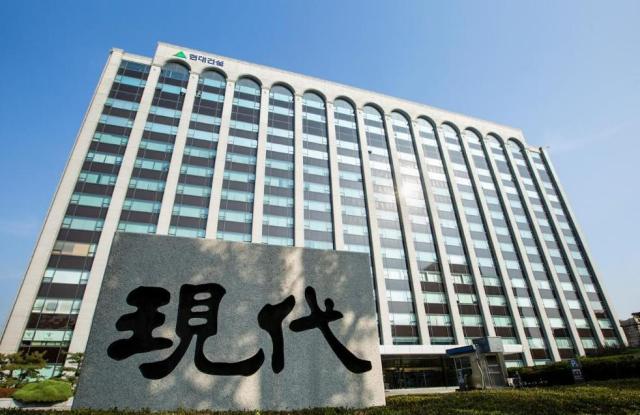
Hyundai Engineering & Construction said in a regulatory filing on the 28th that its first-quarter operating profit on a consolidated basis fell 15.4% from a year earlier to 180.9 billion won, based on preliminary results.
Revenue declined 15.8% to 6.2813 trillion won. Net profit rose 24.0% to 206.8 billion won.
The company said it expects quarterly profit to improve gradually, citing better profitability in its housing business and the phased completion of high-cost plant projects.
Its operating margin held at 2.9%, in line with its full-year target.
Orders for the quarter totaled 3.9621 trillion won, with gains in the energy segment including the Pocheon pumped-storage power plant and preliminary work for the Wando Geumil offshore wind project.
Hyundai Engineering & Construction said it expects major project awards to pick up from the second quarter, including a U.S. electric arc furnace steel mill, the Palisades small modular reactor (SMR) and the Bokjeong station-area development, making it likely to meet its annual order target of 33.4 trillion won.
Its order backlog was tallied at 92.1237 trillion won, equivalent to about 3.4 years of work.
Cash and cash equivalents, including short-term financial products, stood at 3.8515 trillion won. The current ratio was 149.8% and the debt ratio was 157.6%. The company said its credit rating is AA-, among the highest in the industry.
Hyundai Engineering & Construction said it plans to pursue contracts within the year tied to nuclear power projects including the Palisades SMR and the “Matador Project,” a combined energy and artificial intelligence campus development by U.S. energy developer Fermi America. It also plans to expand its energy business in Europe, including Bulgaria, Finland, Sweden and the Netherlands.
A company official said that with external uncertainty persisting, including global geopolitical risks and volatility in raw material prices, the firm is focusing on strict risk management and strengthening its business fundamentals. The official said the company plans to reinforce its energy portfolio, including nuclear power, under a proactive management system to build a resilient business structure that can withstand market shifts.
* This article has been translated by AI.
Copyright ⓒ Aju Press All rights reserved.