
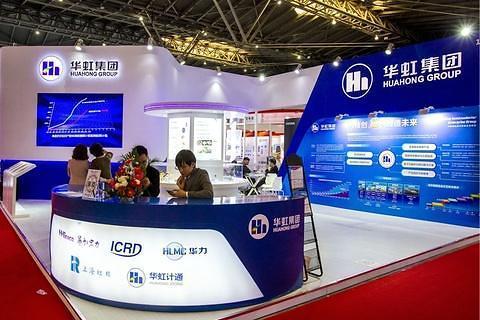
U.S. authorities have moved to block equipment exports to Hua Hong, China’s No. 2 semiconductor foundry, raising pressure in the race over artificial intelligence chips. The step comes at a sensitive time ahead of President Donald Trump’s planned visit to China in May.
U.S. blocks equipment exports over concerns about advanced processes
Reuters reported on April 28 that the Commerce Department recently sent letters to U.S. equipment makers including Lam Research, Applied Materials and KLA, directing them to stop shipping certain tools to Hua Hong.
The letters restrict exports of semiconductor equipment and other materials tied to two manufacturing facilities that U.S. officials believe could be used to produce China’s most sophisticated chips. Reuters described the move as the latest U.S. step to slow China’s advanced-chip development and an extension of policies aimed at protecting U.S. technological advantages in AI and other leading-edge chipmaking.
The action follows reports of progress at Hua Hong. The company is China’s second-largest foundry after SMIC, and has been reported to be developing manufacturing technology for advanced chips, including AI semiconductors. Its affiliate, HLMC, has been reported to be preparing to introduce a 7-nanometer process at a Shanghai plant.
SMIC is effectively the only company in China seen as capable of producing chips on a 7-nanometer process. Analysts say Washington is concerned that if Hua Hong also commercializes advanced production, China’s drive for semiconductor self-reliance could accelerate. There has also been speculation that Huawei is working with Hua Hong to shift some AI chip production that has been made through SMIC.
Congress moves to tighten export-control laws, aiming to institutionalize China curbs
The Hua Hong step fits into a broader U.S. effort to restrict technology flows to China on national security grounds, particularly in AI and advanced semiconductors. The House Foreign Affairs Committee recently approved a package of bills that includes the “Multilateral Alignment for China Technology Controls Act,” or MATCH Act, aimed at strengthening export controls in coordination with allies.
The push has been viewed as Congress seeking to constrain the Trump administration after it signaled it could ease some China-related export restrictions ahead of an expected U.S.-China leaders’ meeting in May. Bloomberg called it “the most significant legislative attempt” to overhaul export-control policy since 2018, reflecting congressional dissatisfaction with what it described as a cautious approach by the administration.
Pressure is not limited to semiconductors. The Wall Street Journal reported that dozens of Democratic House members recently urged Trump to ban Chinese automakers from producing and selling vehicles in the United States. They also called for maintaining existing tariffs and blocking Chinese companies from building U.S. production facilities.
The request followed Trump’s recent comments that Chinese companies could be allowed to enter if they build factories in the United States and create jobs, as the possibility of Chinese electric-vehicle makers entering the U.S. market is being discussed ahead of the expected summit.
Manus dispute adds to tech tensions ahead of expected summit
With tensions rising across advanced industries including semiconductors and autos, observers say the expected May U.S.-China summit is likely to focus more on competition than cooperation. A recent dispute involving the Chinese AI startup Manus has underscored that trend.
U.S. tech company Meta announced in December that it would acquire Manus for about $2 billion, but the Chinese government moved to block the deal, saying it would review whether the transaction fell under technology export controls. On April 27, it ultimately decided to ban the investment. The move was widely seen as part of China’s effort to prevent the overseas transfer of AI talent and technology assets.
Some observers, however, say the two leaders may choose to emphasize more practical issues, such as purchases of Boeing aircraft or agricultural trade, rather than putting advanced-technology disputes at the center of the talks.
* This article has been translated by AI.
Copyright ⓒ Aju Press All rights reserved.