
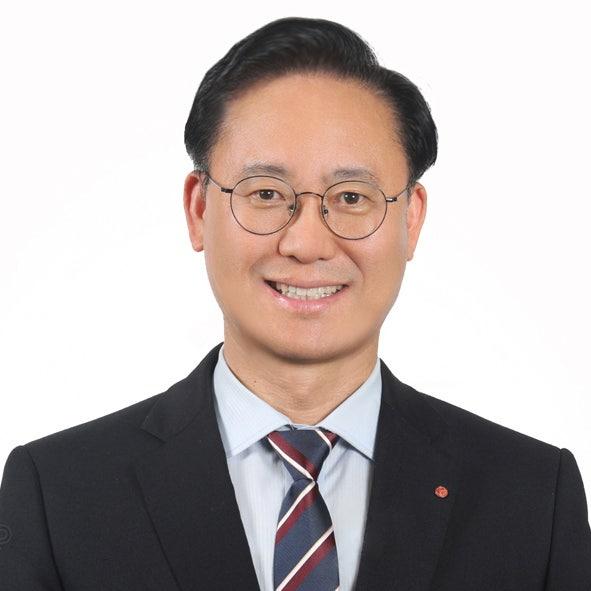
South Korea depends on trade, with a trade-to-GDP ratio of about 75%, the world’s second-highest, the author said. That makes exchange-rate swings from external shocks more than a market indicator, he wrote, calling on the government to build a stronger foreign-exchange “breakwater” on three fronts.
First, the author urged building foreign-exchange reserves toward $1 trillion. South Korea’s reserves stand at $420 billion, which he said is insufficient in a crisis and equals about 23% of gross domestic product. He compared that with Taiwan, Hong Kong and Switzerland, which he said hold reserves equal to 80% to 130% of GDP.
He cited Taiwan’s experience in the 1997 Asian financial crisis, saying its stockpiled reserves helped it remain stable. South Korea should expand reserves to $1 trillion, or about 50% of GDP, to provide psychological stability to markets, he wrote, arguing that readily deployable cash is the most practical shield against speculative attacks on the won.
Second, he called for restoring and expanding currency swap lines with the United States and Japan on a standing basis. If reserves are a country’s own capital, he wrote, swap lines are a second line of defense, like an overdraft. The $60 billion Korea-U.S. swap line has ended, and the Korea-Japan swap line has shrunk to about $10 billion from a previous $70 billion, he wrote. Swap lines with reserve-currency countries, he added, can convince markets that “Korea will not run short of dollars,” helping curb sharp exchange-rate spikes.
Third, he urged stricter debt management and stronger fiscal discipline. The IMF has warned about 2030, when South Korea’s government debt ratio is expected to reach 60%, he wrote. Including contingent liabilities such as civil servant and military pensions, he said broader public debt has already reached 181%. If fiscal weakness erodes external confidence, he warned, the won’s long-term weakening could accelerate.
The author also called for attracting more foreign investment by cutting South Korea’s corporate tax rate from 26% to the global average of 21% and easing regulations tied to the fourth industrial revolution. He wrote that new industries such as Uber, Airbnb and Tada have all been banned in South Korea, adding that the exchange rate is “the price of national credibility.”
He argued the government must also avoid injecting excessive liquidity. The government has finalized a 26 trillion won supplementary budget. Last year, South Korea posted 1% economic growth and 2% inflation, and he wrote that an appropriate money-supply increase would be about 3%. But he said the minimum wage was raised 2.9%, the annual budget was increased 8.1%, and including the 26 trillion won “war” supplementary budget would push the total above 9%. More won liquidity would fuel demand, lift prices and lead to a weaker currency, he wrote. South Korea’s ratio of money supplied relative to GDP is 154%, he said, compared with 71% for the United States.
Only preemptive action can prevent a “second IMF,” he wrote. Companies and individuals have accumulated more than $1 trillion in dollars, he said, but low-income households holding assets only in won would face greater hardship in an exchange-rate crisis. With war and global supply-chain restructuring, he added, exchange-rate stability is no longer solely the Bank of Korea’s task.
He urged an all-of-government push to build reserves, expand swap lines and strengthen fiscal discipline. The government, he wrote, should not miss the “golden time” to protect the economy and break what he described as an 86% probability that the exchange rate will keep rising. He called for a responsible choice between repeating a foreign-exchange crisis and protecting livelihoods through early action.
* This article has been translated by AI.
Copyright ⓒ Aju Press All rights reserved.