
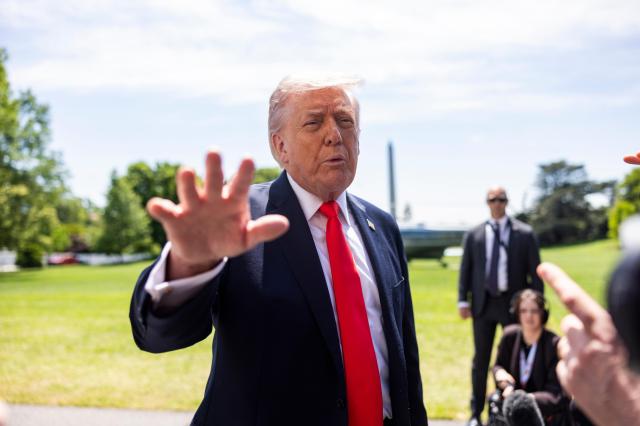
U.S. President Donald Trump said he will temporarily halt “Project Freedom,” a U.S. operation to help ships exit the Strait of Hormuz, just a day after it began, citing the possibility of a final agreement with Iran. While Trump signaled a shift toward negotiations, he said the U.S. maritime blockade on Iran would remain in place, and Iran continued to reject U.S. demands, leaving the outlook uncertain.
In a post Monday on Truth Social, Trump said Project Freedom would be paused “for a short period” to determine whether a deal can be “finally concluded and signed.” He said the decision reflected requests from Pakistan and other countries, what he called major U.S. military success against Iran, and “considerable progress” toward a complete agreement with Iranian representatives.
Trump also said the maritime blockade on Iran would continue, maintaining the effort to cut off Iran’s funding by restricting oil exports. Bloomberg News noted it was unclear what progress Trump was referring to and that he did not provide details on any talks under way.
Project Freedom had been presented as the next key step in the U.S. strategy toward Iran. The U.S. military said it supported two ships leaving the Strait of Hormuz the previous day and repelled multiple attacks by Iranian drones, missiles and irregular naval fast boats during the operation.
Defense Secretary Pete Hegseth and Joint Chiefs Chairman Dan Caine said the Pentagon had deployed air-defense-capable guided-missile destroyers, more than 100 aircraft, 15,000 troops in the region, underwater platforms and various drone forces.
Earlier Monday, Secretary of State Marco Rubio told reporters in the White House briefing room that “Operation Epic Fury is over. President Donald Trump has notified Congress,” adding, “That phase is over. We are now in Project Freedom.” He said the operation was needed because a closure of the Strait of Hormuz would hit the global economy, eventually affecting the U.S. economy, and could lead to similar disruptions in other international waterways if left unaddressed.
Strait of Hormuz still not reopened
Trump announced the pause only hours after senior U.S. officials described the military’s role in Project Freedom, adding to signs of confusion inside the U.S. government. New York Magazine criticized the episode, saying Trump should rename his Iran war “Project Chaos.”
Bloomberg said Trump appeared to be signaling an intent to end the war, but that a deal to reopen the Strait of Hormuz remained distant. It reported that Iran last week, through mediator Pakistan, proposed discussing reopening the strait first and then moving to nuclear-related talks. Trump rejected that proposal, and the pause in Project Freedom further undercut prospects for reopening the waterway, the report said.
Shipping company Hapag-Lloyd said in a statement that “nothing has changed” in the Strait of Hormuz and that passage remains impossible for its vessels. The BBC said what happens next is uncertain.
Iran also maintained a negative stance toward U.S. calls for negotiations. Semi-official Fars News Agency reported that President Masoud Pezeshkian, in a phone call with Iraq’s prime minister-designate Ali al-Zaidi, said the problem is that the United States pursues a “maximum pressure” policy while expecting Iran to come to the table and ultimately yield to unilateral U.S. demands. “This is an impossible equation,” he said.
Iran is also tightening control over the Strait of Hormuz. State-run Press TV reported that Iranian authorities have officially introduced new maritime rules requiring all ships transiting the strait to obtain prior passage permits. Under the rules, ships seeking to pass will receive guidance and transit regulations through an official Iranian email and must secure approval in advance.
Trump had urged South Korea to take part in Project Freedom, but with the operation now paused, South Korea faces the need to weigh its next steps carefully.
* This article has been translated by AI.
Copyright ⓒ Aju Press All rights reserved.