
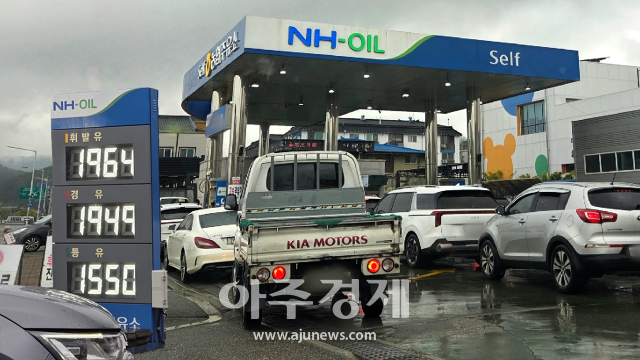
Industry officials said Tuesday that since the cap took effect, refiners’ losses and gas stations’ weakening profitability have mounted. If oil prices rise further, the government’s fiscal burden and industry pushback are expected to intensify.
According to the industry on Tuesday, both gas stations and refiners are struggling to secure supply and set prices under the current system. With supply prices and settlement rules unstable, uncertainty in the market is growing.
Gas stations say volatile supply prices and thinner margins are making it harder to lock in volumes. A gas station industry official said, “With no way to know how the next price-cap bracket will be set, it feels like a gamble, so it’s hard to either increase or cut volumes.”
Refiners also say the burden is rising because the government has set a ceiling on supply prices without clearly defining how losses will be compensated or what standards will apply. The industry estimates that since the cap began, losses at the country’s four major refiners have run to about 500 billion won a week and may have exceeded 3 trillion won in total, as price increases have not been fully reflected.
The government and the industry remain far apart on how to calculate compensation. Refiners argue that because petroleum products are produced jointly from crude oil, it is effectively impossible to calculate costs for each product, and losses should be assessed based on actual market prices. The government, however, is sticking to settlements based on verified costs, citing concerns about excessive compensation, fiscal strain and market distortions.
The industry also points to repeated gaps between market signals and policy decisions. In the second adjustment, factors pointed to increases of 260 won for gasoline and 480 won for diesel, but the actual increase was limited to 210 won. In the third price notice, gasoline was frozen despite upward pressure, while diesel rose 300 won. In the fourth, downward factors emerged but prices were again frozen. As a result, the suppressed increase factors have reached 125 won for gasoline and 628 won for diesel.
Industry officials say that apart from any short-term inflation relief, prolonged controls could shrink supply and raise the risk of a sharp price jump later. They also warn that if international oil prices climb further, refiners’ losses and the government’s fiscal burden would rise together, making the cap difficult to sustain.
Song Heon-jae, a professor of economics at the University of Seoul, said the cap “had some effect in the short term, but it will not be easy to keep it in place.” He added, “If enough crude does not come in, gas stations will not be able to get gasoline properly, and in extreme cases it would be hard to rule out sales only during certain hours or cars concentrating at some stations.”
* This article has been translated by AI.
Copyright ⓒ Aju Press All rights reserved.