
The Pro-Japanese Asset Investigation Committee has been reestablished to review and decide on matters related to pro-Japanese assets. The new law provides a legal basis for recovering proceeds from the sale of these assets and for rewarding whistleblowers who report pro-Japanese properties.
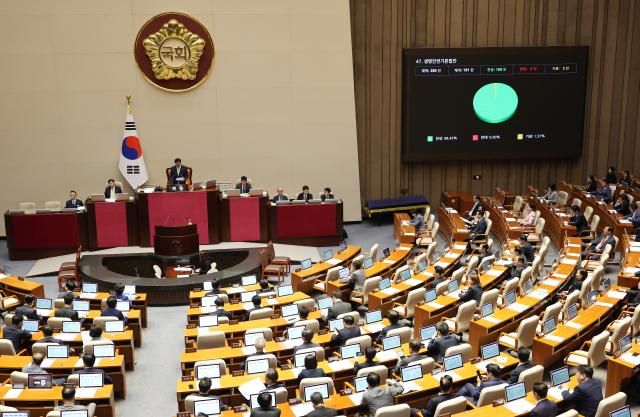
On May 7, the Justice Ministry announced that the Pro-Japanese Asset Confiscation Law passed the National Assembly. This law will take effect six months after its promulgation.
The committee will resume its activities after 16 years. The first committee, active from July 2006 to July 2010, successfully recovered approximately 237.3 billion won in pro-Japanese assets before concluding its work.
The new law not only reinstates the committee but also clarifies the legal framework for recovering proceeds from sold pro-Japanese assets and introduces reward provisions to encourage reporting.
Once the committee resumes its work, recovered assets will primarily support funds for independence activists and their families, contributing to their financial stability and commemorative projects.
In related developments, the Justice Ministry confirmed that descendants of pro-Japanese collaborator Im Seon-jun sold eight plots of land in Cheonsong-dong, Yeoju, between 1993 and 2000. On January 14, the ministry filed a lawsuit seeking the return of approximately 53 million won from the descendants.
On April 22, the Seoul Western District Court ruled in favor of the state, marking the first successful case following a Supreme Court ruling that deemed claims of expiration by descendants of pro-Japanese collaborators as an abuse of rights.
The Justice Ministry has also filed lawsuits for the return of properties belonging to descendants of other collaborators, including 31 plots in Ho-won-dong valued at about 7.8 billion won, 12 plots in Ilsan-dong valued at approximately 2.5 billion won, and two plots in Inchang-dong valued at around 3 billion won. These cases are currently in the first trial stage.
Justice Minister Jeong Seong-ho stated, "The enactment of this law represents a national commitment to fully address pro-Japanese collaboration, aiming to recover unjustly accumulated assets and restore historical justice."
* This article has been translated by AI.
Copyright ⓒ Aju Press All rights reserved.