
Similar scenes unfolded in Pyeongtaek and Busan's Buk-gu district. Jeong Kyung-shim, the spouse of candidate Cho Kuk, attended a local event, while Han Dong-hoon, another candidate, visited a senior center with his wife, attorney Jin Eun-jung, to greet residents. These moments symbolize the increasing importance of candidates' spouses in elections.
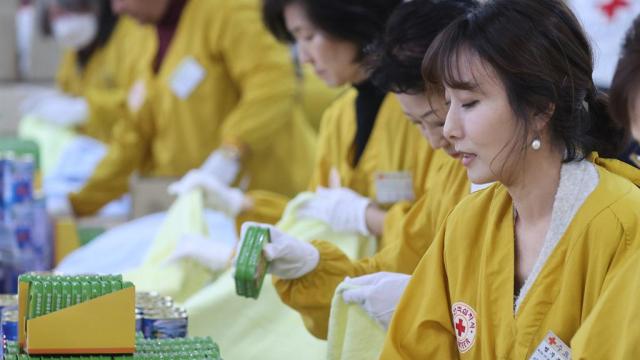
Politics is a personal competition, but voter judgment extends beyond the individual. Factors such as a candidate's lifestyle, relationship-building approach, and family dynamics are all considered. In this context, spouses serve as the closest reflection of a candidate's life, conveying their character more intuitively than official speeches or policies. While political messages are often delivered through words, spouses expand these messages through actions and relationships.
In this election, Cho Kuk's campaign strategy is relatively clear. Jeong Kyung-shim's public appearances convey a message of 'shared responsibility in politics.' Her presence at local events following their move to Pyeongtaek emphasizes a commitment to settling as a family rather than just a political maneuver. This approach fosters the perception among local voters that this is a long-term lifestyle choice rather than a short-term political tactic. Notably, the appearance of a well-known figure like Jeong at these events suggests a willingness to confront political challenges head-on.

Han Dong-hoon's approach differs somewhat. Jin Eun-jung has not been very active in public political life. Her participation in local events and casual interactions with residents highlights the candidate's image as a relatable individual. This strategy builds trust through everyday contact rather than overt political messaging. It can also be seen as a way for a strong political figure to soften their image through their spouse.
Both examples, while differing in approach, illustrate a common trend. Spouses are no longer mere background figures; they play a crucial role in connecting voters and candidates. This role is particularly pronounced in local elections, where establishing familiarity in a short time is essential. The presence of a spouse can effectively reduce distance between candidates and voters.
This trend is not unique to South Korea; it has become a standard practice in international politics. In the United States, candidates' spouses are integral to election strategies. During Barack Obama's campaigns, Michelle Obama played a key role in enhancing his public appeal. Her speeches and campaign appearances conveyed independent political messages beyond mere support. Similarly, Hillary Clinton actively participated in Bill Clinton's campaigns, complementing his policy understanding. Her evolution into a political leader illustrates how the role of a spouse can expand.
A similar trend is observed in Europe. Brigitte Macron, the spouse of French President Emmanuel Macron, has maintained a public presence that influences political image formation. In Japan, Akie Abe, the wife of former Prime Minister Shinzo Abe, gained attention through her active public engagements. While the systems and cultures differ across countries, the role of spouses in elections and political processes is a common thread.
The backdrop of these changes lies in the structural transformation of the political environment. As information dissemination methods diversify and voter evaluation criteria expand, politicians are no longer judged solely on policies. A comprehensive image that includes lifestyle, values, and relationships has become crucial. Spouses serve as the most intuitive window into these elements. As politics increasingly becomes a competition of 'visible lives,' the role of spouses naturally expands.
However, this trend carries both positive aspects and clear limitations. Spousal involvement can enhance a candidate's message and broaden voter engagement. Yet, the influence of individuals without public accountability in the political process raises questions. Particularly when a spouse's past or personal controversies become election issues, policy debates may be overshadowed by character-based conflicts.
In South Korean politics, the role of spouses is not institutionally defined. There are no official positions or clear accountability structures. Nevertheless, their actual influence is growing. This gap presents a challenge that must be addressed moving forward. Without established social standards for the scope and responsibilities of spouses, unnecessary controversies are likely to recur during elections.
Nonetheless, one thing is clear: the presence of spouses is not a temporary phenomenon but part of a structural change. Voters are making decisions based on more information, and politicians must explain themselves through a broader array of factors. In this process, spouses are taking on significant roles.
The cases of Cho Kuk and Han Dong-hoon symbolically illustrate this change. While they present their spouses in different ways, both are expanding their candidates' messages. One emphasizes responsibility and unity, while the other highlights everyday life and intimacy. The strategies differ, but the direction is the same: politics is evolving into a more multifaceted competition.
Ultimately, the essence of elections remains unchanged. Voters choose based on candidates' abilities and visions. However, the factors influencing that judgment are continually increasing. Spouses are among the most prominent variables in this evolving landscape.
Politics is a process of selecting individuals. And individuals exist within relationships. The presence of spouses is one way to showcase those relationships. Whether this has a positive or burdensome effect ultimately depends on voter judgment. The scenes from this election illustrate how the criteria for that judgment are expanding.
* This article has been translated by AI.
Copyright ⓒ Aju Press All rights reserved.