
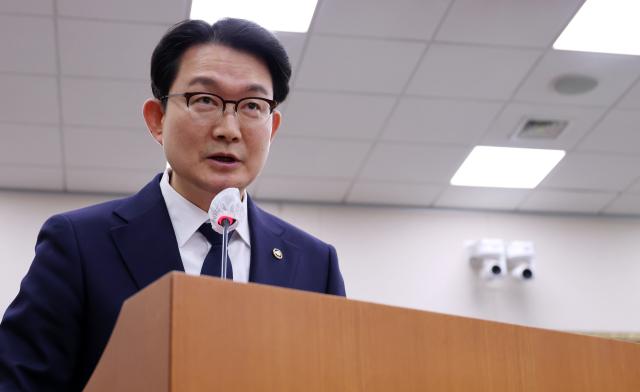
On May 8, the Ministry of Agriculture, Food and Rural Affairs announced the launch of a task force (TF) to develop a strategy for the energy transition in agriculture and rural areas during its first meeting at the Government Sejong Center.
This task force will comprehensively address rural energy independence, agricultural energy transition, and ways to utilize agricultural and rural resources to contribute to national energy transformation. It plans to establish a renewable energy transition roadmap and detailed implementation tasks by July.
Amid rising energy price volatility due to recent instability in the Middle East, the agricultural sector, which is experiencing increased energy demand from the expansion of smart farms and electrification, is facing greater burdens. The government aims to shift agriculture from an energy-consuming industry to a producer and supplier of energy in response to these changing conditions.
Specifically, to achieve rural energy independence, the government will promote the expansion of solar energy in farming, the establishment of energy-independent villages, and the distribution of solar power systems for farms. This initiative aims to create a "locally produced, locally consumed" energy structure in rural areas.
The government will also work on improving energy efficiency throughout the entire agricultural production process. This includes transitioning old farming machinery to electric and hydrogen-based systems, expanding renewable energy facilities in greenhouses and livestock farms, and introducing self-generation facilities in processing facilities such as distribution centers and slaughterhouses.
Additionally, renewable energy production models utilizing agricultural infrastructure like reclaimed land and reservoirs, as well as biomass from livestock waste and agricultural byproducts, will be established. The government expects rural areas to function as energy production hubs, providing additional sources of income.
The task force is led by Kim Jong-gu, Deputy Minister of Agriculture, Food and Rural Affairs, and Kim Jeong-wook, Director of Agricultural Industry Innovation Policy, with three divisions focusing on rural energy independence, agricultural energy transition, and agricultural resource utilization, all staffed by senior officials. A private advisory group comprising industry and academic experts will also be involved.
Based on the discussions of the task force, the government plans to gradually implement energy transition policies that can be felt in the agricultural and rural sectors, alongside financial projects and institutional improvements.
On this day, Deputy Minister Kim stated, "Energy security is food security," adding that the government plans to establish fundamental principles and performance indicators for the energy transition in agriculture and rural areas that align with the national renewable energy transition policy, as well as to refine related systems.
* This article has been translated by AI.
Copyright ⓒ Aju Press All rights reserved.