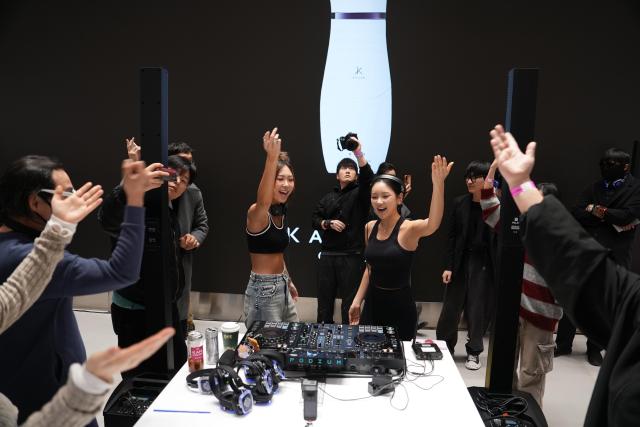
Walk through Seoul on any weekend morning and the evidence is everywhere: colour-coordinated running crews streaming through Han River parks, Strava segments being contested with the intensity of corporate quarterly targets, and, at every major sports retailer, empty shelves.
"During marathon season, running attire and gear are completely sold out on and offline," a Lululemon Korea representative told AJP. "High-performance gear across all major brands becomes nearly impossible to find, even for those willing to pay a premium."
The numbers behind the scene are striking. South Korea's running participation rate jumped from 4.8 percent in 2024 to 7.7 percent in 2025.
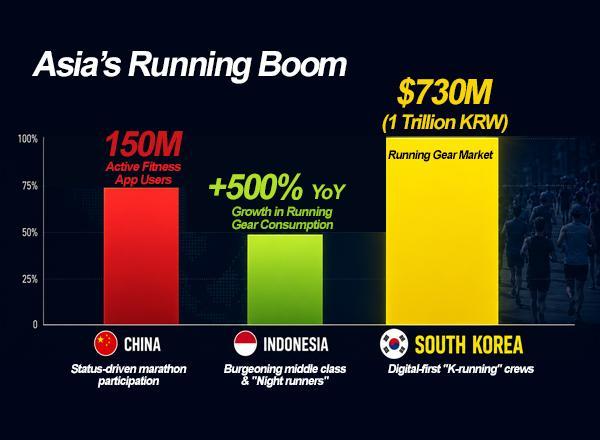
One in three Korean adults now wears a smartwatch. The domestic running gear market has surpassed 1 trillion won ($730 million). What began during the COVID-19 pandemic as an escape from shuttered gyms has evolved into something far more elaborate: a data-intensive, socially networked lifestyle sport with its own aesthetic codes, digital rituals, and — inevitably — growing pains.
The phenomenon even has its own villain arc. "Nuisance running," or minpye — where large organised crews block pedestrian pathways — has become a fixture of local media debate. Korea's running boom, it turns out, is social enough to cause traffic.
Samsung is paying close attention to all of it.
At a media briefing in Seoul on Thursday, the company revealed that its Samsung Health platform has reached 77 million monthly active users globally. The pitch from Samsung's MX Business Digital Health Team was pointed: the winner of Asia's health technology war will not be the brand that tracks the fastest kilometre split. It will be the one that understands the runner's entire life.
"Running is merely one component of our broader goal," said Choi Jun-il, Vice President at Samsung's Digital Health Team. "Because we manage everything from sleep and diet to mental health, stress measurement, and heart health, we believe we have a clear point of differentiation from competitors like Apple or Garmin."
The strategy is anchored in holistic data rather than athletic performance alone — a distinction that matters in a market where elite runners have shifted their priorities accordingly. Eun-ju Kwon, a former national marathon record holder and Samsung Health ambassador, put it plainly: "Instead of just focusing on my pace, what matters most to me now is whether I slept well. I check my sleep and energy scores every morning."
Korea, in Samsung's view, is the testbed. The rest of Asia is the market.
And that market is vast and wildly varied. China has over 150 million active fitness app users, where marathon participation has become a premier status symbol among the urban professional class. Indonesia is experiencing something closer to an explosion: regional e-commerce data shows running gear consumption surged more than 500 percent year-on-year, driven by a growing middle class and a distinctive "night runner" culture shaped by the country's tropical climate. Samsung's Galaxy Watch BioActive sensor — tracking six advanced running metrics including ground contact time and vertical oscillation — is designed to adapt to each of these local cultures rather than impose a single template.
The logic extends well beyond sport. Biometric data from hundreds of millions of daily users, aggregated and analysed at scale, is among the most valuable datasets an AI-era technology company can hold. Samsung's running play is, at its core, a data accumulation strategy dressed in moisture-wicking fabric.
Korea exported its pop culture. It exported its cinema. Now it is attempting to export its running culture — and the digital infrastructure that comes with it.
The shoes may be Korean. The ambition is continental.

Copyright ⓒ Aju Press All rights reserved.