
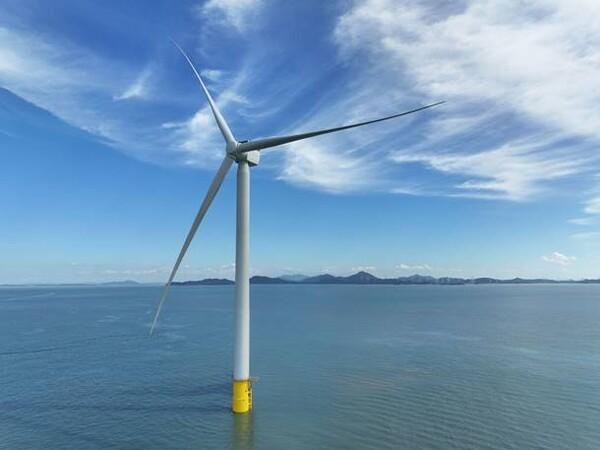
On May 15, the Ministry of Climate, Energy, and Environment held a signing ceremony and meeting for the promotion of joint offshore wind connections at the Korea Electric Power Corporation's Gyeongin Construction Headquarters.
This initiative follows the announcement last December of plans to expand and promote offshore wind infrastructure. At that time, the government outlined a goal to increase the current offshore wind capacity of 0.35 gigawatts (GW) to 10.5 GW by 2030, raising it by 4 GW annually.
The government decided to focus on enhancing key infrastructure for offshore wind construction, including ports, installation vessels, and financing. It also aimed to streamline the military operational consultations, which are crucial for project approvals, and to announce plans for long-term supply bidding more promptly. Additionally, a new offshore wind power promotion team at the director level was established, with plans to conduct site bidding starting in 2029, reducing the average project duration from about 10 years to 6.5 years.
Previously, offshore wind projects were pursued through individual connections, with each developer building separate lines to land substations. However, as offshore wind farms have grown larger, this has led to increased costs from redundant transmission lines and grid shortages.
In response, the government plans to proactively establish a joint connection facility, allowing multiple offshore wind developers to connect at public hubs on islands or coastal areas for rapid integration and expansion.
This approach is expected to reduce connection costs, thereby lowering the cost of offshore wind power generation and decreasing Korea Electric Power Corporation's (KEPCO) electricity purchasing expenses. Furthermore, in areas where KEPCO's shared network and offshore wind connection lines are adjacent, integrated facilities are anticipated to lower KEPCO's investment costs in the grid.
During the event, a memorandum of understanding (MOU) was signed between KEPCO and offshore wind developers in the Haenam region, which is one of nine candidate sites for joint connections. As a result, the total length of connection lines is projected to decrease from 703 km to 287 km, a reduction of 59%. The total investment is expected to drop by 3.6 trillion won compared to individual connections, with an anticipated average reduction of 20 won per kilowatt-hour in offshore wind generation costs.
Following the signing ceremony, the Ministry of Climate and KEPCO introduced detailed plans for the joint connection initiative during a subsequent meeting. The government aims to expand joint connections in areas densely populated with offshore wind projects through consultations among developers by the third quarter of this year. To facilitate this, they will gather opinions on cost-sharing plans that harmonize institutional support with principles of public benefit and beneficiary burden.
Minister of Climate, Energy, and Environment Kim Seong-hwan stated, "The expansion of renewable energy is a core issue of energy security that is vital for the nation's survival. The promotion of offshore wind power must be approached from the perspective of national infrastructure management. The government will be a strong ally in breaking down the uncertainties of grid connections and the barriers to permits faced by offshore wind developers."
* This article has been translated by AI.
Copyright ⓒ Aju Press All rights reserved.