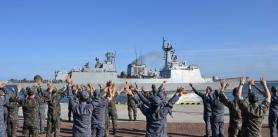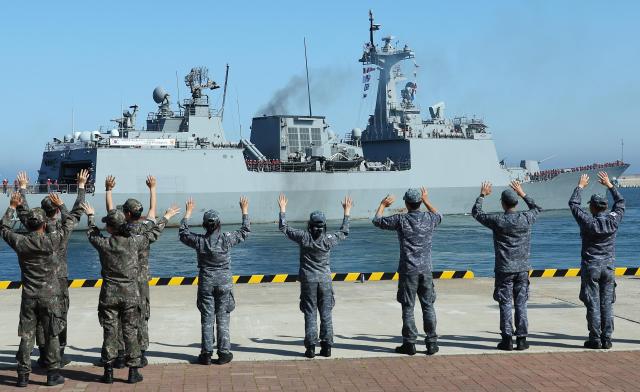
The 4,400-ton Wang Geon, a Chungmugong Yi Sun-sin-class destroyer, left Busan Naval Base at 4 p.m. after a send-off ceremony attended by service members and their families.
The 48th rotation of the Cheonghae Unit consists of about 260 personnel, including the ship’s crew, command staff, a UDT/SEAL boarding team, an aviation unit operating a Lynx maritime helicopter, and Marine Corps, medical and maintenance support personnel.
The Navy said about 80 members, or roughly 30 percent of the unit, have previous experience serving with the Cheonghae Unit.
The unit will carry out anti-piracy operations in the Gulf of Aden, escort vessels and support safe navigation. It is also tasked with protecting South Korean nationals in emergencies and participating in maritime security operations led by the Combined Maritime Forces and the European Union Naval Force Somalia.
Under the deployment approval passed by the National Assembly, the Cheonghae Unit’s operational area is limited to waters around the Gulf of Aden.
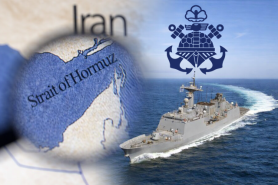
However, speculation has grown that the unit’s mission area could be expanded to the Strait of Hormuz if Seoul decides to join U.S.-proposed military cooperation efforts aimed at reopening the key waterway. Such a move would require parliamentary approval.
The 48th rotation has strengthened its counter-drone defense system, reflecting concerns over threats such as explosive drones used during the Iran war.
A Navy official said the upgrade was not made with a possible Hormuz deployment in mind, but was intended to prepare for various threats that could arise during the unit’s mission.
The currently deployed Dae Jo-yeong destroyer is also known to have established communication channels with South Korean vessels near the Strait of Hormuz and has been checking their safety conditions.
The Cheonghae Unit is expected to take three to four weeks to reach the Gulf of Aden and replace the 47th rotation next month.
At the ceremony, Navy Chief of Staff Adm. Kim Kyung-ryul said the Cheonghae Unit “symbolizes the strong naval power of the Republic of Korea” and shows the country’s role as a responsible global state.
Col. Ahn Woo-jin, commander of the 48th rotation, said the unit would work as “one team” to complete its mission.
Oceans Minister Hwang Jong-woo asked the unit to protect South Korean vessels, saying ships flying the Korean flag are “our territory moving across the world.”
Launched in March 2009, the Cheonghae Unit has escorted more than 2,400 vessels and supported the safe navigation of about 39,000 ships over the past 17 years.

Copyright ⓒ Aju Press All rights reserved.