
Hyundai Motor Group is set to re-enter the Japanese and Chinese markets. In Japan, facing severe labor shortages due to an aging population, the company will introduce purpose-built vehicles (PBVs). In China, where competition among local electric vehicle manufacturers is fierce, Hyundai plans to launch thoroughly localized electric vehicles under its "In China, For China" strategy.
Unlike its successful foothold in the U.S. and Europe, and its emerging growth in India and Southeast Asia, Japan and China are considered challenging markets due to strong patriotic consumer culture, often referred to as the "graveyard of imported cars." Hyundai aims to strengthen its presence in Asia to become a global top-tier company.
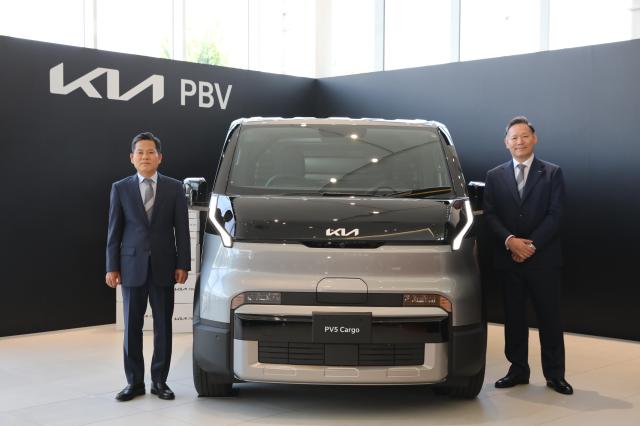
According to industry sources, Kia announced the launch of its first dedicated PBV model, the "PV5," on May 13 at its Tokyo-based Kia PBV Japan showroom. The PV5, tailored to meet the diverse business environments and lifestyles of local customers, features a customized vehicle structure and advanced technologies.
Japan is grappling with various social issues, including labor shortages, logistics challenges, and increased gaps in regional transportation due to rapid aging. The PV5 aims to provide a new alternative in Japan's limited electric commercial vehicle market while addressing these social issues.
The PV5 is equipped with V2L (Vehicle-to-Load) and V2H (Vehicle-to-Home) specifications, allowing it to serve as an emergency power source during disasters like earthquakes. It also incorporates the CHAdeMO charging method, enhancing usability for the Japanese market.
The Japanese government plans for 30% of new car sales to be electric vehicles by 2030. In response to the growing demand for small and medium-sized electric vans, Kia will first launch passenger and cargo models of the PV5, followed by a wheelchair-accessible version (PV5 WAV), with plans to introduce a successor model, the PV7, by 2028 to boost local sales.
To effectively penetrate the Japanese market, Kia has established a partnership with Sojitz Corporation, a prominent general trading company. As part of this collaboration, Kia PBV Japan was launched in April last year to develop PBV operations in Japan. Kia PBV Japan currently operates seven dealerships, including the Tokyo-based showroom, and 52 service centers, with plans to expand to 11 dealerships and 100 service centers by the end of the year.
Kim Sang-dae, Vice President of Kia PBV Business Division, stated, "The launch of the PV5 in Japan is a significant milestone that showcases Kia's product competitiveness and brand trust. We aim to build long-term trust with Japanese customers and establish ourselves as a reliable partner supporting their transition to electrification."
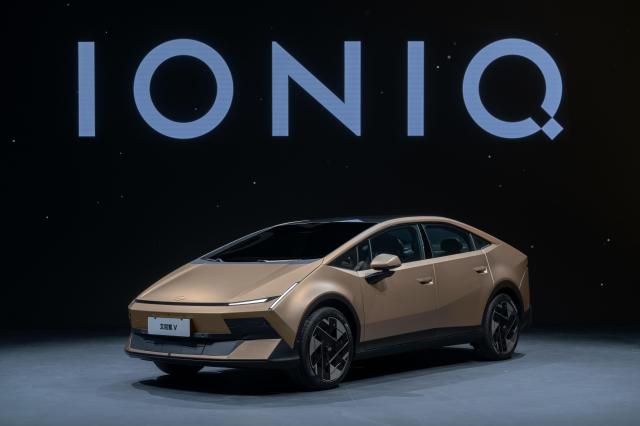
In China, Hyundai will introduce the Ioniq V, the first model developed specifically for the Chinese market. Moving away from the previous strategy of selling global models, the Ioniq V has been designed with a focus on local consumer preferences, featuring batteries from China's CATL, advanced driver-assistance systems (ADAS) from Momentus, AI voice recognition based on Baidu, and infotainment systems that reflect the lifestyle of Chinese consumers.
Hyundai is also preparing to launch an extended-range electric vehicle (EREV) to cater to the rapidly growing market in China, which has been traditionally focused on pure electric vehicles. EREVs utilize an internal combustion engine to charge the battery, significantly extending driving range, which is expected to attract consumers in China's less developed regions where charging infrastructure is limited. Hyundai aims to complete a lineup of over 20 models, including six electric vehicles, by 2030, targeting annual sales of 500,000 units in China.
Both China and Japan present significant challenges for Hyundai Motor Group due to high brand loyalty towards domestic manufacturers, including BYD, Xiaopeng, and Toyota, which have become global automotive leaders.
China, in particular, is the world's largest automotive market, with an annual volume exceeding 30 million vehicles, more than double that of the U.S. It is also a battleground for electric vehicle battery and software technology development, making it essential for Hyundai to establish a foothold in this market.
Japan is known as one of the most demanding automotive markets globally, and success there is seen as a testament to winning in quality and detail. If Korean cars, once viewed as alternatives to Japanese vehicles, gain acceptance among Japanese consumers, they could elevate to true premium brands in the global market, according to industry assessments.
An industry insider remarked, "If Hyundai secures an advantage in the fiercely competitive local market in China and achieves success in Japan, which is the home ground of global leader Toyota, it would be as symbolic as its achievements in the U.S. or Europe. China and Japan are the final pieces of the puzzle for Hyundai to reach global leadership."
* This article has been translated by AI.
Copyright ⓒ Aju Press All rights reserved.