
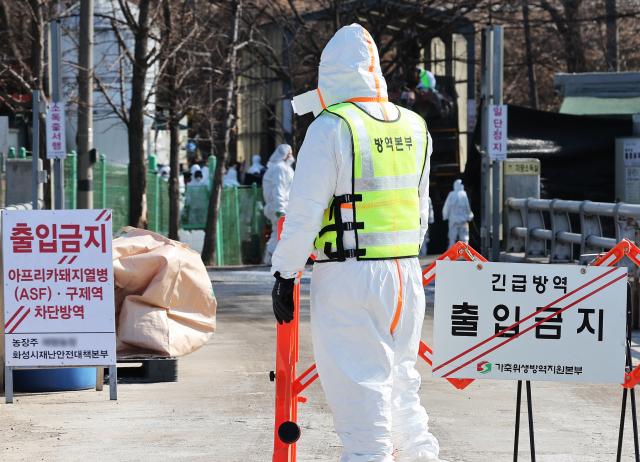
This year, 87% of the confirmed cases of African swine fever (ASF) in South Korean farms have been traced back to foreign sources. The primary routes of transmission are believed to be through feed ingredients and the compounded feed made from them.
The Animal and Plant Quarantine Agency released the findings of its epidemiological investigation into the causes of ASF on May 19. Between January 16 and March 16, 24 cases of ASF were reported across seven provinces nationwide. Notably, the disease spread to regions beyond the previously affected areas of Gyeonggi, Gangwon, and North Gyeongsang, including South Chungcheong, North Jeolla, South Jeolla, and South Gyeongsang.
Of the 24 cases, three were of a type previously identified in South Korea, while 21 were linked to strains originating from abroad. Key factors contributing to the outbreak include infection through feed ingredients, illegal distribution of livestock products, and contamination from wild boars.
The Central Disaster Management Headquarters noted that ASF genes from foreign strains were detected in feed ingredients and compounded feed supplied to the affected farms, confirming a link between the farms and the contaminated feed. Additionally, ASF genes were found in six unreported products seized during crackdowns on illegal livestock products, raising concerns about the potential for virus entry through border inspection networks. Authorities also believe that contamination from wild boar carcasses may have transmitted the virus to domesticated pigs on farms.
The Central Disaster Management Headquarters is enhancing its biosecurity measures. A testing system for ASF has been established, requiring inspections of all pigs being shipped from slaughterhouses nationwide. To prevent ASF entry through illegal livestock products, the agency is expanding X-ray inspections of travelers' luggage.
Park Jeong-hoon, head of the Food Policy Office at the Ministry of Agriculture, Food and Rural Affairs, stated, "We are implementing proactive biosecurity measures starting from the entry of foreign workers to slaughterhouses and wild boars to prevent a recurrence of ASF. We urge farms to actively cooperate with biosecurity management, including restricting access for people and vehicles and prohibiting the entry of illegal livestock products into farms."
* This article has been translated by AI.
Copyright ⓒ Aju Press All rights reserved.