
The Ministry of Land, Infrastructure and Transport has launched an audit of Seoul City and the Korea Railroad Corporation (KRC) following a significant incident of missing rebar in the GTX-A line at Samsung Station. The situation escalated into a dispute over accountability after it was revealed that there was a lack of official communication among relevant agencies for about six months after the rebar deficiency was confirmed, raising concerns about the overall project management system beyond mere construction flaws.
According to the Ministry of Land and construction industry sources, the ministry notified Seoul City and KRC on May 18 of an audit regarding allegations of poor construction and delays in reporting related to the underground complex development at the GTX-A Samsung Station section. Investigators will conduct a preliminary investigation by May 21, followed by a formal audit starting May 22.
A ministry official stated, "This audit aims to examine whether there were issues in the overall management of this national project," adding that they plan to verify the reasons for the reporting delays by comparing the materials and explanations submitted by Seoul City and KRC.
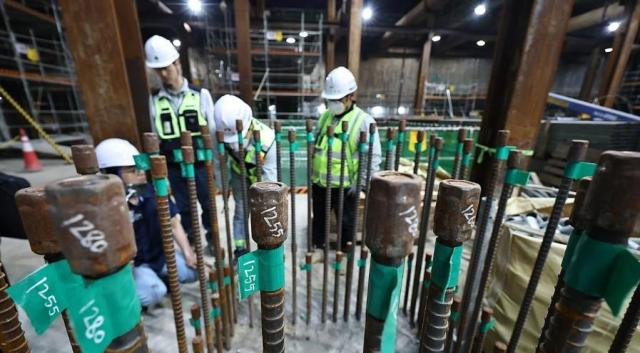
Last November, Hyundai Engineering & Construction, the contractor, discovered the missing main rebar in the underground platform structure during an internal quality inspection and reported it to Seoul City. It was confirmed that some rebar, which should have been installed in two rows according to the design, was only installed in one row, with approximately 2,500 pieces missing, totaling 178 tons.
The issue lies in the subsequent response. Seoul City claims it submitted a construction management report, which included the relevant information, to KRC three times between November and January, following the construction management agreement procedures. They explained that time was needed to review and finalize reinforcement methods, sharing the final reinforcement plan with KRC and the Ministry of Land at the end of last month.
In contrast, KRC argues that Seoul City treated the significant safety defect as merely internal documentation rather than a formal report. KRC stated, "The monthly construction management reports submitted by Seoul City are extensive, often running into thousands of pages, making it difficult to immediately recognize the missing rebar issue, which was only included in a portion of the construction management log."
There are concerns within the industry that a more direct and clear reporting system should have been in place for such a critical defect in national railway infrastructure. Relying solely on the submission of management reports may have hindered relevant agencies from immediately grasping the severity of the issue.
Seoul City maintains that there were no procedural issues, with a city official stating, "A review by structural engineers confirmed that there are currently no issues with structural safety," and that they finalized and shared the reinforcement plan after a comprehensive review of safety and construction feasibility.
However, voices within KRC and beyond have raised concerns that given the significant defect in a key national railway project, more proactive external communication and separate reporting should have been necessary. The ongoing dispute over accountability suggests that the reporting system at the time was not functioning effectively.
The responsibility of Hyundai Engineering & Construction is also under scrutiny. The Citizens' Coalition for Economic Justice issued a statement asserting that both the contractor and the inspection team bear significant responsibility, calling for a review of structural subcontracting practices and the avoidance of direct construction issues in large projects.
Hyundai Engineering & Construction has proposed a reinforcement method that involves wrapping the deficient column exteriors with thick steel plates and welding them. Seoul City believes this method will ensure strength beyond design standards, but the Ministry of Land has stated it will not allow the resumption of reinforcement work until verification by an accredited institution is completed.
* This article has been translated by AI.
Copyright ⓒ Aju Press All rights reserved.