
The heart of South Korea's industry is shaking. The world is entering a massive industrial war over artificial intelligence (AI) and semiconductors. The United States and China are engaged in a fierce competition for AI supremacy, with companies like NVIDIA, TSMC, Samsung Electronics, and SK Hynix evolving from mere private enterprises to national strategic assets. Particularly, the semiconductor industry has transformed into a completely different realm compared to traditional manufacturing. It is a hyper-capital-intensive sector requiring hundreds of trillions of won in facility investments, research and development (R&D), ultra-fine process competition, expansion of AI data centers, and acquisition of advanced packaging technologies.
In this context, the recent controversy over Samsung Electronics' union's demand for performance bonuses raises significant questions for our society. To what extent should labor rights be respected? What sense of responsibility should a union overseeing a core national industry possess?
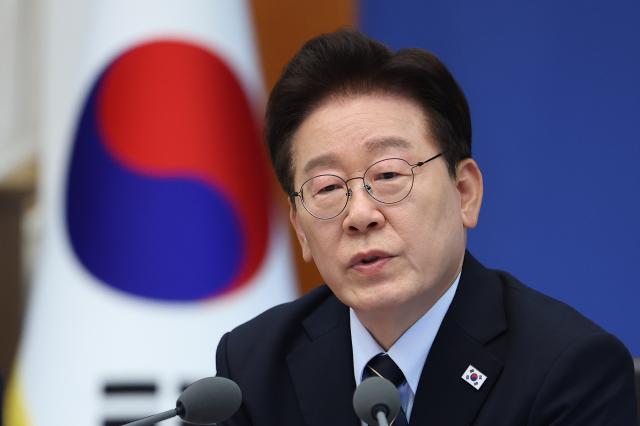
President Lee Jae-myung's remarks on labor rights and social responsibility during a recent Cabinet meeting are noteworthy in this regard. The president acknowledged that the three labor rights are constitutional safeguards for the socially vulnerable, while emphasizing that all rights come with responsibilities and limits. His comment regarding the demand to directly distribute a certain percentage of operating profit as a request that even investors would not make was a very realistic observation.
A company cannot simply distribute its profits just because it has made a lot of money this year. The AI and semiconductor industries are fundamentally different from traditional manufacturing. These sectors must reinvest most of today's earnings into future investments to survive.
One of the most critical concepts in the semiconductor industry is capital expenditure (CapEx). Building a state-of-the-art semiconductor factory costs tens of trillions of won. Securing high-bandwidth memory (HBM) for AI, next-generation foundries, ultra-fine processes, and advanced equipment requires astronomical funding. With U.S. companies like NVIDIA and AMD, Taiwan's TSMC, and China's SMIC engaged in a frenzied investment competition under national support, missing the timing for investment could shake the entire South Korean industry. In the AI era, the semiconductor industry prioritizes future investments over today's achievements. Even if this year’s operating profit reaches 300 trillion won, it does not immediately translate to 'surplus funds.' Most of it must be reinvested for future factories, AI infrastructure, R&D, and securing global supply chains.
However, demanding a certain percentage of operating profit before taxes is a simplistic view of the industry's structure. This is not to undermine the contributions of workers. The competitiveness of Samsung Electronics and SK Hynix is due to the presence of world-class engineers and workers. The value of labor and rightful compensation must be respected. Yet, South Korea's unions must now adopt a progressive sense of responsibility that aligns with the changing global industrial landscape.
The logic of unions from the past manufacturing era cannot adequately address the AI age. Today's global competition is not just a corporate issue; it is tied to national survival. This is why the U.S., China, Japan, and Taiwan support their semiconductor industries at the national level. The Samsung Electronics union must now move beyond a narrow focus on wage struggles to consider the competitiveness of South Korea's industry as a whole. Particularly, unions at global companies like Samsung Electronics must take into account their impact on global investors, markets, and the entire South Korean economy. Excessive debates over performance bonuses and extreme demands could ultimately weaken Samsung's competitiveness, which would return as a burden on the national economy. Currently, South Korea's economy is not in a comfortable position. With low growth, low birth rates, China's technological catch-up, U.S. tariff pressures, the Middle East energy crisis, and the restructuring of global supply chains, the entire South Korean economy is facing a significant test. If labor, capital, companies, and the government begin to drift toward extremes during such a time, the future of South Korea's industry will inevitably be shaken.
We must view the past 30 years of Europe losing industrial vitality under excessive stakeholder capitalism and regulation with a critical eye. The crisis in Germany's automotive industry and the absence of major tech companies in Europe are not coincidences. In contrast, the U.S. has fostered super-innovative companies like NVIDIA, Apple, and Microsoft through bold investments and a capital market-centered structure. South Korea has also grown into a global semiconductor powerhouse through Samsung Electronics and SK Hynix.
Now, South Korean unions must change. They need to evolve from a struggle-centered approach to a strategic union that considers industrial competitiveness and the future of the nation. A model of advanced unions is needed that goes beyond demands for wages and welfare to include discussions on technological innovation, productivity improvement, and long-term investment stability. Unions should not become adversaries of companies. Likewise, companies should not view workers merely as costs. There needs to be a shared understanding that both are part of a common destiny supporting South Korea's industrial ecosystem. In this context, President Lee Jae-myung's remarks convey a crucial message: rights must be respected, but all rights come with responsibilities and balance.
The Samsung Electronics union must take President Lee's realistic warning seriously. What is needed now is not excessive demands and political slogans, but a mature sense of solidarity that contemplates the re-emergence of South Korea's industry together. The AI and semiconductor war has already begun. Now, South Korea's unions must move beyond past struggle logic to become advanced unions that jointly bear responsibility for future industries and national competitiveness. This is the path that will benefit both labor and companies, ultimately leading to a resurgence of the entire South Korean economy.
In this context, the recent controversy over Samsung Electronics' union's demand for performance bonuses raises significant questions for our society. To what extent should labor rights be respected? What sense of responsibility should a union overseeing a core national industry possess?
President Lee Jae-myung's remarks on labor rights and social responsibility during a recent Cabinet meeting are noteworthy in this regard. The president acknowledged that the three labor rights are constitutional safeguards for the socially vulnerable, while emphasizing that all rights come with responsibilities and limits. His comment regarding the demand to directly distribute a certain percentage of operating profit as a request that even investors would not make was a very realistic observation.
A company cannot simply distribute its profits just because it has made a lot of money this year. The AI and semiconductor industries are fundamentally different from traditional manufacturing. These sectors must reinvest most of today's earnings into future investments to survive.
One of the most critical concepts in the semiconductor industry is capital expenditure (CapEx). Building a state-of-the-art semiconductor factory costs tens of trillions of won. Securing high-bandwidth memory (HBM) for AI, next-generation foundries, ultra-fine processes, and advanced equipment requires astronomical funding. With U.S. companies like NVIDIA and AMD, Taiwan's TSMC, and China's SMIC engaged in a frenzied investment competition under national support, missing the timing for investment could shake the entire South Korean industry. In the AI era, the semiconductor industry prioritizes future investments over today's achievements. Even if this year’s operating profit reaches 300 trillion won, it does not immediately translate to 'surplus funds.' Most of it must be reinvested for future factories, AI infrastructure, R&D, and securing global supply chains.
However, demanding a certain percentage of operating profit before taxes is a simplistic view of the industry's structure. This is not to undermine the contributions of workers. The competitiveness of Samsung Electronics and SK Hynix is due to the presence of world-class engineers and workers. The value of labor and rightful compensation must be respected. Yet, South Korea's unions must now adopt a progressive sense of responsibility that aligns with the changing global industrial landscape.
The logic of unions from the past manufacturing era cannot adequately address the AI age. Today's global competition is not just a corporate issue; it is tied to national survival. This is why the U.S., China, Japan, and Taiwan support their semiconductor industries at the national level. The Samsung Electronics union must now move beyond a narrow focus on wage struggles to consider the competitiveness of South Korea's industry as a whole. Particularly, unions at global companies like Samsung Electronics must take into account their impact on global investors, markets, and the entire South Korean economy. Excessive debates over performance bonuses and extreme demands could ultimately weaken Samsung's competitiveness, which would return as a burden on the national economy. Currently, South Korea's economy is not in a comfortable position. With low growth, low birth rates, China's technological catch-up, U.S. tariff pressures, the Middle East energy crisis, and the restructuring of global supply chains, the entire South Korean economy is facing a significant test. If labor, capital, companies, and the government begin to drift toward extremes during such a time, the future of South Korea's industry will inevitably be shaken.
We must view the past 30 years of Europe losing industrial vitality under excessive stakeholder capitalism and regulation with a critical eye. The crisis in Germany's automotive industry and the absence of major tech companies in Europe are not coincidences. In contrast, the U.S. has fostered super-innovative companies like NVIDIA, Apple, and Microsoft through bold investments and a capital market-centered structure. South Korea has also grown into a global semiconductor powerhouse through Samsung Electronics and SK Hynix.
Now, South Korean unions must change. They need to evolve from a struggle-centered approach to a strategic union that considers industrial competitiveness and the future of the nation. A model of advanced unions is needed that goes beyond demands for wages and welfare to include discussions on technological innovation, productivity improvement, and long-term investment stability. Unions should not become adversaries of companies. Likewise, companies should not view workers merely as costs. There needs to be a shared understanding that both are part of a common destiny supporting South Korea's industrial ecosystem. In this context, President Lee Jae-myung's remarks convey a crucial message: rights must be respected, but all rights come with responsibilities and balance.
The Samsung Electronics union must take President Lee's realistic warning seriously. What is needed now is not excessive demands and political slogans, but a mature sense of solidarity that contemplates the re-emergence of South Korea's industry together. The AI and semiconductor war has already begun. Now, South Korea's unions must move beyond past struggle logic to become advanced unions that jointly bear responsibility for future industries and national competitiveness. This is the path that will benefit both labor and companies, ultimately leading to a resurgence of the entire South Korean economy.
* This article has been translated by AI.
Copyright ⓒ Aju Press All rights reserved.