
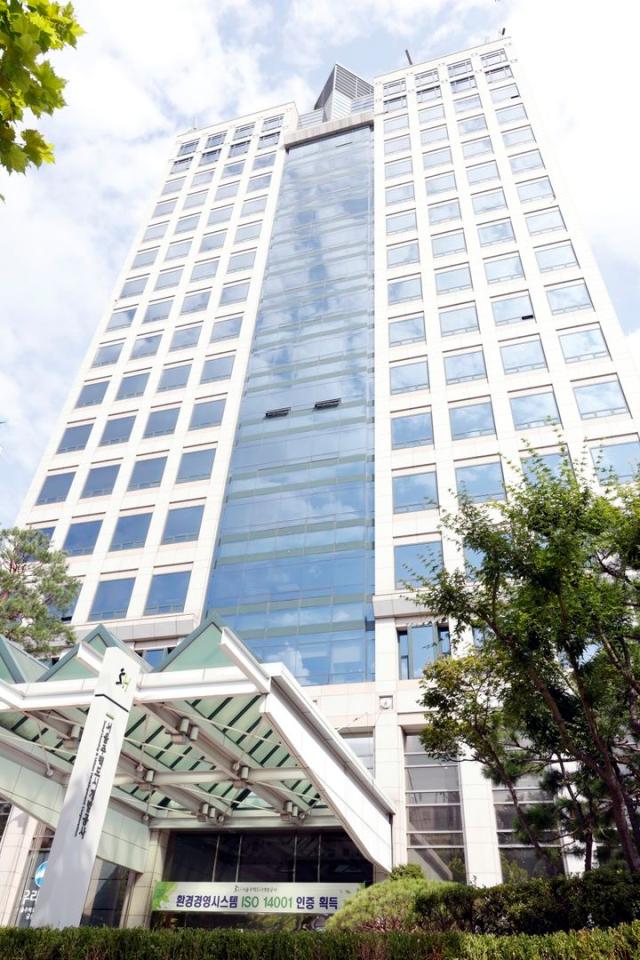
The Seoul Housing and Communities Corporation (SH) is reviving its long-stalled plan to relocate its headquarters in Jungnang-gu, Shinnae-dong, through a "partial relocation" approach. Instead of moving all employees and departments, the plan now involves retaining some functions at the current headquarters in Gangnam's Gaepo-dong. This shift is attributed to concerns over project viability and financial burdens. Internally, SH is reportedly aiming to begin construction in the second half of 2027, marking a renewed momentum for a project that has been stagnant for nearly eight years.
As of May 20, SH has requested a feasibility review from the Korea Local Administration Research Institute's Local Investment Project Management Center, with completion expected by the end of this month.
Following the review, the project will undergo a series of approvals, including internal investment committee assessments, board resolutions, and city council agreements, to finalize whether to proceed. The timeline is currently being evaluated with a goal of starting construction in the latter half of 2027.
Discussions about relocating SH's headquarters began during the tenure of former Seoul Mayor Park Won-soon from 2018 to 2019 as part of a balanced development policy between Gangnam and northern Seoul. The project was seen as a key symbol of this initiative, aimed at urban development in Jungnang-gu and balanced growth in the northeastern region. In 2020, a tripartite agreement was signed among the Seoul Metropolitan Government, Jungnang-gu, and SH, which advanced the project, and a feasibility study was conducted by the Korea Local Public Enterprises Evaluation Institute in 2021.
However, the project faced delays due to issues related to its financial viability and funding challenges. Industry experts attribute these setbacks to the competitive location of the Gaepo-dong headquarters, the high costs of a large-scale relocation, and concerns regarding the public benefits of the new headquarters.
An SH official stated, "The full relocation approach did not yield sufficient viability, leading us to explore various options, ultimately settling on a partial relocation plan. If the feasibility review results are positive, we plan to proceed as planned."
Initially, the plan called for the complete relocation of all employees and departments to Jungnang-gu, but opposition from labor unions and financial concerns prompted a change in direction. The current proposal involves maintaining some functions at the Gaepo-dong headquarters while relocating key departments and personnel to the new headquarters in Jungnang-gu. The specific distribution of departments and the scale of personnel movement will be determined after consulting with internal stakeholders.
The funding approach has also changed. The project structure has shifted from SH's own business model to a REIT (Real Estate Investment Trust) investment model. The new headquarters will be developed as a mixed-use project, incorporating office facilities, a performance venue (public contribution), as well as residential and commercial spaces. This change was made because relocating only public offices did not provide sufficient viability, prompting a shift to a mixed-use development model that combines housing and commercial facilities. This decision was reportedly made after consultations among the Seoul Metropolitan Government, Jungnang-gu, local lawmakers, and SH.
The SH labor union continues to oppose the headquarters relocation, citing concerns over financial stability, changes in working conditions for affected employees, and accessibility issues for citizens. There are ongoing internal objections regarding public transportation access and reduced work efficiency compared to the Gaepo-dong location.
SH stated, "The issue of relocating the headquarters involves changes in employment relationships and working conditions, so we will continue to consult with the union."
* This article has been translated by AI.
Copyright ⓒ Aju Press All rights reserved.