
The South Korean government is accelerating reforms in the foreign exchange and capital markets to facilitate its inclusion in the MSCI (Morgan Stanley Capital International) developed markets index. The plan aims to implement over 70% of the overall roadmap by the end of the first half of the year, enhancing market accessibility and trading convenience for foreign investors.
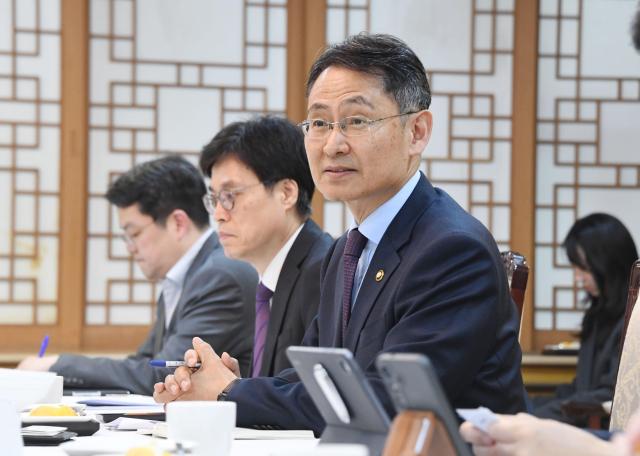
On May 21, the Ministry of Finance held a meeting of the "Foreign Exchange Stability Council and MSCI Developed Markets Index Inclusion Task Force," chaired by Deputy Minister Heo Chang, to review the progress of the "Comprehensive Roadmap for Foreign Exchange and Capital Markets" announced in January.
Out of the eight key areas and 39 tasks outlined in the MSCI roadmap, 25 tasks (64%) have been completed so far. The government plans to push forward with three additional tasks by June, bringing the total to 28 (over 70%) by the end of the first half.
Since February, relevant agencies have been working on institutional improvements focusing on account and payment systems, investor identification systems, English disclosures, and enhanced access to derivatives. The reform of the Korea Securities Depository system now allows for settlement processing based on nominal accounts for each fund, and the issuance of Legal Entity Identifier (LEI) confirmation letters for foreign corporate account openings has been recognized as valid identification, reducing translation and notarization burdens.
Additionally, the removal of trading hour restrictions for KOSPI futures on Eurex and FTSE has improved access to Korean derivatives for foreign investors.
The government is also working on restructuring the foreign exchange market. The domestic foreign exchange market is set to begin 24-hour trading from July 6, following a pilot trading session on June 29. The establishment of an offshore won payment network is also in progress, with IT testing scheduled for June, pilot operations in September, and full operations targeted for January 2027.
During the meeting, the government finalized plans to reform the overseas foreign exchange business institution (RFI) system. To encourage greater participation of global financial institutions in the domestic foreign exchange market, the government will reduce registration and reporting burdens and expand the use of operational won accounts.
Specifically, for global financial institutions utilizing a centralized booking model (CBM), the responsibility structure will be simplified, focusing on the headquarters as the booking entity, significantly streamlining the registration process for branches and trading entities. The reporting deadline for sanctions-related issues will also be extended from the previous seven days to 30 business days.
The government plans to enhance the utilization of operational won accounts by allowing them to be used like integrated accounts for investment, enabling the management of customer funds separately, securities settlement fund transfers, and temporary won borrowing (OD).
Deputy Minister Heo stated, "Most of the roadmap tasks are being implemented as planned, and we are confirming positive responses from foreign investors. Since foreign investors are particularly concerned about the smooth operation of actual trading and settlement processes, we will closely monitor the detailed operational situation."
Meanwhile, the government discussed plans to reform the monitoring system for cross-border virtual asset transfers, a task outlined in the roadmap. Following the recent passage of the revised Foreign Exchange Transactions Act, registration of virtual asset service providers and mandatory reporting of transfer histories will be enforced, with plans to share related information with the National Tax Service, Customs Service, Financial Supervisory Service, and Financial Intelligence Unit.
* This article has been translated by AI.
Copyright ⓒ Aju Press All rights reserved.