
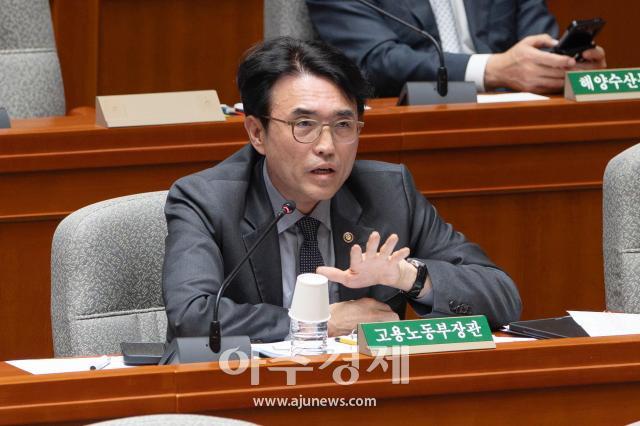
During the eighth emergency meeting on labor conditions with representatives from the plastic and textile industries, Kwon assessed the impact of the prolonged conflict in the Middle East on these sectors. He also gathered feedback on challenges faced by the industries to explore necessary support measures to prevent an employment crisis.
The industries are currently grappling with rising raw material costs due to supply chain disruptions stemming from the Middle East. The instability in the supply of naphtha has led to increased prices, raising concerns particularly in the plastic sector regarding profitability due to rising synthetic resin costs, and in the textile sector due to higher polyester fiber prices.
According to the Ministry of Employment and Labor, the number of insured workers in the plastic manufacturing sector has decreased to 175,000 as of last month, continuing a downward trend since January of last year. The textile manufacturing sector has 88,000 insured workers, a decline that has persisted since September 2021, while the clothing manufacturing sector has seen a drop to 46,000 since October 2016.
In response, industry representatives have requested multifaceted support to prevent the situation from escalating into an employment crisis. They highlighted the need for employment retention packages and solutions to address labor shortages. Kwon assured that he would seek various support measures to ensure timely assistance where it is needed.
Kwon stated, "We will swiftly reform necessary systems and enhance support to enable companies to actively work towards retaining employment. We will simplify the eligibility criteria and procedures for employment retention subsidies to actively recognize and support those in need."
He also noted that the designation of special employment support industries has been adjusted to allow for quicker responses to on-the-ground situations, reducing the assessment period for quantitative criteria from 12 months to 6 months. Kwon pledged to review designation criteria based on industry-specific crisis situations and significantly enhance support for training and job stability.
To attract job seekers, he mentioned that incentives would be provided for youth employment through the Youth Job Leap Grant, particularly targeting small and medium-sized enterprises in regions where the plastic and textile industries are concentrated. He emphasized the plan to hold job demand days in these areas to provide focused recruitment support services.
Kwon urged, "Please communicate openly about how government support can effectively align with on-site needs. I will take your voices as crucial signals and listen carefully to consider the necessary support together."
He concluded by stating, "We will remain vigilant to the warnings coming from the field and will promptly review and respond to necessary measures. If the government and industry maintain their awareness and work together, we can overcome this crisis."
* This article has been translated by AI.
Copyright ⓒ Aju Press All rights reserved.