
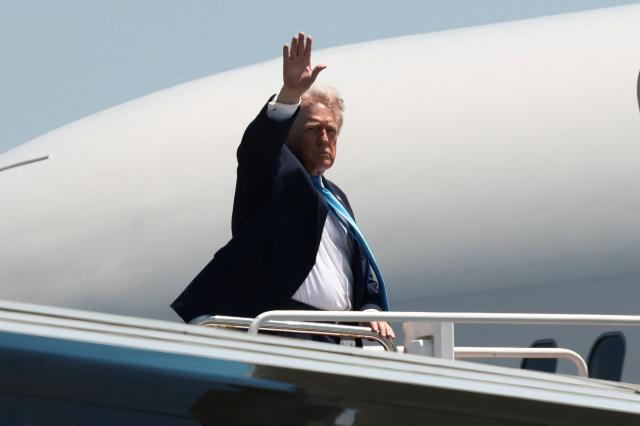
On May 20, during a visit to the Coast Guard Academy in New London, Connecticut, Trump told reporters, "We are in the final stages regarding Iran," adding, "Let’s see what happens." He continued, "We will either reach an agreement or face some rough situations, but I hope that doesn’t happen."
When asked if he was rushing to resolve the Iran conflict ahead of the November midterm elections, Trump replied, "Everyone talks about the midterms, but I am not rushing at all." Earlier that day, Punchbowl News reported that Republican Congressman Tom Cole, chairman of the House Appropriations Committee, indicated that the Pentagon's funding for operations related to Iran could run out by August, highlighting growing concerns within the GOP about the war. Cole expressed worry that Congress may not have enough time to address additional funding for Iran.
In the same vein, Trump did not shy away from applying pressure on Iran. During his commencement address at the Coast Guard Academy, he stated, "We will be watching what happens. We have hit them very hard. We may have to hit them even harder, but maybe not." He emphasized, "We will not allow Iran to have nuclear weapons. It’s very simple."
Trump also claimed that Iran's military capabilities have significantly weakened. He stated, "Everything has disappeared. Their navy is gone. Their air force is gone. Almost everything is gone," adding, "The only question is whether we will go in and finish it or whether they will sign a document."
Iran Demands Economic Sanctions Relief First
As Trump mentioned both the possibility of an agreement and further pressure, Iran confirmed it is reviewing the U.S. proposals. Iranian Foreign Ministry spokesman Esmail Baghaei stated in an interview with state television, "We have received the U.S. perspective and are currently reviewing it closely," explaining that the visit of Pakistan's Interior Minister to Tehran is aimed at facilitating message exchanges between the two countries.
Earlier, Iranian state news agency IRNA reported that Pakistani Interior Minister Mohsin Naqvi visited Iran again on May 20 following a previous visit on May 16.
Baghaei outlined the prerequisites for dialogue to end the war, emphasizing the need for the release of frozen assets and the cessation of U.S. maritime blockades. He stated, "At this stage, we are focused on ending the war on all fronts, including Lebanon. Our demands are clear: the release of Iran's frozen assets, issues related to piracy, and actions targeting Iranian shipping have all been clearly stated from the beginning." He added, "If this process is based on Iran's legitimate demands, we can say diplomacy has succeeded; otherwise, if unreasonable demands persist, we will obviously not succeed."
Meanwhile, Israel has reportedly expressed strong opposition to the ongoing negotiations between the U.S. and Iran. Axios reported that Prime Minister Benjamin Netanyahu criticized the negotiation process during a phone call with Trump, advocating for a resumption of hostilities against Iran.
Sources indicated that Trump informed Netanyahu that mediators are preparing a 'letter of intent' to secure signatures from both the U.S. and Iran. This letter is said to outline a 30-day negotiation period to officially end the war and discuss Iran's nuclear program and the reopening of the Strait of Hormuz.
Netanyahu remains skeptical about the negotiations with Iran, asserting that military action should be resumed to weaken the Iranian regime and its military capabilities. A U.S. source noted, "Netanyahu was very angry after the call with Trump."
* This article has been translated by AI.
Copyright ⓒ Aju Press All rights reserved.