
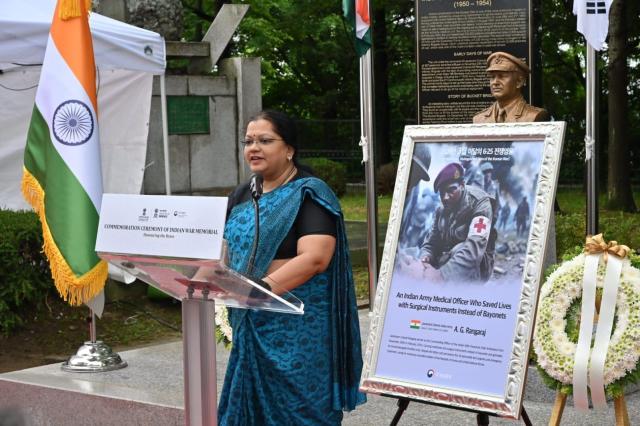
“His siblings rushed to tell their mother, but she refused to believe it because she still remembered him as a shy boy who was afraid to walk alone in the dark,” she said. “But somehow, that timid boy ended up jumping out of airplanes.”
The timid boy was Lt. Col. A.G. Rangaraj, an army doctor who led an Indian medical unit during the 1950-53 war.
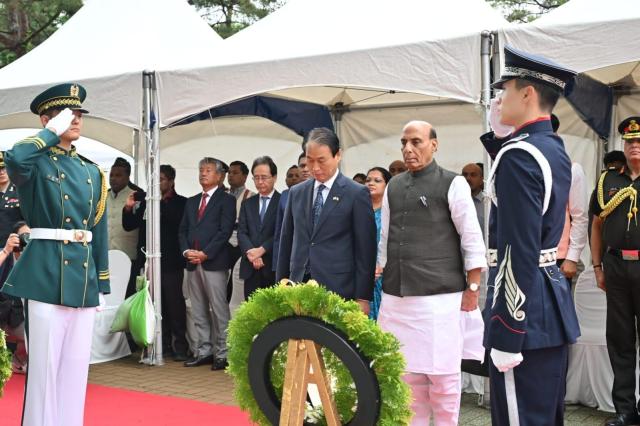
Rangaraj and fellow veterans were posthumously honored at a ceremony on Thursday at Imjingak in Paju, north of Seoul, where officials unveiled a memorial recognizing India’s contribution as part of events marking the 76th anniversary of the outbreak of the conflict.
The ceremony was attended by visiting Indian Defense Minister Rajnath Singh, who was hosted by Patriots and Veterans Affairs Minister Kwon Oh-eul.
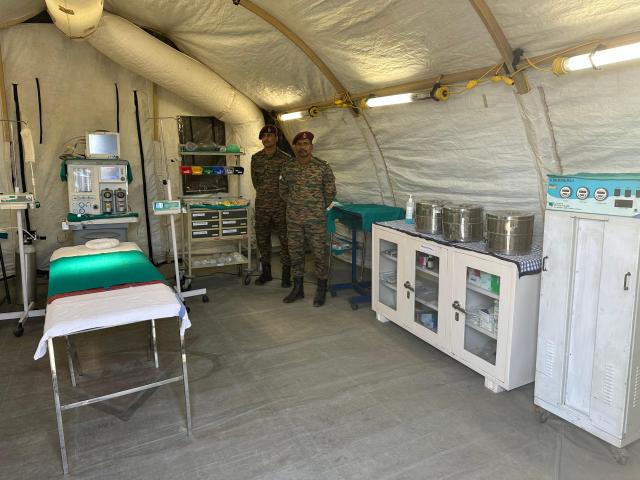
One of six countries that provided non-combat support to South Korea during the conflict, India’s contribution came largely in the form of medical and humanitarian aid. The country’s 60th Parachute Field Ambulance, one of the largest medical units sent by a supporting nation, deployed 627 medical personnel.
One of the unit’s best-known operations came during Operation Tomahawk on March 21, 1951, near Munsan, north of Seoul, when members attached to the U.S. Army’s 187th Airborne Regimental Combat Team parachuted into enemy territory as part of a combat airborne operation. Amid intense frontline fighting, they established medical facilities and treated wounded soldiers.
Led by Rangaraj, the Indian unit treated 200,000 patients and performed 2,500 surgeries.
For South Korea, the new memorial carries symbolic weight not only because of India’s wartime role, but also because of its location. Just south of the Demilitarized Zone, Imjingak has long served as a site of remembrance for the war and hope for peace on the still-divided peninsula.
The presence of Rangaraj’s family added a personal dimension to Thursday’s ceremony, turning the memorial from a diplomatic event into a reminder of the individual lives behind wartime history.
“It is an honor for all of us to know that he has been nominated as a Korean War hero by the government of the Republic of Korea,” Prasad said.
In addition to the medical unit, India also played a major postwar role through the Neutral Nations Repatriation Commission. A 5,230-strong Custodian Force of India helped carry out the peaceful repatriation of some 2,000 prisoners.
The memorial features busts of Rangaraj and another Indian figure closely associated with the Korean War, Gen. K.S. Thimayya, who chaired the U.N. Neutral Nations Repatriation Commission at the time of the armistice.
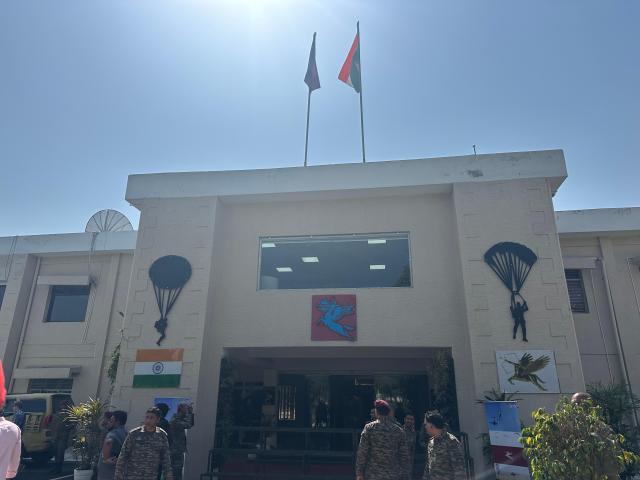
During AJP’s visit to the brigade in March, Col. Jagneet Gill, the current commanding officer of the 60th Parachute Field Ambulance, said the unit’s deployment to Korea remains an important part of its identity.
“The 60th Parachute Field Ambulance is a key medical support unit under the Indian Army’s 50th Independent Parachute Brigade, and we supported wounded people during the Korean War,” Gill said. “It was really nice to have the chance to visit South Korea last November at the invitation of the Korean government.”
Decades later, the legacy of the Korean War continues to resonate in the hearts of both nations.

Copyright ⓒ Aju Press All rights reserved.
