
South Korea's democracy has always evolved through the participation and sacrifice of its citizens.
From the April 19 Revolution to the June Democratic Uprising of 1987, the young generation has consistently been at the forefront of significant historical turning points, questioning the systems and realities established by older generations while demanding a better future.
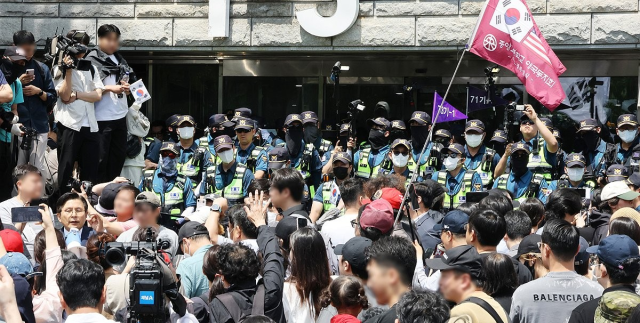
The recent protests led by the 2030 generation in front of the ballot counting center in Jamsil, Seoul, should be viewed through this lens.
The immediate catalyst for the protests was a shortage of ballots during the local elections. Some citizens claimed that their voting rights were not adequately protected, gathering in front of the counting center to voice their concerns. This situation sparked various political interpretations and debates.
However, viewing this phenomenon solely as a movement of a particular party or faction misses the essence of the issue.
More importantly, we must consider why so many young people took to the streets.
Today’s youth in South Korea are navigating one of the most complex eras in history. During the industrialization period, a clear ladder of success existed: studying hard led to job opportunities, which in turn allowed for home ownership and family formation.
However, the current reality is starkly different. Artificial intelligence and automation are reshaping the industrial landscape. Companies are becoming cautious about hiring, pushing young people into increasingly fierce competition.
Housing costs are rising, with rent and mortgage burdens in the metropolitan area putting pressure on young lives. Marriage and childbirth are shifting from personal choices to economic burdens.
Global economic uncertainties are also increasing. Low growth, high interest rates, the restructuring of global supply chains, and the prolonged U.S.-China rivalry are contributing to a sense of anxiety about the future among the youth.
When young people feel that their trust in the national system is shaken, their anxiety only intensifies.
As we reflect on these protests, the first step for our society should not be to blame or stigmatize the youth.
Instead, we must listen to their voices. In a democratic society, citizens' concerns deserve respect. The anxieties and frustrations felt by the younger generation are directly linked to the future of South Korea.
However, conflict and confrontation are not the answers. What South Korea needs now is not a generational war but generational reconciliation.
The youth should not view older generations as adversaries. The progress of South Korea toward industrialization and democratization was made possible by the sweat and sacrifices of the older generation.
Conversely, older generations should not see the youth merely as inexperienced. Today's young people possess higher education levels, international perspectives, and digital skills than any previous generation. The future competitiveness of South Korea will ultimately stem from their creativity and spirit of challenge.
The issue lies not with the generations but with the system. One of the greatest challenges facing South Korea is the need to innovate its bureaucratic and vested interest structures.
While administrations have changed multiple times, the bureaucratic system has seen little transformation. Regulations have increased, and administrative procedures have become more complex. A culture prioritizing evasion of responsibility over innovation is also prevalent.
The political arena is no different. Regardless of party affiliation, calls for reform are made during elections, yet the changes felt by the public often fall short of expectations. Reforms in the labor market, education, pensions, and regulations remain largely unfinished tasks.
Ultimately, the anger of the youth is not solely directed at a specific party. It stems from a reality where opportunities are dwindling and a sense of hopelessness prevails, where hard work does not guarantee a visible future. When this despair accumulates, society loses its vitality, and conflicts escalate.
The Italian thinker Antonio Gramsci described a crisis era as one where "the old is dying, but the new cannot be born." Today, South Korea may be at a similar crossroads.
The institutions of the industrialization era are becoming outdated. However, new systems and institutions suitable for the age of artificial intelligence have yet to be adequately established.
In this void, it is the youth who feel the greatest anxiety. Therefore, what our society needs now is not to suppress anger but to transform it into hope.
We must provide more opportunities for young people. An environment conducive to entrepreneurship and innovation must be created. The labor market and education systems need to be reformed for the future. Bureaucracy and unnecessary regulations should be reduced.
Vested interests must also make gradual concessions. Just as experienced players in golf allow younger players to start a new round, society must create space for the next generation to grow.
The future of South Korea will not be shaped by the victory of one generation over another.
Only through mutual understanding and cooperation can a new leap forward be achieved. It is hoped that the voices of the 2030 generation, which began in front of the Jamsil counting center, will not end in mere anger but will serve as a catalyst for institutional innovation and generational reconciliation in South Korea.
True democracy lies not in amplifying conflicts but in listening to diverse voices and working together to create a better future.
What South Korea needs now is not another ideological confrontation, but the courage to move beyond vested interests and bureaucracy, along with leadership that fosters reconciliation and innovation between generations.
* This article has been translated by AI.

Copyright ⓒ Aju Press All rights reserved.