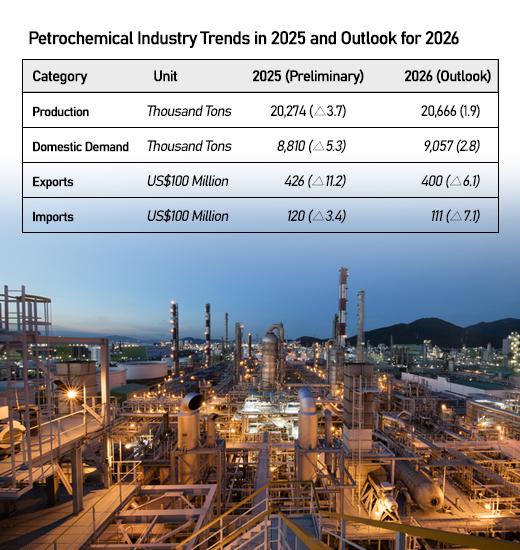
SEOUL, December 16 (AJP) - South Korea's battered petrochemical industry, already deep into streamlining and restructuring, is bracing for another difficult year in 2026, with conditions expected to remain cloudy and rain-soaked, according to an industrial "weather forecast" released by the Korea Chamber of Commerce and Industry (KCCI).
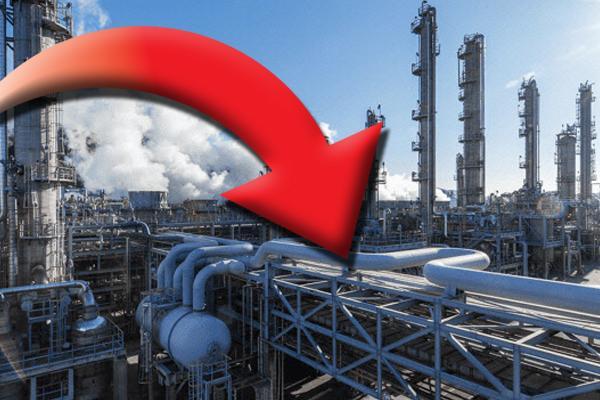
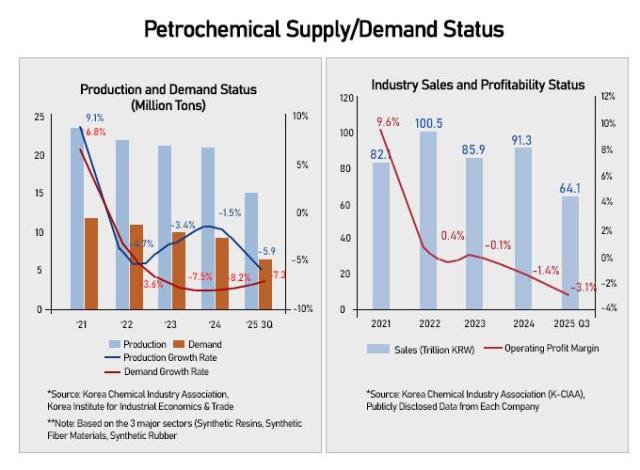
Exports are projected to fall a further 6.1 percent next year, following an estimated 11.2 percent drop in 2025, as global oversupply continues to weigh heavily on prices and margins. Domestic output is expected to edge up just 0.9 percent to 20.67 million tons, reflecting capacity rationalization after an estimated 3.7 percent contraction this year.
The global glut shows little sign of easing. China's share of global ethylene capacity has surged from 21 percent in 2022 to an estimated 25.2 percent this year, while worldwide oversupply is projected to widen to 49 million tons in 2025, up from 44.9 million tons last year.
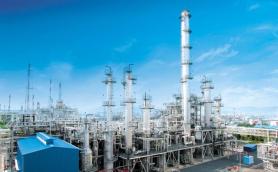
Restructuring has been most acute at the Yeosu petrochemical complex in South Jeolla Province, which accounts for roughly half of South Korea's total petrochemical capacity and produces 6.41 million tons of ethylene annually. During a visit last month, Trade, Industry and Energy Minister Kim Jung-kwan warned that companies failing to meet a December deadline for output cuts would be excluded from government relief measures.
Progress elsewhere has intensified pressure on Yeosu-based producers to follow suit. Yeocheon NCC, the country's third-largest ethylene producer, reached a breakthrough this month after its joint owners Hanwha Solutions and DL Chemical reportedly agreed to finalize feedstock supply contracts that had been stalled for nearly a year over pricing disputes.
The agreement clears the way for Yeocheon NCC to permanently shut down its No. 3 plant, which has been idle since August, eliminating 470,000 tons of annual capacity. The two shareholders have also agreed to convert a combined 300 billion won ($220 million) in loans into equity.
Tensions, however, remain unresolved. DL Chemical said Monday that it had proposed shutting down Yeocheon NCC's larger No. 1 plant, which has capacity of 900,000 tons, a move Hanwha Solutions said had not been agreed upon. Industry sources interpret the proposal as DL's attempt to minimize its losses, noting that Hanwha consumes roughly 1.4 million tons of ethylene annually—nearly twice DL's usage of 735,000 tons.
DL Chemical argued in a statement that closing either the No. 1 or No. 2 plant was the only viable option to stem ongoing losses.
China's relentless capacity expansion has continued to erode margins across the naphtha-based value chain. Ethylene prices have fallen to about $740 per ton this month, down 17 percent from the start of the year, while propylene prices have dropped 15 percent to around $880 per ton. Analysts expect the oversupply to persist at least through 2027.
Domestic demand has offered little relief. Output of vehicles for the domestic market fell 2.7 percent in 2024 to 4.13 million units, while construction activity has contracted by double digits for most of 2025. Rising imports of plastic and textile products have further squeezed demand for locally produced petrochemicals.
In its report, KCCI urged the government to elevate eco-friendly petrochemical technologies from a "new growth engine" to a "national strategic technology," a move that would lift tax credits by more than 10 percentage points. The group said stronger incentives could accelerate the industry's shift toward bioplastics, chemical recycling and electric-heated naphtha cracking.
"China's manufacturing competitiveness is rising by the day, putting every producer on edge," said Lee Jong-myung, head of KCCI's industrial innovation division. "Companies must continue experimenting aggressively, including with AI, while the government needs to deliver bold regulatory reforms and incentive frameworks to support the transition."

Copyright ⓒ Aju Press All rights reserved.