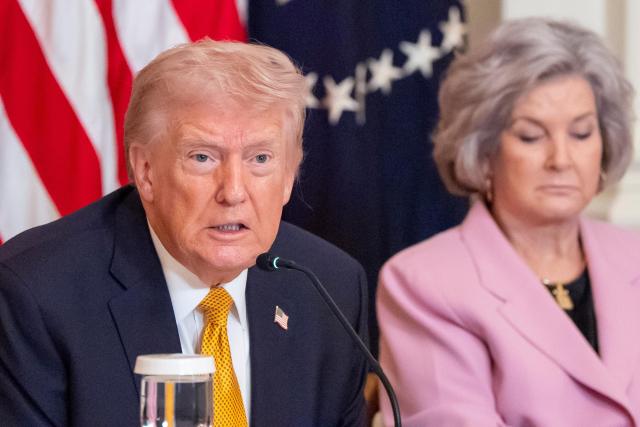
Speaking at the White House on Monday during a meeting with trustees of the John F. Kennedy Center for the Performing Arts, Trump renewed his call for allies to join a coalition to secure the strait — though responses from partner countries have so far ranged from cautious non-commitment to outright reluctance.
“We strongly encourage other nations whose economies depend on this strait far more than ours,” Trump said. “We get less than 1 percent of our oil from the strait and some countries get much more.”
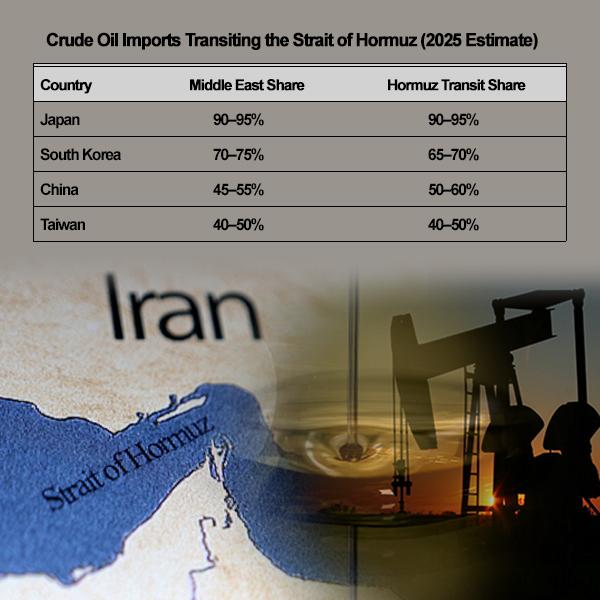
“Japan gets 95 percent. China gets 90 percent. Many of the Europeans get quite a bit. South Korea gets 35 percent. So we want them to come and help us with the strait,” he added, without providing the basis for the numbers.
According to petroleum association postings of each countries, Japan depends 90 to 95 percent on Hormuz transit and South Korea around 65 to 70 percent. The share for China is lower at 50 to 60 percent.
“We’ve protected them from horrible outside sources, and they weren’t that enthusiastic — and the level of enthusiasm matters to me,” he said.
"We have some countries where we have 45,000 soldiers, great soldiers, protecting them from harm's way, and we have done a great job," he added, declining to name them.
The United States maintains roughly 50,000 troops in Japan and about 28,500 troops in South Korea, two of Washington’s closest security partners in Asia.
Seoul has signaled that it is weighing the request carefully. The South Korean government said it remains in consultations with Washington and will address the issue only after “careful deliberation.”
Japan has issued a similar response, emphasizing the complexity of any military involvement in the conflict.
Pressure on Seoul has already intensified at the diplomatic level. South Korean Foreign Minister Cho Hyun held a phone call Monday with U.S. Secretary of State Marco Rubio, according to the foreign ministry.
Rubio briefed Cho on the situation in the Middle East and called for cooperation to restore stability in the region. He also emphasized the importance of global coordination to secure maritime traffic through the Strait of Hormuz and stabilize oil prices.
Cho thanked Washington for assisting with the evacuation of Korean nationals from the region and requested continued support. The two officials agreed to meet soon for further discussions on bilateral and global security cooperation.
The diplomatic push underscores Washington’s growing concern that the war — now entering its third week — could turn into a prolonged disruption to global energy markets.
The Strait of Hormuz normally carries about one-fifth of the world’s oil shipments, making it one of the most strategically sensitive maritime chokepoints in global trade. The suspension has spiked oil prices to $100 a barrel and other commodities, causing disruptions across the board.
The standoff is also becoming politically sensitive in the United States. Although the U.S. military’s superiority over Iran has never been seriously questioned, the conflict has proven more resilient than some policymakers initially expected. Iran’s most effective retaliation has been targeting regional oil infrastructure and effectively blocking commercial shipping through the strait.
Rising crude prices have already pushed up gasoline costs in the United States — a development that could complicate domestic politics as congressional midterm elections approach.
Trump has responded with a mix of defiance and reassurance. He said some countries have privately expressed willingness to support the U.S. effort but declined to identify them.
“We don’t need anybody,” Trump said. “We’re the strongest nation in the world.” At the same time, he warned that any Iranian attempt to mine the strait would be “a form of suicide.”
Across the Atlantic, the response from European capitals has been markedly cautious.
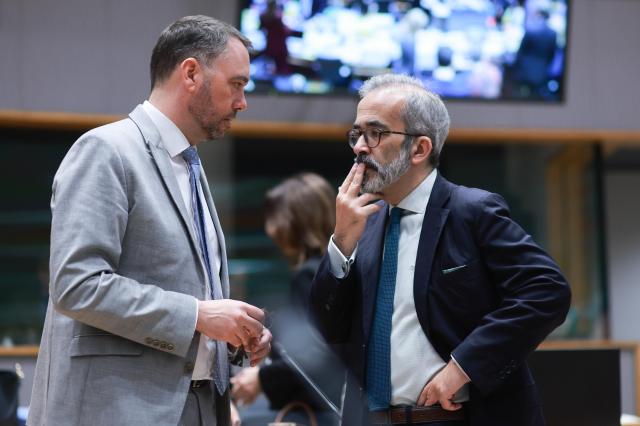
European Union foreign ministers meeting in Brussels stressed that they had little appetite for becoming directly involved in a conflict that many leaders view as a U.S.-initiated war.
“This is not our war. We have not started it,” said Boris Pistorius.
EU foreign policy chief Kaja Kallas said there was no consensus among member states to extend the EU’s existing Red Sea naval mission — known as Aspides — to the Strait of Hormuz. “There was a clear wish to strengthen our operation, but for the time being there was no appetite to change the mandate,” she told reporters after talks with EU foreign ministers.
Germany and Italy both opposed expanding the mission’s scope, arguing that shifting naval assets into the strait could risk escalating the conflict.
British Prime Minister Keir Starmer also declined to commit to a full naval escort operation.
“We will not be drawn into the wider war,” Starmer said at a press conference in London, though he noted that Britain would continue exploring options with allies to restore freedom of navigation.
Several European leaders also emphasized that the Strait of Hormuz crisis does not fall under the mandate of NATO’s collective defense framework, which is triggered only when member states themselves are attacked.
Luxembourg Foreign Minister Xavier Bettel put the point bluntly: “Blackmail is not what I wish for.”
The surge in oil prices has already raised fears of renewed inflation and disruptions across global manufacturing and food supply chains and capital flight in Asian markets.
Copyright ⓒ Aju Press All rights reserved.