
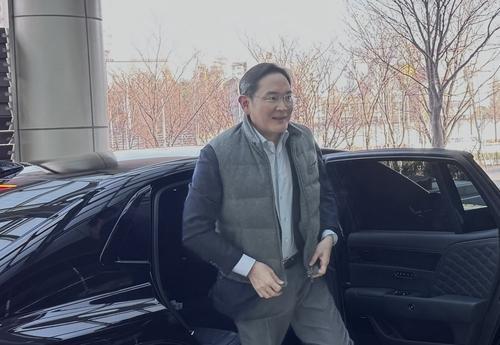
SEOUL, January 05 (AJP) - A large delegation of South Korea’s top business leaders, including the heads of the country’s biggest conglomerates, are accompanying President Lee Jae Myung on his state visit to China as attention turns to whether bilateral economic cooperation can enter a new phase amid shifting global supply chains.
Business groups said on Monday that an economic delegation organized by the Korea Chamber of Commerce and Industry is travelling to China to coincide with Lee’s trip from Jan. 4 to Jan. 7.
The delegation includes about 200 executives, among them Samsung Electronics Chairman Lee Jae-yong, SK Group Chairman Chey Tae-won, Hyundai Motor Group Chairman Chung Eui-sun and LG Group Chairman Koo Kwang-mo.
Also joining the delegation are POSCO Group Chairman Chang In-hwa, GS Group Chairman Huh Tae-soo, LS Group Chairman Koo Ja-eun and CJ Group Chairman Sohn Kyung-shik. It will mark the first visit by a South Korean economic delegation to China since 2019.
Industry officials said the trip is being viewed as more than a simple resumption of exchanges, describing it as a potential opportunity to pursue a “new phase” of economic cooperation between the two countries.
"Discussions are expected to range from advanced industries — such as semiconductors, batteries, electric vehicles and displays — to services and cultural content," an industry source said.
In the semiconductor sector, attention is focused on the recent move by the United States to partially ease restrictions on bringing equipment into Chinese plants operated by South Korean firms.
Samsung Electronics and SK hynix run major production bases in Xian and Suzhou, and in Wuxi and Dalian, respectively, raising expectations of limited but practical progress in manufacturing cooperation with China.
Automakers and battery makers are also seeking to rebuild their presence in the Chinese market.
Hyundai Motor and Kia are rolling out China-specific electric vehicles and repositioning local plants as export bases, while LG Energy Solution is maintaining production in China as part of a broader global supply-chain strategy.
During the trip, the delegation plans to hold a South Korea–China business forum to discuss stabilizing manufacturing supply chains, tapping new consumer markets, and expanding cooperation in services and content. Companies are also expected to sign memorandums of understanding and hold one-on-one business meetings.
Copyright ⓒ Aju Press All rights reserved.
