
What first sounded like a provocative aside has evolved into a serious public health proposition, as President Lee Jae Myung pushes South Korea into a widening global debate over whether taxation should be used to curb excessive sugar consumption and its long-term health costs.
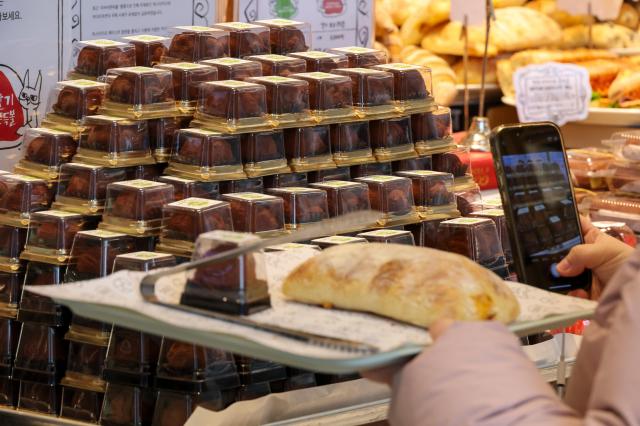
South Koreans are hardly restrained when it comes to dessert. The recent craze for dujjonku — a sugar-drenched, crunchy cookie inspired by Dubai chocolate — has underscored the country’s growing sweet tooth. But that enthusiasm is now being questioned from an unexpected quarter: health policy.
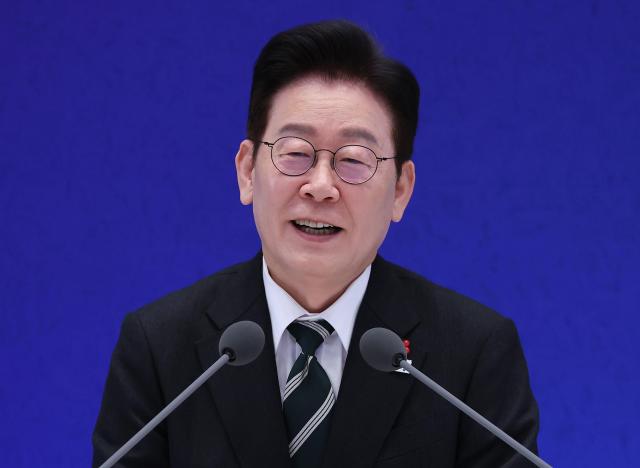
Over the weekend, Lee returned to the idea of a so-called “sugar levy” via social media, pointing to international precedent and rising concern over diet-related disease.
On Monday, he shared a report by the World Health Organization titled “The War Against Sweet Addiction — WHO’s Official Sugar Tax Recommendation,” framing the issue as one requiring open, evidence-based national debate.
“Proposals such as a sugar charge require open, fact-based national debate precisely because they are complex, easily misunderstood and touch many interests,” Lee wrote.
He stressed that excessive sugar intake is a key driver of obesity and metabolic disease, while emphasizing that what is under discussion is not a conventional tax hike.
“A health burden fee could be imposed on products where excessive sugar consumption harms health, with the funds directed toward prevention and treatment to reduce pressure on public health insurance,” he said.
The remarks immediately triggered debate among lawmakers and industry groups. Food and beverage companies warned that a sugar charge could raise prices or disproportionately affect lower-income households, while public health advocates said the discussion was long overdue.
A broader global shift
Korea’s emerging debate mirrors a broader shift underway across Europe, where governments are increasingly turning to fiscal tools to reshape dietary behavior.
In January, Slovakia approved a fiscal consolidation package that included a targeted value-added tax increase on sugary and salty foods. Under the plan, which takes effect this year, products such as chocolate, ice cream, confectionery and crisps will be taxed at 23 percent, compared with a standard rate of 19 percent.
Slovak authorities said the measure was intended to promote responsible consumption while strengthening public finances.
In the United Kingdom, the Labour government has announced plans to expand its Soft Drinks Industry Levy to include milk-based beverages such as bottled milkshakes, sweetened coffee drinks and plant-based dairy alternatives from January 2028.
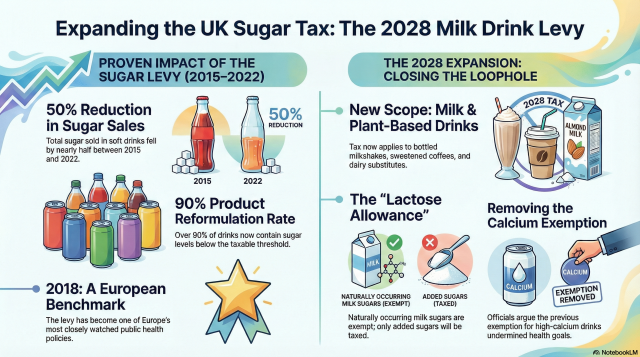
Since its introduction in 2018, the UK levy has become one of the most closely watched public health policies in Europe. Officials say it has driven widespread reformulation, with more than 90 percent of soft drinks now containing less sugar than the taxable threshold. Between 2015 and 2022, total sugar sold in soft drinks fell by nearly half.
Policy experiments across Europe
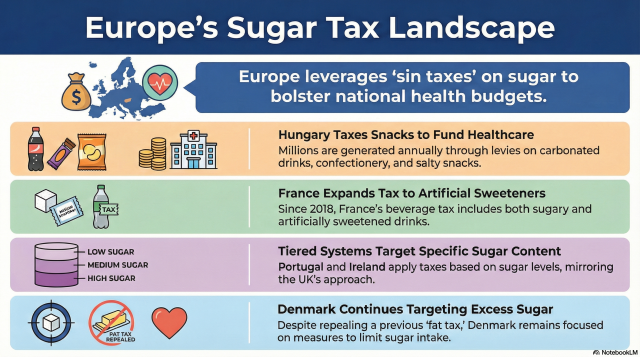
Across the European Union, nutrition-related taxes have moved from experimental to mainstream. Hungary operates a Public Health Product Tax on sugary drinks, confectionery and salty snacks, generating dedicated revenue for healthcare. France expanded its soft drink tax to include both sugary and artificially sweetened beverages. Portugal applies a tiered tax based on sugar content, while Ireland mirrors the UK approach through its Sugar-Sweetened Drinks Tax.
Even Denmark, which repealed its short-lived “fat tax” more than a decade ago, continues to revisit measures aimed specifically at excess sugar intake.
Korea’s health context
South Korea’s public health indicators remain among the strongest in the OECD, but experts warn that dietary shifts toward processed foods and sugar-heavy beverages are eroding that advantage — particularly among younger adults.
According to the Korean Diabetes Association’s Diabetes Fact Sheet 2024, an estimated 308,000 people aged 19 to 39 in South Korea are living with diabetes, accounting for 2.2 percent of the country’s total diabetic population. While the proportion may appear small, health authorities caution that early-onset diabetes significantly increases lifetime risks of cardiovascular disease, kidney failure and other complications.
More striking is the scale of metabolic risk among young men. The same report found that 37 percent of men in their 30s are in a prediabetic state, meaning their blood sugar levels are already elevated enough to place them at high risk of progressing to full diabetes without intervention.
Public health experts say the figures reflect broader lifestyle and dietary changes, including higher consumption of sugary snacks, sweetened beverages and ready-to-drink products, combined with sedentary work patterns and long hours.
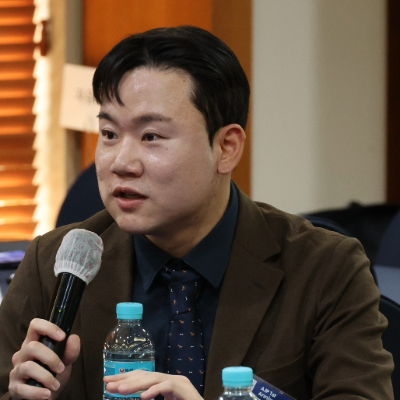
Marc Diederich, a professor at Seoul National University’s Department of Pharmacy, said the scientific case for preventive action is well established.
“Excess added sugar, particularly from sweetened beverages, contributes to obesity, insulin resistance and chronic inflammation,” he told AJP. “These conditions not only undermine metabolic health but also increase cancer risk indirectly through physiological stress and immune dysfunction.”
Children and young adults, he added, are especially vulnerable. “High sugar intake is linked to dental disease, unhealthy weight gain and early metabolic abnormalities,” Diederich said. “Fiscal tools can help shift consumption patterns, but they must be paired with education.”
He also pointed to Korea’s traditional diet as a preventive asset worth protecting. “Meals centered on grains, vegetables, fermented foods and soups have long supported good health,” he said. “Preserving that food culture should be part of any long-term prevention strategy.”
Copyright ⓒ Aju Press All rights reserved.
