
SEOUL, February 03 (AJP) - Nearly four years after stepping away as a full group for mandatory military service, BTS is returning with a touring footprint that underlines just how much ground it covered — and how much leverage it still holds — in the global live music economy.
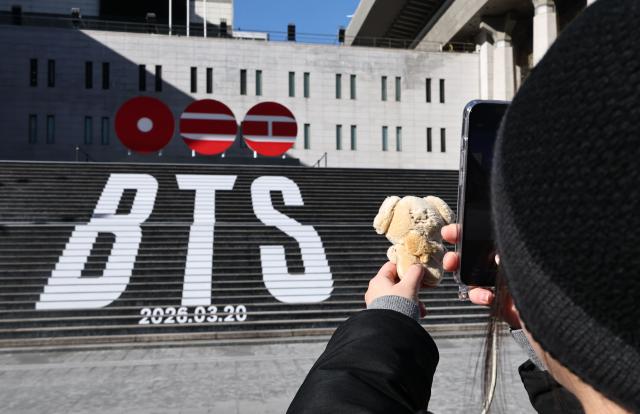
A yearlong world tour spanning 80-plus stadium shows in roughly 30 cities across five continents is taking shape, positioning BTS’s comeback as one of the largest live music undertakings in recent years. The opening statement will be characteristically symbolic: a kickoff performance in central Seoul’s Gwanghwamun area on March 31, set to stream live on Netflix — the platform’s first livestreamed concert originating from South Korea.
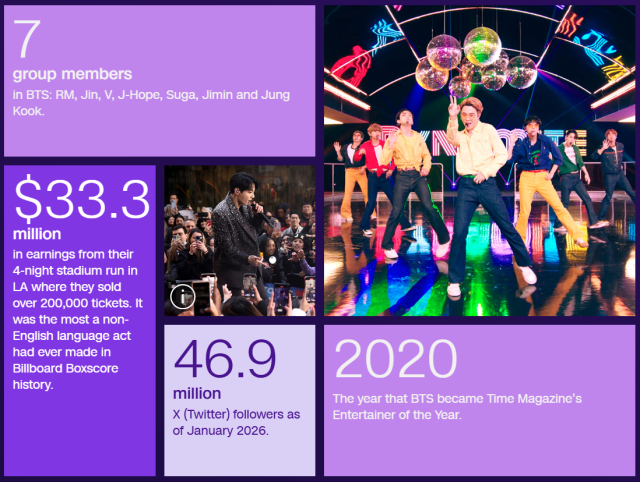
The scale reinforces a long-standing narrative around BTS: that the group functions less as a touring act than as a global cultural asset. When CNN recently revisited “BTS in Numbers,” it highlighted how rare it is for artists to sustain tours of this magnitude. Historically, only a handful of legacy names — Elton John, Bruce Springsteen and the Rolling Stones — have pushed tours into triple-digit show counts over multiple years.
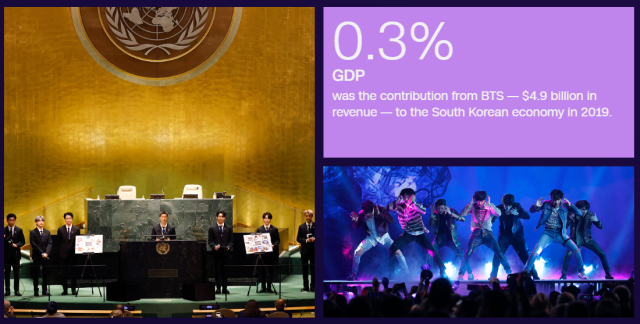
BTS’s own benchmarks already place it in that company. Since debuting in 2013, the group has logged six No. 1 singles on the Billboard Hot 100, while its four-night stadium run in Los Angeles in 2021 generated $33.3 million from more than 200,000 tickets, then the highest-grossing Boxscore ever recorded by a non-English-language artist. At home, government estimates have pegged BTS’s economic contribution at $4.9 billion in 2019, cementing its status as a national soft-power asset.
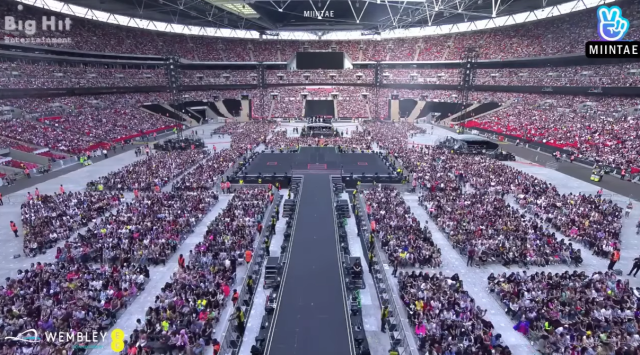
The follow-up, “Permission to Dance On Stage” in 2022, was intentionally limited after pandemic disruptions but no less telling. A four-night run at Los Angeles’ SoFi Stadium attracted roughly 214,000 attendees, underscoring sustained demand even as the group prepared for enlistment.
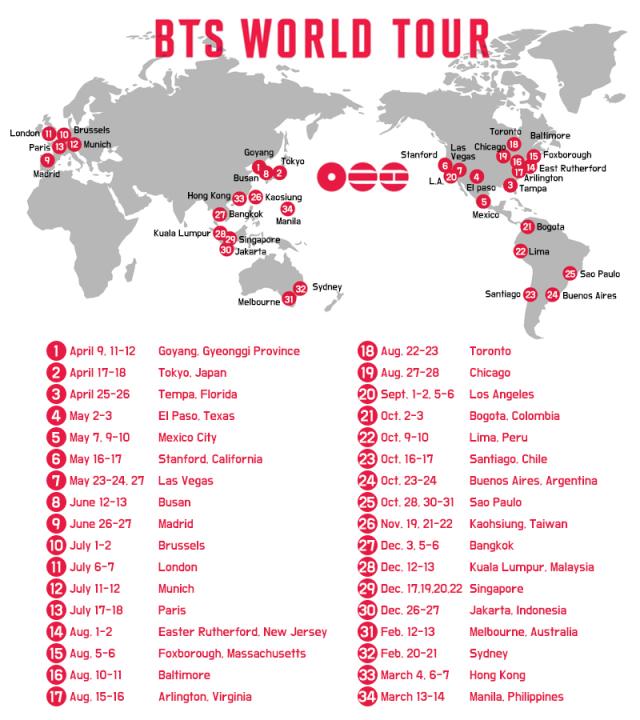
The upcoming 2026–2027 “Arirang” World Tour raises the bar again. Official schedules point to 82 shows across 34 cities in 23 countries, making it BTS’s most expansive itinerary to date. Early ticketing signals have been striking. In Mexico, local reports said as many as one million fans attempted to secure roughly 150,000 available seats, while rapid sellouts have been reported across parts of North America and Europe.
Some industry reports have cited 41 major stadium dates selling out globally, with total ticket sales estimated at around 2.4 million, though final figures remain under review.
HYBE said it is still in the process of aggregating ticket sales data and reviewing venue-level details, noting that assessments are ongoing to determine whether additional seats can be released at certain locations. The company added that it is still reviewing potential dates for stops in Japan and the Middle East, which have yet to be officially announced.
Financial markets are watching closely. Analysts increasingly frame the tour not simply as entertainment, but as a large-scale global content business. Im Do-young of Daol Investment & Securities estimates that ticket revenue alone could reach 1.1 trillion to 1.2 trillion won, rising toward 1.5 trillion won when official merchandise sales are included, assuming the full schedule is completed. At that level, the tour would rank among the largest ever mounted by a single artist.
At home, pricing will offer an early test of elasticity. BTS’s South Korea leg begins in April at Goyang Stadium, with tickets priced at 264,000 won for sound check, 220,000 won for General R, and 198,000 won for General S, according to Interpark. Positioned at the upper end of the stadium touring range, the shows will serve as a bellwether for how far premium pricing can stretch in a post-pandemic, post-inflation concert market.
For the global live music industry, BTS’s return is more than a reunion tour. It is a stress test — of demand, pricing power and scale — unfolding in real time, with few modern precedents.

Copyright ⓒ Aju Press All rights reserved.
