
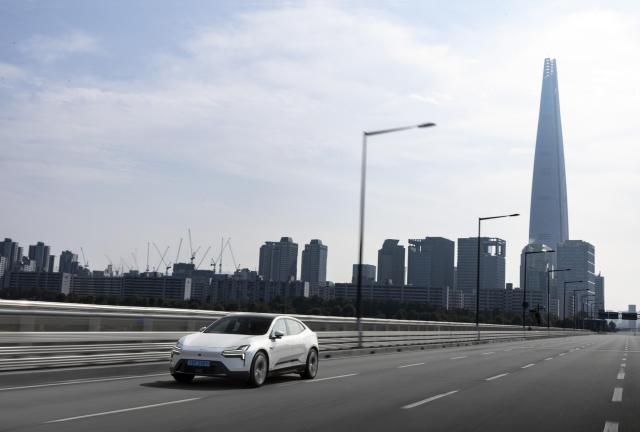
What happens when Volvo’s belief that “safety can’t be an option” meets a racing mindset built on pushing performance to the limit?
In an EV market dominated by established names such as Tesla, Volkswagen and Hyundai, Sweden-born Polestar has positioned itself as a performance-focused electric brand with an unusual origin story: a European automaker’s safety-first DNA combined with China-based manufacturing and ownership ties.
With competition expected to intensify amid concerns about oversupply of Chinese EVs, Polestar says it aims to set a new benchmark between the legacy internal-combustion world and the shift to electric vehicles.
◆From a 1996 launch to a “star” in EVs; up 296.6% in South Korea in a year
Polestar traces its roots to Flash Engineering, a Swedish racing team founded in 1996 by STCC champion Jan “Flash” Nilsson. The team developed by tuning Volvo cars for performance, blending Volvo’s “safety can’t be an option” philosophy with racing’s goal of maximizing output. It later rebranded as Polestar Racing and, in 2009, became Volvo’s official performance partner.
After Volvo’s acquisition, Polestar debuted as an independent brand in 2015. In 2017, it was absorbed with Volvo into China’s Geely Holding Group and was remade as an electric performance brand.
Polestar’s lineup uses simple numbering from 1 to 6. Its first model, the Polestar 1, was a plug-in hybrid rated at 600 horsepower and up to 150 kilometers (93 miles) of electric-only range, drawing attention in the late 2010s as EVs gained momentum. The first sedan, the Polestar 2, competed with Tesla’s Model 3 and helped establish the brand globally. Polestar 4 became a strong seller in the premium EV segment, and Polestar 5 and 6 are scheduled to be unveiled this year.
In South Korea, Polestar Automotive Korea sold 2,957 vehicles in 2025, up 296.6% from 800 in 2024, according to the Korea Automobile Importers & Distributors Association. The Polestar 4 accounted for about 90% of sales and led the 60 million won-and-above premium EV import segment last year, beating models including the BMW i5 and Audi Q4 e-tron.
The company attributed the result to product quality and brand image rather than heavy promotions or discounting. The Polestar 4’s design removes the rear window to create a more open second-row feel, and it is rated for more than 511 kilometers (318 miles) of range per charge in the long-range single-motor version. It is also rated at up to 544 horsepower and 0-100 kph (0-62 mph) in 3.8 seconds. A Polestar Korea official said the company will “provide Swedish premium value through a differentiated customer experience” and strengthen leadership in the luxury EV market by launching the Polestar 3 and Polestar 5.
Polestar traces its roots to Flash Engineering, a Swedish racing team founded in 1996 by STCC champion Jan “Flash” Nilsson. The team developed by tuning Volvo cars for performance, blending Volvo’s “safety can’t be an option” philosophy with racing’s goal of maximizing output. It later rebranded as Polestar Racing and, in 2009, became Volvo’s official performance partner.
After Volvo’s acquisition, Polestar debuted as an independent brand in 2015. In 2017, it was absorbed with Volvo into China’s Geely Holding Group and was remade as an electric performance brand.
Polestar’s lineup uses simple numbering from 1 to 6. Its first model, the Polestar 1, was a plug-in hybrid rated at 600 horsepower and up to 150 kilometers (93 miles) of electric-only range, drawing attention in the late 2010s as EVs gained momentum. The first sedan, the Polestar 2, competed with Tesla’s Model 3 and helped establish the brand globally. Polestar 4 became a strong seller in the premium EV segment, and Polestar 5 and 6 are scheduled to be unveiled this year.
In South Korea, Polestar Automotive Korea sold 2,957 vehicles in 2025, up 296.6% from 800 in 2024, according to the Korea Automobile Importers & Distributors Association. The Polestar 4 accounted for about 90% of sales and led the 60 million won-and-above premium EV import segment last year, beating models including the BMW i5 and Audi Q4 e-tron.
The company attributed the result to product quality and brand image rather than heavy promotions or discounting. The Polestar 4’s design removes the rear window to create a more open second-row feel, and it is rated for more than 511 kilometers (318 miles) of range per charge in the long-range single-motor version. It is also rated at up to 544 horsepower and 0-100 kph (0-62 mph) in 3.8 seconds. A Polestar Korea official said the company will “provide Swedish premium value through a differentiated customer experience” and strengthen leadership in the luxury EV market by launching the Polestar 3 and Polestar 5.
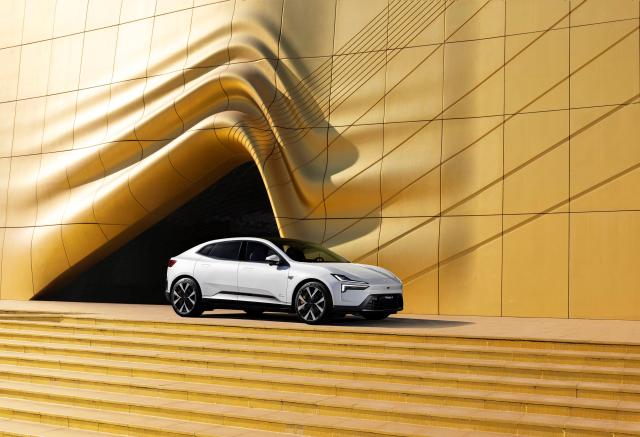
Polestar’s identity reflects how global the auto industry has become. It markets itself with Swedish design and engineering, relies on China for much of its production infrastructure, and has raised capital through a Nasdaq listing. That mix has led some to label it a “Chinese brand wearing a European mask.”
Polestar rejects that framing and says it is building a “dream car” identity in the EV era, similar to how Porsche used racing to become a symbol of performance. The company has also promoted a vision of a “climate-neutral car in 2030.”
One example is a campaign tied to Climate Week NYC, using outdoor ads across New York and social media to highlight the impact of internal-combustion vehicles on consumers and society, focusing on what it called a hard-to-break dependence between gasoline cars and drivers. Polestar has also pointed to a moonshot project aimed at a fully climate-neutral vehicle without carbon offsets, and a GT Polestar 5 linked to a renewable-energy smelter.
Fredrika Klarén, Polestar’s head of sustainability, said, “As many traditional automakers are rolling back climate pledges, we are going the other way,” adding that EVs are “the most efficient and scalable alternative” for responding to climate change.
Polestar says its cross-border structure shows how manufacturing ecosystems are being reshaped beyond traditional “national brand” labels. Its push in the EV transition is ongoing as the broader auto industry moves through a period of change.
<Editor’s note> As times change, choices about where people live, what they wear and what they eat have become more important than simply making a living. A similar leather bag can cost 100,000 won under one label but sell for 100 million won if made by Hermès. This series looks at the forces behind brands that can sway consumer decisions and determine corporate fortunes, and at the intense competition companies face to build them.
* This article has been translated by AI.
Copyright ⓒ Aju Press All rights reserved.