
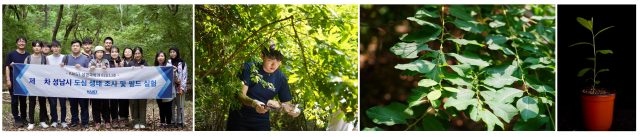
SEOUL, February 06 (AJP) - Researchers at the Korea Advanced Institute of Science and Technology have identified the core process by which the native Korean plant Flueggea suffruticosa, commonly known as leaf flower or gwangdaessari, produces securinine, a compound known for its anticancer properties. The discovery, made after 70 years of scientific uncertainty, provides a foundation for the stable production of anticancer substances using synthetic biology.
KAIST announced on January 30 that a joint research team led by Professor Kim Sang-kyu from the Department of Biological Sciences and Professor Han Sun-kyu from the Department of Chemistry has mapped the biosynthetic pathway of securinine-type alkaloids. These substances were first discovered in the leaf flower in 1956, and while more than 130 related compounds have since been reported, the mechanism of their formation within the plant remained unknown.
The leaf flower is a shrub commonly found in the mountains and fields of the Korean Peninsula. Its leaves and roots have long been used as traditional medicine in Northeast Asia. Among the alkaloids it produces, securinine has demonstrated efficacy in killing tumor cells and assisting in nerve regeneration by crossing the blood-brain barrier.
Alkaloids like securinine, morphine, and caffeine are highly complex molecules, making the identification of their biosynthetic pathways—the step-by-step process involving various enzymes—extremely difficult. To solve this, the KAIST team combined chemical synthesis expertise with single-cell transcriptomics.
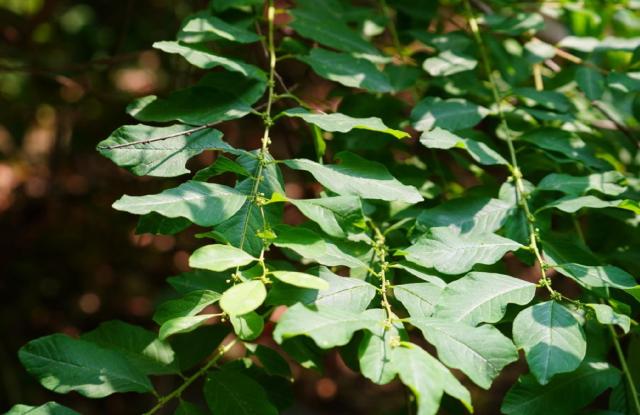
The researchers analyzed the genome of plants collected from the KAIST Ecological Forest in Seongnam. By using single-cell analysis on leaf tissues where securinine production is most active, they tracked which genes were expressed in specific cells. Simultaneously, the chemistry team synthesized virosine B, a predicted precursor, to observe how it transforms within the leaf flower.
The study revealed that a specific group of enzymes called sulfotransferases plays a critical role in reshaping the molecular skeleton of the precursor into securinine. Previously, sulfotransferases were primarily thought to assist in making substances more soluble or easier to break down. This research marks the first documented case where these enzymes actively remodel an alkaloid scaffold.
The researchers also found that the genes responsible for this process are concentrated in the vascular bundle cells of the leaf flower. This specialized cellular environment coordinates the production of amino acids and necessary co-factors to facilitate the synthesis of these high-value compounds.
"This research identifies the molecular formation of high-value natural products found in native Korean plants," Professors Kim Sang-kyu and Han Sun-kyu said. "It establishes a basis for the stable production of anticancer substances using microbes or cells, which can lead to various medical applications."
The study, featuring co-first authors Dr. Jeong Seong-jun, Dr. Kang Kyu-min, and doctoral student Kim Tae-in, was published in the journal Nature Communications on January 23.
(Paper information)
Journal: Nature Communications (IF 15.7)
Title: Chemically guided single-cell transcriptomics reveals sulfotransferase-mediated scaffold remodeling in securinine biosynthesis
DOI: https://bit.ly/4azf4iz
Copyright ⓒ Aju Press All rights reserved.
