

On a cold, wind-swept slope in northern Italy, 17-year-old Choi Gaon rose from pain, doubt and near withdrawal to seize Olympic gold — not just any gold, but South Korea’s first ever in a snow event — at the Milan-Cortina Winter Olympics.
She did it the hard way. The only way that truly lasts.
After a frightening crash in her opening run and another failed attempt that left her visibly shaken, Choi stood on top of the halfpipe for her final descent with little left to prove — and everything left to risk. What followed was a composed, mature, technically clean run worth 90.25 points. It was the run of her life.
And it was enough.

For much of the night, it looked like Choi’s Olympic debut might end in heartbreak.
Her first run ended in a heavy fall that brought medics onto the course. Her score: 10.00. Before her second attempt, “DNS” flashed beside her name. Few would have blamed her for stepping away.
She didn’t.
She dropped in again. Fell again. And still refused to surrender.
By the time she stood in for her final run, she was no longer chasing medals. She was chasing herself — the athlete she had fought to become through back surgery, long rehabilitation and years in the shadow of her famous mentor.
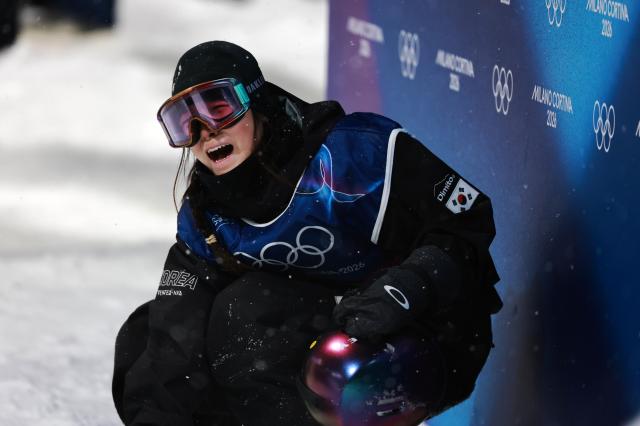
Conservative by her standards, precise by Olympic standards, her final run was a masterclass in judgment under pressure. While others struggled with slick, snowy conditions, Choi delivered when it mattered most.
Veteran coaches call that “competitive intelligence.” Old reporters call it heart.
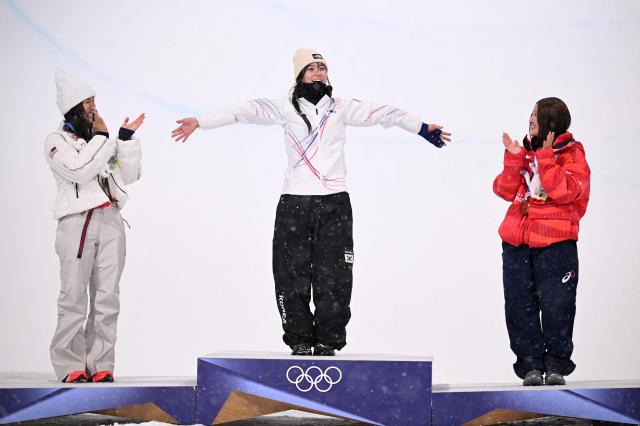
Kim’s silver, earned with grace and dignity, closed one of snowboarding’s great Olympic chapters. Injured and short of competition this season, the American legend still showed her class. But even legends must eventually pass the torch.
On this night, it passed to someone who once watched Kim on television and dreamed.
Now, Choi is the youngest women’s halfpipe gold medalist in Olympic history — younger than Kim was in PyeongChang — and the face of Korea’s next generation of winter stars.
The symbolism was unavoidable: the student surpassing the teacher, not in defiance, but in fulfillment.
Choi’s triumph is part of a larger awakening.
Just days before Choi’s dramatic breakthrough, 18-year-old Yu Seung-eun had already signaled that Korea’s snowboarders were ready for something bigger. Yu captured bronze in women’s big air at Livigno.
For years, Korea’s winter ambitions revolved around skating and short track. Snowboarding lived on the margins, sustained by a handful of pioneers.
A generation raised on global competition, overseas training and fearless ambition is now delivering results on the biggest stage.
Copyright ⓒ Aju Press All rights reserved.
