
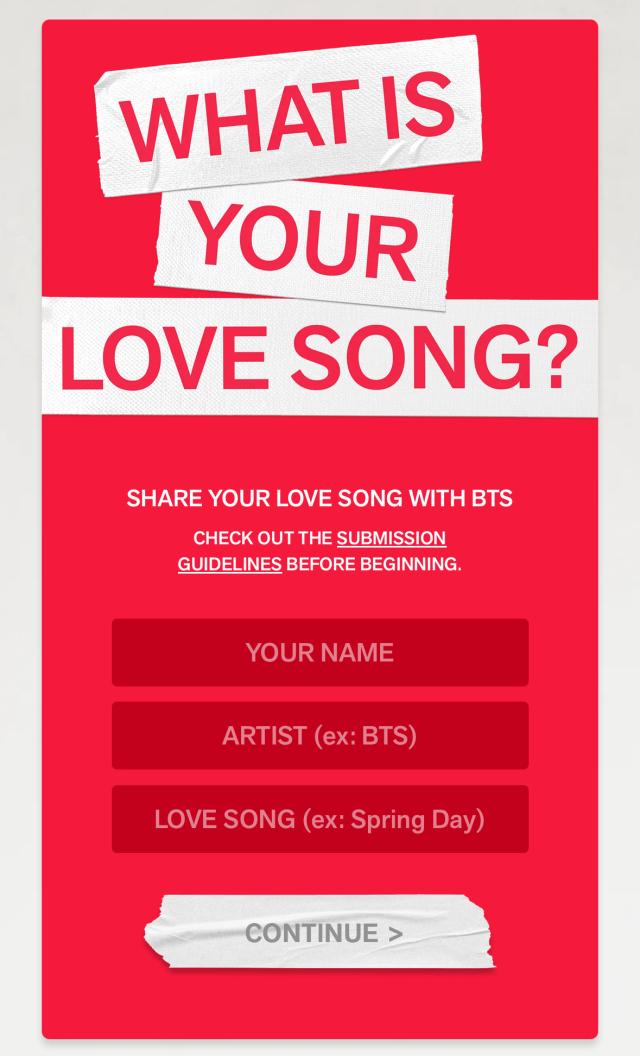
SEOUL, February 25 (AJP) - “What is your love song?”
The question flashes on screens from Seoul to New York’s Times Square. It makes you pause. It sends you back — to a first confession, a quiet heartbreak, a family memory, even a hard-earned sense of self.
A song can seal emotion inside three minutes and return it intact years later. Few artists understand that power better than BTS.
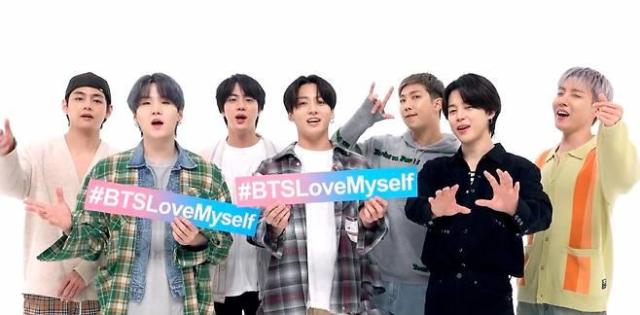
K-pop amplifies emotion through collective empathy. A message delivered on stage rarely ends there; it is reinterpreted, shared and woven into personal stories. In 2018, BTS’s Love Yourself series shifted the genre’s emotional axis. Instead of centering romance, it foregrounded identity. In “Epiphany,” the line — “I’m the one I should love” — reframed love as self-recognition.
That message arrived at a time of relentless comparison. On social media, curated success and filtered perfection have become the standard. For many young people, visibility is confused with worth. In that environment, affirmation carries weight.
The question is not whether music heals — but how far its influence reaches.
Data from the Health Insurance Review and Assessment Service show that depression among Koreans in their 20s rose sharply in recent years, with the total number of patients surpassing 1.1 million in 2024. Anxiety cases followed a similar trajectory. At the same time, research increasingly shows that lyrics shape emotional states. A 2024 study analyzing streaming histories found that listeners at higher risk of depression gravitated toward low-positivity, low-energy themes. If negative messages reinforce mood, the reverse may also hold true.
Lee Hae-woo, a psychiatry professor at Kangwon National University, describes media messages as “contagious.” Just as harmful coverage can trigger the “Werther effect,” repeated exposure to resilience-focused narratives can produce the “Papageno effect,” encouraging coping rather than despair. Positive language, she notes, can support cognitive reframing — a core principle of cognitive behavioral therapy.
Music is not medicine. But it can be an emotional buffer.
A 2025 meta-analysis published in Psychology of Music reviewed 82 studies and found that song lyrics have measurable psychological effects, strongly influencing emotional responses and moderately shaping attitudes and behavior. Lyrics function as cultural narratives; they influence how listeners interpret themselves and the world.
Within BTS’s fandom, ARMY, “Love Yourself” evolved from a slogan into lived language. Fans describe turning to the message during periods of low self-esteem, sometimes alongside professional treatment. Such testimonies are not clinical evidence. But they reveal how music can become part of a recovery narrative — not replacing therapy, but reinforcing self-worth.
In a culture saturated with “healing” content, self-love can itself become performative. Yet BTS’s framing remains direct and durable. It does not promise transformation. It invites reflection.
So what is your love song?
It may not be about romance at all. It may be about the moment you chose to see yourself differently.
Music cannot cure. But it can create a pause — a space where recognition replaces comparison. And sometimes, that pause is enough to begin.
Copyright ⓒ Aju Press All rights reserved.
