
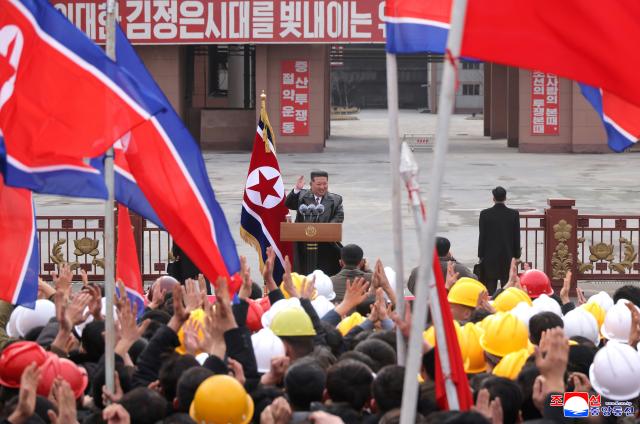
SEOUL, March 03 (AJP) - If the U.S.-Israeli strikes that killed Ali Khamenei and the capture of Nicolás Maduro were meant to signal American reach, the leader most coldly calculating their implications would be Kim Jong-un.
Pyongyang's Foreign Ministry on Tuesday condemned what it called "illegal aggression" and "hegemonic and gangster-like" behavior by Washington, according to the Korean Central News Agency. The rhetoric was familiar. The strategic takeaway is less so.
Unlike Iran or Venezuela, North Korea sits in a different deterrence category. It possesses an operational nuclear arsenal and intercontinental ballistic missiles capable of reaching the U.S. mainland.
That reality alone, analysts say, sharply reduces the likelihood that Washington would contemplate a leadership-targeted military option on the peninsula.
"North Korea is not like Iran," said Lee Sung-yoon, principal fellow at the Sejong Institute.
"North Korea has nuclear weapons and ICBMs, and information about North Korea is so insufficient that it is in a much safer position than Maduro or Khamenei."
To Pyongyang, the removal of a non-nuclear state's top leadership through external force assures the United States is willing to use decapitation options if it deems them necessary and Regimes without nuclear deterrence remain vulnerable.
The second message is the more powerful one in Pyongyang.
Kim has repeatedly declared North Korea's nuclear status "permanent" and "completely and absolutely irreversible," pledging expansion of sea-launched and long-range ballistic systems, AI-enabled unmanned platforms and tactical rocket forces aimed at South Korea.
According to the Stockholm International Peace Research Institute, the North is estimated to possess roughly 50 warheads, with fissile material for dozens more.
Rather than reopening diplomatic space, the latest strikes could harden Pyongyang's conviction that nuclear capability is the ultimate insurance policy.
Yet volatility could broaden the diplomatic theater.
Lee argues that the shockwaves from Tehran and Caracas — far from foreclosing talks — could embolden President Donald Trump to pursue a dramatic "grand deal."
Trump has previously referred to North Korea as a "nuclear power" during APEC remarks in late 2025 and publicly signaled openness to another meeting.
A potential inflection point looms in April, when Trump is scheduled to visit Beijing — a trip that could create space for quiet triangular signaling involving Pyongyang. Kim's recent engagements with Vladimir Putin and Xi Jinping have elevated his diplomatic posture, reinforcing his self-image as a peer rather than a supplicant.
"Kim's status has been greatly elevated," Lee said. "By meeting with Trump, he may aim for partial troop withdrawal, arms-control style talks instead of denuclearization, and de facto recognition as a nuclear-armed state."
Kim's January address framed the choice starkly: "peaceful coexistence or eternal confrontation."
He insisted the future of relations depends "entirely on the attitude of the U.S. side," while leaving open the possibility of talks if Washington ends what Pyongyang calls hostile policies — namely joint U.S.-South Korea military drills and sanctions.

Copyright ⓒ Aju Press All rights reserved.
