
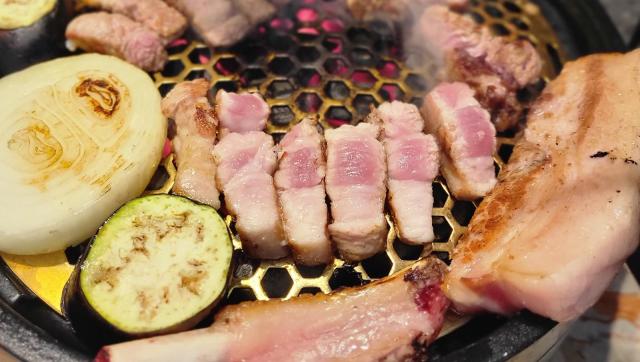
SEOUL, June 02 (AJP) - Nvidia CEO Jensen Huang’s reported plan to visit a Samgyeopsal (pork belly) restaurant, a staple of Korean barbecue (K-BBQ), during his upcoming trip to Seoul has turned a casual dinner itinerary into a cultural talking point, putting the charcoal-grilled pork menu back in the spotlight as one of South Korea’s most visible dining experiences for foreign visitors.
Huang is expected to visit South Korea this week after appearing at the Computex trade show in Taipei, where Nvidia hosted a separate dinner with Korean technology partners. Korean media reports have suggested that he could hold an informal “Samgyeopsal Somaek” gathering, pairing grilled pork with soju and beer, accompanied by conglomerate leaders in Seoul.
The attention surrounding the possible meal reflects a broader pattern. For many foreign visitors, Korean barbecue is no longer just a restaurant option. It has become one of the easiest ways to experience Korea at the table — by grilling meat, sharing side dishes, and learning how people eat together here.
A similar effect was seen after Huang’s earlier “Kkanbu” fried chicken gathering in Seoul with Samsung Electronics Executive Chairman Jay Y. Lee and Hyundai Motor Group Executive Chair Chung Eui-sun. After news of the meeting spread, the franchise Kkanbu Chicken briefly topped search rankings on food delivery platforms such as Baemin and Coupang Eats, while some branches reportedly paused delivery orders due to overwhelming demand. The episode showed how quickly a high-profile dining scene can turn into consumer interest.
Korean barbecue, often referred to overseas as K-BBQ, has garnered popularity among foreign gourmets as it offers more than grilled meat. The table itself becomes part of the appeal: the charcoal or gas grill stove in the middle, the sound of meat cooking, the Banchan (side dishes) spread across the table, the lettuce wraps, and the small acts of serving others.
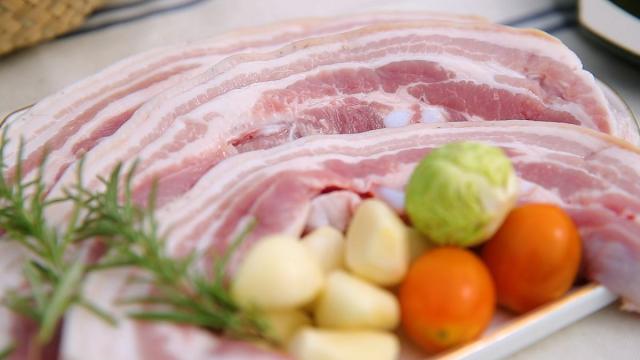
For Koreans, much of this feels ordinary. For many first-time foreign diners, that ordinariness is what makes the meal stand out.
A 37-year-old freelance designer based in Ilsan said her earliest memory of samgyeopsal came from a weekend family dinner. “It was not a special day, but I still remember the smell of meat cooking on the grill and my parents cutting the meat for me,” she said. “In Korea, barbecue is something people become familiar with from childhood.”
She said grilled meat appears in many everyday settings — office dinners, gatherings with friends, family meals, post-exam outings, payday meals and nights when someone needs comfort. “When Koreans say, ‘Let’s go eat meat,’ it does not always mean just filling the stomach,” she said. “It often means sitting down together and talking.”
That everyday role helps explain why barbecue occupies a different place in Korean food culture. Around the grill, people naturally take on small roles. Someone turns the meat. Someone cuts it. Someone passes side dishes or fills a glass. A well-cooked piece is often offered to another person first.
These gestures are rarely explained in Korea because they are part of the routine. But for foreign diners, they can be the part of the meal that feels most different.
Unlike restaurant meals that arrive fully prepared from the kitchen, K-BBQ often continues at the table. Diners wait for the meat, turn it, cut it, wrap it and combine it with garlic, ssamjang, kimchi or other side dishes. The meal gives people something to do together before they even begin eating.
Lukas, a 29-year-old visitor from Germany, said he first saw Korean barbecue in Korean dramas and YouTube videos before trying it in Seoul with a Korean friend. “What surprised me most was that customers cook the meat themselves,” he said. “In Germany, food usually comes from the kitchen already prepared. But with K-BBQ, it felt like the meal was still happening at the table.”
He said the format felt different from German barbecue, which is often held outdoors and is usually less centered on one shared grill at the table. “Everyone was watching the same grill and waiting for the meat,” he said. “That was different for me. It felt like the time at the table mattered as much as the food.”
The format can also be awkward at first. For diners unfamiliar with Korean barbecue, even simple questions — when to turn the meat, how long to wait, what to eat together — can require help from friends or staff. But that learning process can make the meal more social.
“At first, I was a little nervous,” Lukas said. “I worried that I might burn the meat. But the workers there told me when to turn it over, and the staff stayed alongside me to help me get used to the grilling. After a while, I got the hang of it and ever since, I am pretty good at grilling in Korean BBQ.”
A moment that stayed with him was when his friend made a Ssam, placing meat, garlic and ssamjang inside lettuce before handing it to him.
“It was very new to me when one of my friends made me this big lettuce wrap, you can't see that kind of generosity in Germany often,” he said. “It was very interesting experience and it felt less like just eating food and more like being welcomed.”
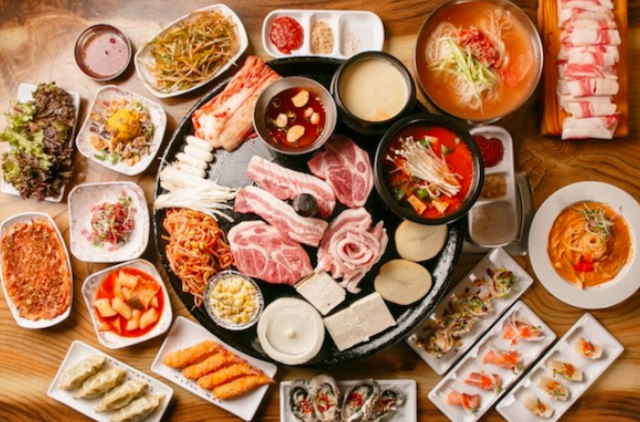
This sense of intimacy is something global audiences have grown familiar with through pop culture. Global cultural icons like BTS have frequently broadcasted their love for K-BBQ on reality shows like "In the SOOP" or "Run BTS." For millions of international fans, watching the world’s biggest pop stars take turns flipping pork belly, managing the smoke, and feeding one another wraps (ssam) has turned an exotic dining habit into an aspirational lifestyle.
Academic research also supports the idea that Korean popular culture can turn interest in Korean food into actual consumption. A 2023 PLOS ONE study on samgyeopsal consumption in the Philippines found that utilitarian and hedonic motivation, Korean influence, and attitude were associated with actual behavior toward eating samgyeopsal among Filipino respondents. A separate 2025 study of Korean drama viewers in Türkiye found that 77 percent of respondents began trying Korean food after watching Korean dramas, though the survey sample was heavily female and concentrated among younger viewers.
For K-BBQ, that link between media and dining is useful because the meal is easy to understand visually. Meat is placed on the grill, flipped, cut, wrapped and shared. The table changes as the meal goes on. For people who first see Korean food through dramas, YouTube or social media, barbecue offers a scene that is easy to remember and easy to recreate.
That has helped Korean barbecue become more than a menu item in overseas cities. Many diners visit K-BBQ restaurants not only to eat Korean food, but to try a Korean-style group meal — one built around a shared grill rather than individual plates.
Still, the same features that make K-BBQ distinctive can make it harder to expand. Restaurants need ventilation systems, staff who can guide first-time customers, consistent meat quality and enough side dishes to support the full meal. Operators also have to decide how much to adapt to local dining habits without making the experience feel generic.
There is also a risk that K-BBQ abroad becomes reduced to unlimited meat, loud interiors and novelty. The stronger version of Korean barbecue is not just about volume. It is about the way the meal gives people a reason to stay at the table longer, talk more and take care of small things for one another.
For Korean diners, turning meat, cutting pieces, passing banchan or making a wrap for someone else may not feel special. For foreign diners, those same gestures can become the memory they take from the meal.
That may be why Korean barbecue has continued to travel well. It is not only a way to eat Korean meat. It is a way to see how Koreans gather, share and spend time around food.

Copyright ⓒ Aju Press All rights reserved.
