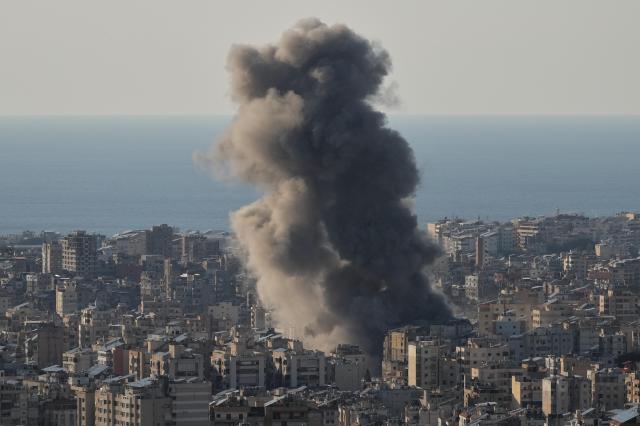
SEOUL, March 04 (AJP) - The bombshell from the 2026 Middle East conflict has flown to Seoul and crashed the party in a big way — sending the benchmark KOSPI plunging a record 12 percent and the KOSDAQ 14 percent.
One stock, however, defied the sweeping rout: LIG Nex1, the maker of the Cheongung-II.
The sudden spotlight came after the missile defense system reportedly saw its first real combat use intercepting Iranian missiles over the Gulf, a development that instantly thrust South Korea’s defense technology into the center of a widening regional war.
The geopolitical shock triggered both panic and dark humor in Seoul’s retail trading circles.
A viral meme circulating among Korean day traders shows Kim Seung-youn and his son Kim Dong-kwan beckoning investors to board a flight amid the spiraling Middle East war, captioned: “No time to explain — just get in.”
Behind the jokes lies a stark reality: defense companies are increasingly under the spotlight as geopolitical tensions intensify globally, from the Russia–Ukraine War to rising instability in the Middle East following joint strikes by the United States and Israel on Iran.

Korean missile shield tested in real combat
The Middle East escalation provided an unexpected proving ground.
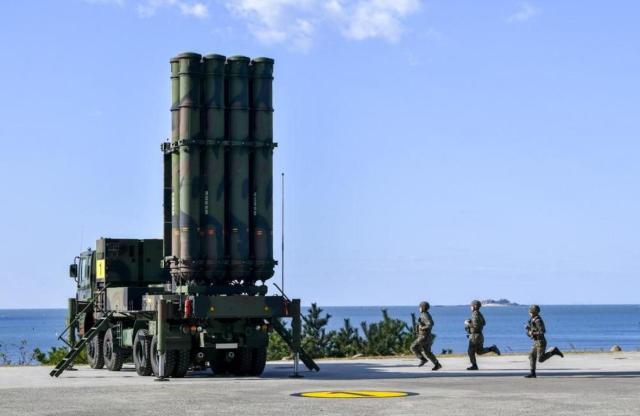
Iran’s retaliatory missile and drone attacks on Gulf states hosting U.S. military assets reportedly triggered interceptions by the Cheongung-II system deployed in the United Arab Emirates, marking what analysts view as the first known combat use of a Korean-exported missile defense system.
The UAE integrates Cheongung-II into a multilayered defense network alongside the Patriot missile system and Israel’s Arrow missile defense system.
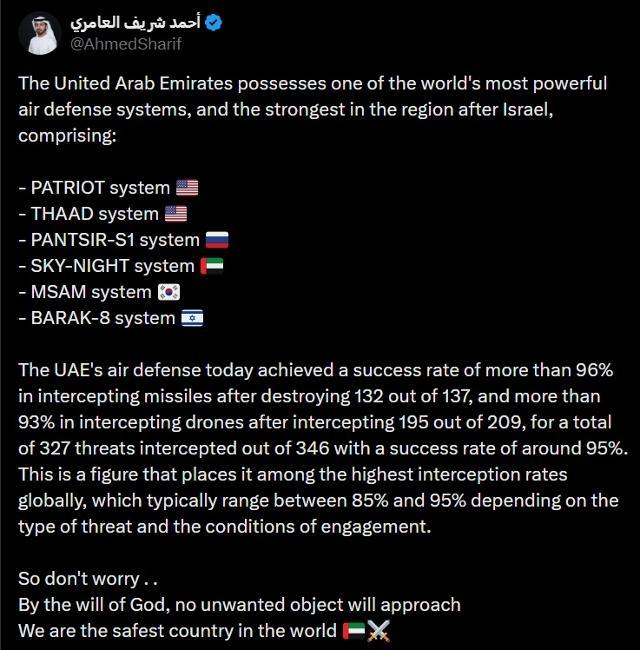
According to UAE defense data, 161 out of 174 Iranian ballistic missiles were intercepted, along with all eight cruise missiles and 645 out of 689 drones — an interception rate exceeding 90 percent across categories. Cheongung-II reportedly delivered comparable performance within the network.
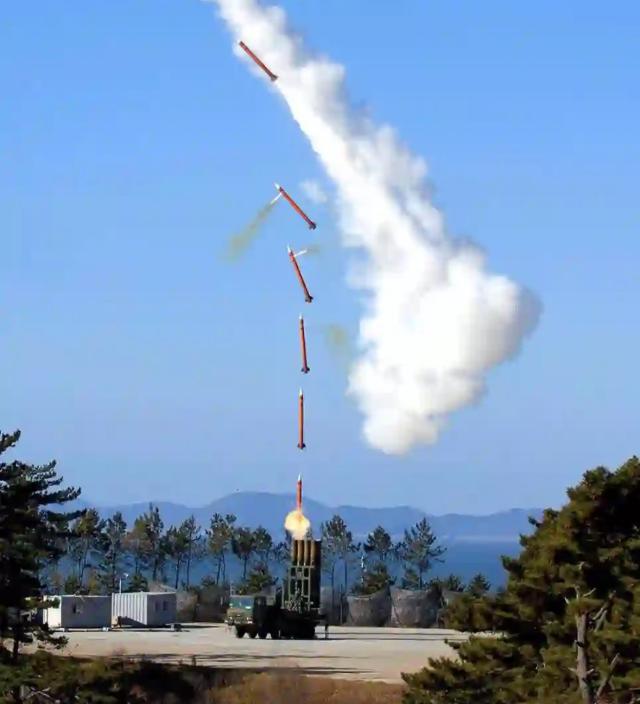
Often described as a Korean counterpart to Patriot, the system uses a hit-to-kill interceptor capable of destroying targets by direct impact. Its missiles travel at roughly five times the speed of sound and can intercept aircraft and ballistic missiles at altitudes of around 15–20 kilometers.
Analysts say battlefield validation could significantly strengthen confidence in the system globally.
“While defense stocks may fluctuate in the short term due to geopolitical developments, the industry’s fundamentals point to a structurally upward trajectory,” said Choi Jung-hwan, a defense analyst at Daishin Securities.
“The fact that Cheongung-II has now gained operational experience in an actual conflict could strengthen trust in the system.”
The Gulf conflict highlights a broader transformation in modern warfare, where missile barrages and drone swarms increasingly dominate the battlefield.
“Missile defense is ultimately a probability game,” Choi said. “Ballistic missiles follow predictable trajectories, but drones are far harder to track and intercept.”
He added that the economics of drone warfare also challenge traditional air defense strategies.
“Drones are relatively cheap, while the systems designed to intercept them are expensive. In prolonged conflicts, that imbalance can weigh heavily on defenders.”
The dynamic is expected to accelerate demand for counter-drone systems and next-generation air defenses — sectors where South Korea is rapidly expanding capabilities.
Investors pile into defense names
The battlefield headlines quickly translated into investor enthusiasm.
Shares of LIG Nex1 surged nearly 30 percent Tuesday after reports of Cheongung-II’s operational use.
Other defense contractors also rallied sharply. Hanwha Aerospace jumped about 20 percent to close at 1,432,000 won, while Hanwha Systems climbed more than 29 percent to 146,700 won.
Both stocks retreated the following day as profit-taking set in, with Hanwha Aerospace slipping 7.6 percent and Hanwha Systems dropping about 21 percent. LIG Nex1 which soared around 20 percent during the broad retreat managed to end Wednesday up 1.8 percent at 673,000 won.
Ryu Youn-seung, professor of defense industrial security at Myongji University, said the Middle East conflict could ultimately boost global demand for missile defense systems.
“With Iran and Israel exchanging missile attacks, many countries may seek to strengthen their air defense capabilities,” he said.
“The Cheongung-II’s performance could serve as a valuable opportunity for South Korea’s defense industry to gain greater recognition in global arms markets.”
Korea’s defense exports have expanded rapidly since the Ukraine war reshaped global arms demand.
According to the Stockholm International Peace Research Institute, South Korea ranked 10th among global arms exporters between 2019 and 2023, accounting for roughly 2 percent of global exports.
The country’s competitive pricing and rapid delivery timelines have helped drive major deals, including Poland’s $12 billion purchase of Korean tanks, artillery and fighter jets in 2022.
Analysts say the industry’s next phase will broaden beyond land systems such as tanks and artillery to include platforms like the KF 21 Boramae and advanced missile defense systems.
“Defense is a long-cycle industry operating on timelines of a decade or more,” Choi said. “Korea’s strong manufacturing base — from steel to chemicals — gives it a structural advantage that is difficult for competitors to replicate.”
If Cheongung-II’s combat debut proves successful, analysts say it could accelerate South Korea’s rise as a major supplier in the global defense market — not only as a cost-efficient exporter, but increasingly as a credible security partner.

Copyright ⓒ Aju Press All rights reserved.