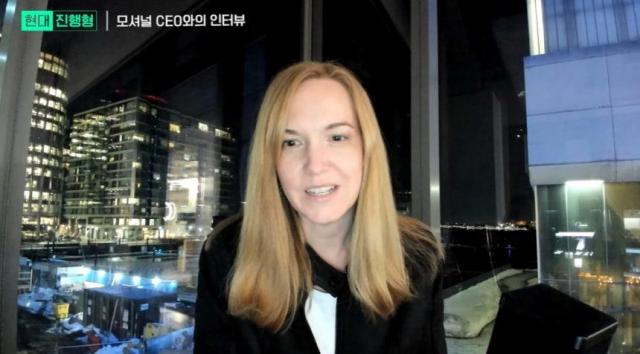
Laura Major, chief executive of Motional, reiterated the plan during an appearance on Hyundai Motor Group’s official podcast channel, Hyundai Now, where she outlined the company’s technological direction and commercialization strategy for autonomous mobility.
Major said the company recently redesigned its autonomous driving system architecture around a generative artificial intelligence-based large driving model (LDM), describing the shift as a key milestone in the development of autonomous driving technology.
“The decision to redesign Motional’s autonomous driving system architecture around AI and transition to a large driving model marked an important turning point,” Major said, adding that the move has helped improve driving quality, responsiveness, scalability and operating efficiency despite the technical risks associated with overhauling an existing system.
Motional is focusing on building a fully driverless Level 4 robotaxi service, with safety remaining the company’s top priority.
Major said the firm applies an end-to-end (E2E) AI approach to general driving scenarios that account for more than 90 percent of real-world road situations, while employing a separate “guardrail” safety framework to handle rare edge cases such as emergencies.
“These exceptional scenarios become critical training data that help improve the overall performance of the autonomous driving system,” she said.
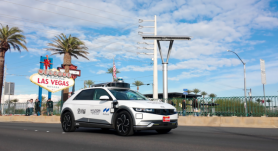
Motional currently operates research and development hubs across the United States and is conducting intensive testing in Las Vegas and Pittsburgh.
Major said the two cities offer contrasting urban environments that help refine the system’s adaptability. Las Vegas features a modern grid-based layout with wide roads, while Pittsburgh presents more complex driving conditions with narrow streets, older infrastructure and intricate intersections.
“Testing across these different environments helps us build a general-purpose autonomous driving system that can operate in virtually any city,” she said.
The company also highlighted the role of real-world data accumulated through pilot programs with ride-hailing platforms such as Uber and Lyft.
Through those trials, Motional has gathered more than 130,000 autonomous ride experiences, generating insights into passenger behavior and in-vehicle interaction — including how riders access trip information, whether they prefer onboard displays or smartphones, and how features such as route changes or mid-ride stops should be integrated into driverless services.
Major said improving the passenger experience will be just as critical as advancing the underlying driving technology as the company approaches commercialization.
“Our goal is not only to develop autonomous driving technology but also to deliver a seamless and intuitive passenger experience,” she said.
Hyundai Motor Group’s Hyundai Now series explores mobility technologies and industry trends, and Major’s appearance marked the first time a senior executive from the group participated directly in the program.
Major recently received the SDV Innovator Award from North American automotive magazine MotorTrend for her contributions to software-defined vehicle innovation.
Copyright ⓒ Aju Press All rights reserved.