
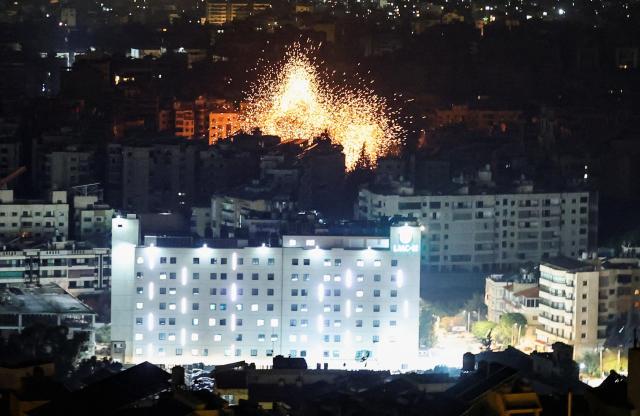
For some strategists, Iran’s retaliatory missile and drone strikes on American facilities across the Middle East offer a preview of how a future conflict in the Taiwan Strait could unfold — and how Washington’s Asian allies might be drawn into it.
The concern was highlighted in the South China Morning Post, which noted that Iran’s attacks on U.S. bases could serve as a template for potential escalation in Asia. In a Taiwan contingency, Beijing could similarly target American military assets hosted by U.S. allies, including Japan, the Philippines and South Korea.
“Analysts said the retaliatory strikes could serve as a template for a potential conflict in the Taiwan Strait, as Beijing might consider actions against U.S. allies hosting American military assets such as Japan, the Philippines and South Korea,” the newspaper reported.
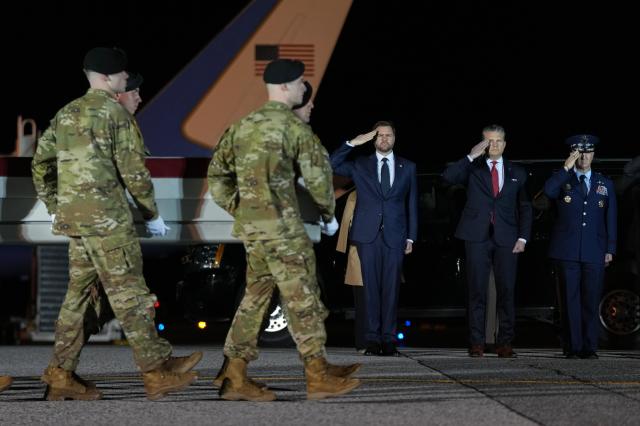
The scale and precision of the strikes have prompted renewed debate over the vulnerability of American military infrastructure abroad.
The implications extend far beyond the Gulf.
A 2024 report by the Congressional Research Service notes that the United States maintains 24 permanent military bases in the Indo-Pacific and has access to another 20 facilities. Key installations include Kadena Air Base in Okinawa and Camp Humphreys in Pyeongtaek, South Korea.
The Philippines has also expanded American access to nine military sites since 2023, including three located on Luzon, close to Taiwan.
Lyle Goldstein, a senior research fellow at Brown University’s Watson Institute for International and Public Affairs, said Iran’s strikes underscore how U.S. bases could become early targets in a Taiwan crisis.
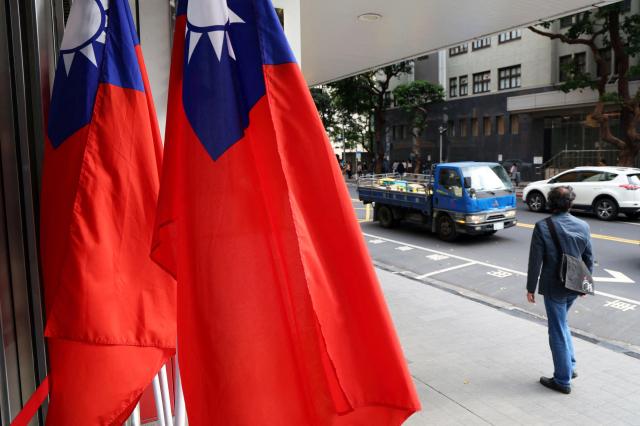
For years, military planners have warned that U.S. forces stationed in Japan, South Korea and the Philippines could be vulnerable to large-scale missile strikes from China in the early stages of a regional conflict. The Iranian attacks, some analysts argue, show how even a middle power can challenge American military infrastructure through precision strikes.
Yet the debate unfolding in Seoul and Tokyo is not solely about military vulnerability. It is also about the risks inherent in alliance politics — particularly the fear of becoming entangled in a conflict they did not initiate.
Spencer D. Bakich, a professor at the Virginia Military Institute, notes that the concept of “entrapment” has long shaped U.S. alliance strategy in Asia.
During the early Cold War, Washington worried that strongly anti-communist leaders such as South Korea’s Syngman Rhee and Taiwan’s Chiang Kai-shek might provoke confrontations with their adversaries and pressure the United States to intervene.
To manage that risk, the United States constructed a network of bilateral alliances designed to maximize American leverage over its partners.
Today, however, Bakich argues the concern may be reversing direction. Many policymakers in South Korea and Japan fear that conflicts elsewhere — including the war in the Middle East — could pull them into wars they would prefer to avoid.
“I assess that it is highly unlikely that either South Korea or Japan will find themselves directly committed to this war,” Bakich said.
As a result, a division of labor has gradually taken shape within the alliance: the United States focuses on security challenges in the Middle East, while its Asian allies concentrate on maintaining stability in the Indo-Pacific.
Practical constraints reinforce this arrangement.
South Korea and Japan possess powerful militaries designed to address regional threats, but they have limited capacity to contribute forces to conflicts beyond their immediate neighborhood. That reality, Bakich argues, provides both governments with leverage in negotiations with Washington.
Instead of direct military participation, their most likely contribution to a U.S.-led war effort against Iran would be financial support — similar to the role both countries played during the 1990–1991 Gulf War.
Not all analysts, however, view the situation solely through the lens of alliance entrapment.
Jennifer Murtazashvili, a professor at the University of Pittsburgh who is currently conducting research in Tel Aviv, argues that focusing exclusively on the risk of being dragged into war may obscure a larger strategic question: what happens if Iran emerges from the conflict stronger.
“The entrapment problem in alliance politics is well established,” she said.
“But South Korean and Japanese policymakers should resist framing their calculus purely around alliance obligation alone.”
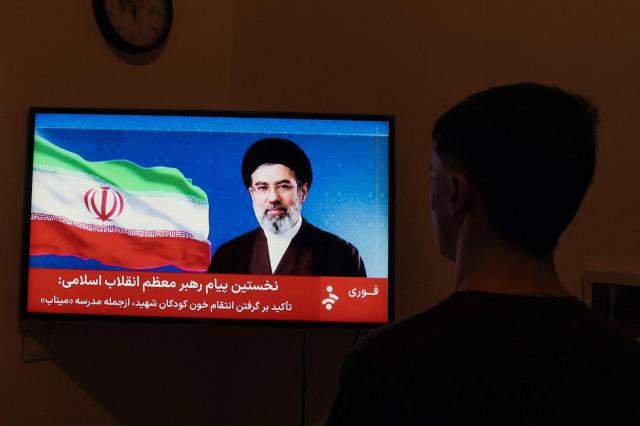
An Iran emboldened by the conflict, she argues, would not simply be an American problem.
In that sense, engagement by U.S. allies may serve their own strategic interests — but the form of participation matters.
Murtazashvili suggests that Seoul and Tokyo should seek clarity about war aims before offering support. Entrapment risks are highest, she argues, when allies join open-ended military campaigns with vague objectives.
At the same time, allies possess a range of options short of direct combat participation. Logistical assistance, intelligence sharing and financial support can demonstrate alliance solidarity without exposing them to the full risks of military escalation.
Domestic politics will also shape the calculus.
Leaders in both countries must balance alliance expectations with public opinion, which historically has been cautious about overseas military operations.

For America’s Asian allies, the war with Iran is both distant and immediate — geographically far away, yet rich with lessons about the vulnerabilities of U.S. military power and the enduring complexities of alliance politics.
In that sense, the conflict may prove to be more than a Middle Eastern war. It could also serve as a rehearsal for the geopolitical dilemmas Washington and its allies may one day face in the Indo-Pacific.
Copyright ⓒ Aju Press All rights reserved.
