
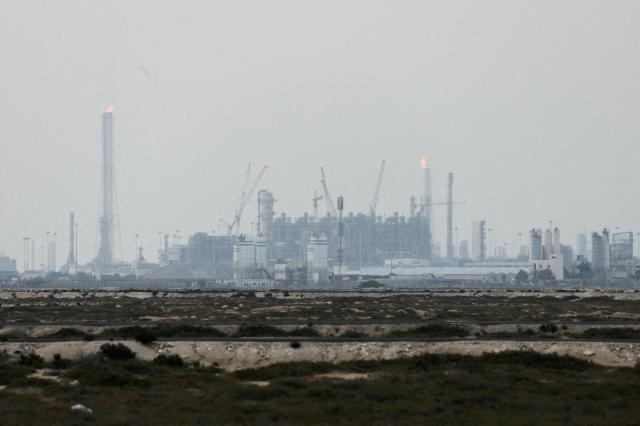
The move underscores how the escalating Iran war is beginning to hit global energy supply chains directly, with retaliatory attacks now extending beyond oil routes into core LNG production facilities.
According to government officials, the contingency plan — drawn up shortly after the outbreak of hostilities — assumes a “zero-import” scenario for Qatari LNG and outlines response measures including stockpile management and alternative sourcing.
“We have already secured sufficient volumes to last through the end of this year,” a senior official at the Ministry of Trade, Industry and Energy said. “Even if imports from Qatar fall to zero, there will be no immediate issue in managing domestic supply.”
Concerns intensified after Iran launched missile strikes on Qatar’s Ras Laffan industrial complex, the world’s largest LNG export hub, in retaliation for an Israeli attack on Iran’s South Pars gas field earlier this week.
QatarEnergy said the strikes damaged facilities accounting for about 17 percent of its LNG export capacity and warned that repairs could take three to five years. The company’s chief executive also signaled the possibility of declaring force majeure on long-term supply contracts for up to five years, potentially affecting key buyers including South Korea.
The prospect has rattled global markets, though industry officials in Seoul said a full-scale, long-term force majeure declaration remains unlikely given the massive financial losses it would entail.
South Korea imported 6.97 million tons of LNG from Qatar last year, accounting for 14.9 percent of total imports, making it the third-largest supplier after Australia and Malaysia. Dependence on Qatari LNG has been declining as Seoul diversifies its import portfolio.
That trend is expected to accelerate. A 2.1 million-ton long-term contract with Qatar is set to expire at the end of this year, reducing the country’s reliance on Qatari LNG to around 8 percent from next year.
Officials said the government is pursuing a two-track strategy — securing short-term spot cargoes while identifying medium-term replacement contracts — to prepare for prolonged disruptions of up to five years.
South Korea’s LNG system remains heavily centralized, with Korea Gas Corp. importing about 75 percent of total volumes, allowing for coordinated supply management. Strategic reserves, officially set at around nine days of mandatory stockpiles, are currently above required levels.
Industry officials said that even if shipments from Qatar are delayed, adjustments can be made within annual delivery plans. The more immediate concern lies in prices.
Qatar accounts for roughly one-fifth of global LNG exports, and any sustained disruption could shift the market balance sharply in favor of suppliers, reversing expectations of a looser supply environment in the coming years.
The broader energy shock is already building. Oil prices have surged following attacks on Gulf infrastructure, with some projections suggesting crude could climb as high as $150 to $180 per barrel if disruptions persist into April.
Such a scenario would likely spill over into LNG markets, increasing power generation costs and putting upward pressure on household gas and electricity prices in South Korea.

Copyright ⓒ Aju Press All rights reserved.
