
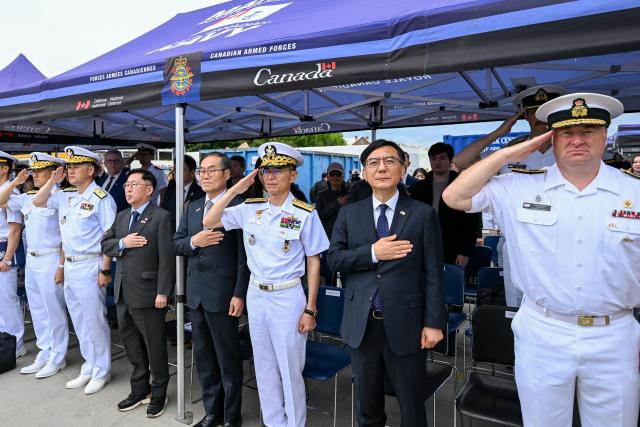
The KSS-III-class diesel-electric submarine arrived at Canadian Forces Base Esquimalt on Saturday after a nearly two-month voyage from Jinhae in southern Korea, marking the first trans-Pacific deployment by a South Korean submarine. The vessel was officially welcomed Monday before scheduled joint exercises with the Royal Canadian Navy and allied forces.
The visit comes at a crucial stage in Canada’s Canadian Patrol Submarine Project, or CPSP, aimed at replacing the country’s aging Victoria-class submarines with up to 12 modern diesel-electric vessels.
Glenn Copeland, managing director of Hanwha Defence Canada, described the timing of the submarine’s arrival as significant as Ottawa prepares to narrow the field.
Hanwha Ocean, the maker of ROKS Dosan, is leading the Korean consortium against the European rival led by Germany’s ThyssenKrupp Marine Systems, with the Canadian government expected to make its choice as early as next month.
“I think this is the best conventional submarine available in the world today,” Copeland said, arguing that the KSS-III meets Canadian operational requirements in range, endurance, size and weapons capability.
“We feel very positive about our chances,” he added. “Right now, if you ask anyone, they will say it is 50-50. But there are clearly factors working in our favor.”
The Dosan Ahn Chang-ho departed Jinhae on March 25 and traveled roughly 15,000 kilometers across the Pacific, stopping in Guam and Hawaii for supplies. Two Canadian sailors boarded the submarine in Hawaii on May 7 and sailed aboard the vessel to Victoria, giving Ottawa a rare firsthand opportunity to evaluate Korean submarine operations at sea.
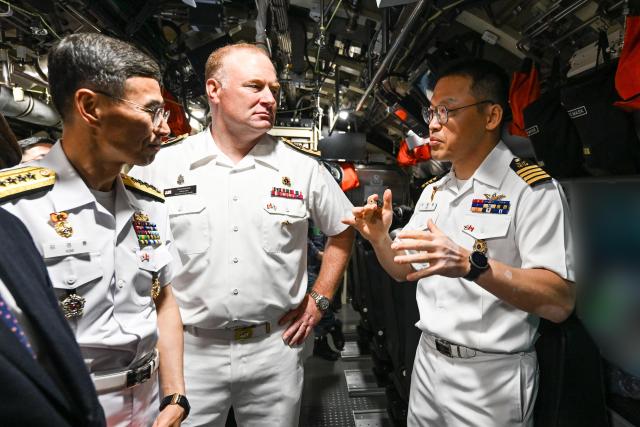
Petty Officer 2nd Class Jake Dixon compared the experience to “buying a brand-new Tesla and then you’re coming out of a ’99 Honda Civic,” according to local media reports.
Lieutenant-Commander Brittany Bourgeois, who also spent about two weeks aboard the submarine, praised the vessel’s condition and spacious interior.
“Being on board a modern submarine really opened our eyes to the possibilities ahead of us,” she said.
The positive reviews could strengthen South Korea’s standing as Canada grapples with severe operational strain in its submarine fleet. Ottawa currently operates four Victoria-class submarines purchased secondhand from Britain in 1998, but reports indicate only one remains operational while the others are undergoing repairs.
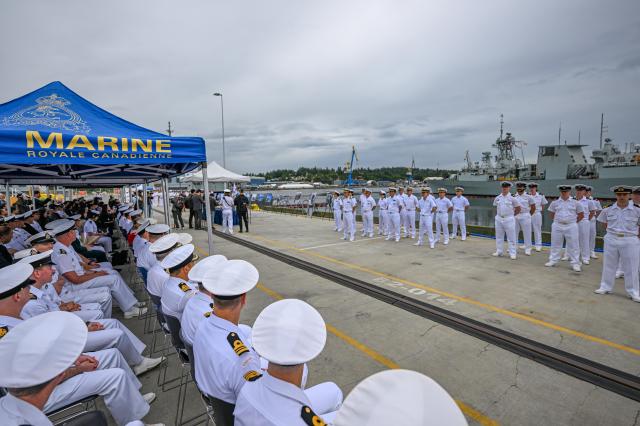
“We’ve operated submarines for more than 100 years, but we have not truly been a submarine-owning nation,” Patchell said. “With 12 modern submarines, Canada can become one.”
The contest has increasingly evolved beyond submarine specifications into a broader strategic and industrial competition.
Hanwha Ocean has sought to distinguish itself through wider economic cooperation proposals, including an equity investment in Canadian space startup Reaction Dynamics and a $345 million steel infrastructure project tied to Algoma Steel. Canadian media have generally viewed the Korean bid favorably compared with TKMS’ proposal centered on German launch infrastructure technology.
Still, analysts note that the KSS-III’s strengths could also pose questions for Canadian planners.
Its vertical launch system and heavy strike capability — developed in response to threats from North Korea and broader regional tensions involving China — may exceed the Royal Canadian Navy’s current operational requirements, which do not include ballistic or cruise missile submarine missions.
By contrast, TKMS’ Type 212CD is widely viewed as highly suitable for Arctic operations because of its smaller size, maneuverability and ability to operate in shallow and ice-covered waters across Canada’s Arctic archipelago.
But the German bid faces mounting concerns over delivery schedules. TKMS already has a substantial production backlog tied to orders from Germany, Norway, Singapore, Türkiye and India, leading some Canadian defense analysts to question whether deliveries could realistically meet Ottawa’s target timeline in the mid-2030s.
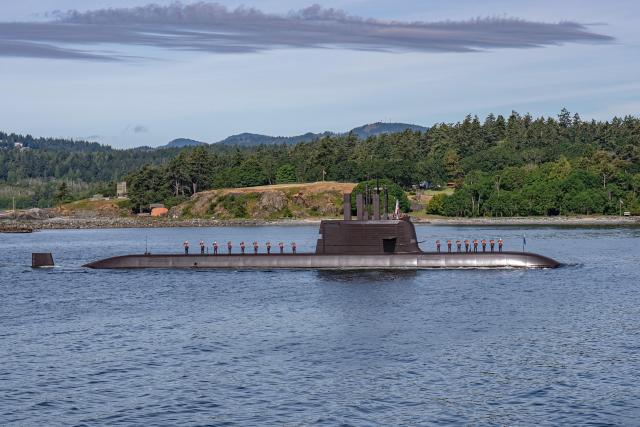
The deployment demonstrated not only the endurance and operational reliability of the KSS-III platform, but also Seoul’s growing ambition to compete directly with established European defense manufacturers in high-end naval procurement markets increasingly shaped by geopolitical competition and supply-chain reliability.
A South Korean Navy official said the Dosan Ahn Chang-ho is expected to participate in joint exercises with Canadian forces in early June, though exact schedules have not been disclosed.

Copyright ⓒ Aju Press All rights reserved.
