TWS VR Concert Film ‘Rush Road’ Draws Fans With Quiet Energy and Meticulous Prep
by Choi SongheePosted : March 25, 2026, 15:16Updated : March 25, 2026, 15:16
Every production holds countless perspectives. People may share the same place and time, yet a director and performers can experience it in very different ways. <최송희의 B-컷> looks beyond the on-screen “A-cut” to the vivid record of what happened off camera. By weaving interviews with directors and actors, it reconstructs “B-cut” moments that were often more intense than the finished frame.
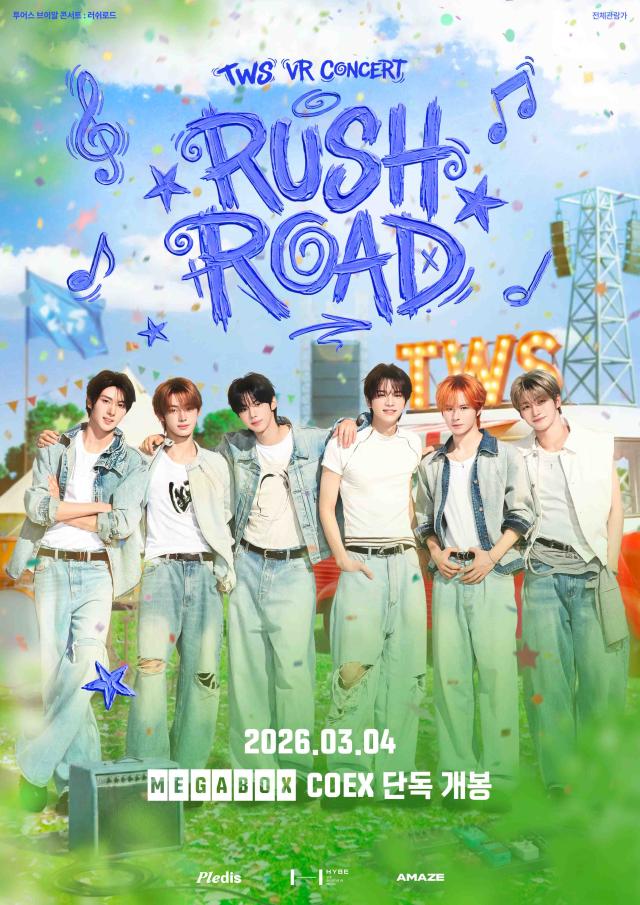
TWS VR concert film “Rush Road” (Amaze)
Among K-pop fans, the group TWS is often seen as “introverted,” known for soft-spoken interviews and a shy, rookie image. But in the close-up frame of a VR concert — where even a breath can feel inches away — the group showed a different side in the VR concert film “Rush Road,” which has continued to sell out.
Director Kim Ji-ae, who helmed “Rush Road,” said the members’ focus stood out even on a set that could easily become dominated by technology. She said the shy boys carefully calculated their blocking in front of the camera and even adjusted choreography angles themselves.
In an interview with this outlet, Kim described TWS and its fandom, SAI, as “above all, a big healing.” She said it was restorative to see the worries poured into the project — and the artists’ effort — turn into fans’ happiness.
“These days, I take my vacation at the theater,” Kim said. “When I see people who came to watch a project we worked so hard on really loving it, it’s overwhelming. Being in the energy of people who came to see someone they like is healing. I had something stressful recently and went to the theater, and I came back healed after seeing SAI.”
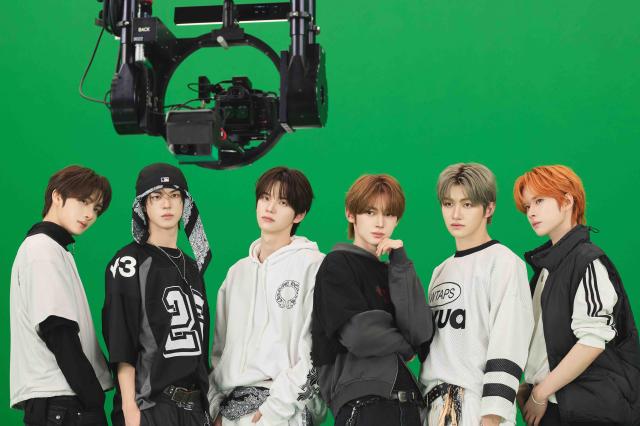
Still from “TWS VR Concert: Rush Road” (Amaze)
Watching “Rush Road” alongside SAI, this reporter noticed a contrast with other idol-fandom screenings. Where loud cheers often erupt the moment an artist appears close, SAI tended to respond differently. Even when a member reached out and stepped toward the viewer, the theater filled less with shouting than with quiet, bashful reactions.
Kim said she saw the same pattern.
“I felt like the fandom really takes after the artists,” she said. “Maybe because it’s an introverted group and an introverted fandom, they seemed embarrassed even while watching the film. Even with life-size standees, instead of taking photos up close, they zoom in from far away — it looked cute and shy. But on site they’re shy, and online they’re very active. When I read reactions on Twitter or communities, the feedback is so thoughtful, and I’m grateful. Some of the songs they suggested for the set list overlapped with songs we also regretted not being able to include, and I found it interesting — like, ‘We don’t think that differently.’”
What drew that reserved fandom into the experience, Kim said, was the members’ relentless preparation. Amaze CEO Lee Seung-jun and Kim both praised the group for going beyond simply performing assigned choreography and instead working to find the best angles for VR.
“TWS participated very actively in the preparation,” Kim said. “They kept studying how they should look by watching senior artists’ VR videos, and they practiced in a planned way down to fingertip details. Jihoon, Kyungmin and Youngjae — the so-called ‘Jakduz’ — are members who are very interested in performance directing. Even during choreography test shoots, Jihoon was watching the directing very closely, and the members all shared opinions, so it really felt like we were making it together. They were a team that thought through how each scene would look and what blocking would be better. Among the artists we’ve filmed so far, it’s rare to see anyone give input while even checking camera guides in such detail. It was a project filled with thought in every part, and it was my first time with artists like this.”
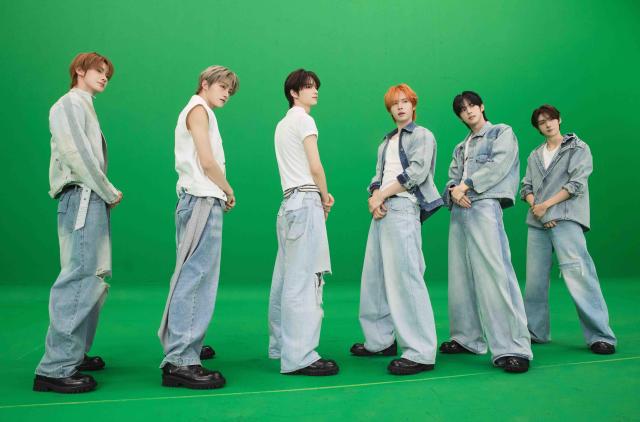
TWS VR concert film “Rush Road” (Amaze)
Kim said it is not easy for artists to speak up on a set packed with technical staff. But she said TWS monitored rehearsal footage through VR headsets and traded immediate feedback. Even after realizing that a hand-holding jump move was hard to execute at “full power” because of the VR camera’s characteristics, she said, the group refused to coast.
“It could have turned into a tech-driven set, but TWS never let go of their ambition for the stage,” Kim said. “They went into filming shouting, ‘This moment will never come back.’”
Kim said the members’ off-camera shyness was matched, on camera, by a persistent drive to get the performance right. In the end, she said, the film’s impact was not only the novelty of VR but the clear connection left on screen between the artists and the fans who resemble them in temperament.